ASTANA, March 15 (AJP) - A leaden sky hung low over Astana on Sunday morning, stubbornly refusing to deliver the slight thaw promised by the local forecast. Instead, the mercury hovered at a biting -4°C, and the city’s wide avenues were flanked by mounds of snow stained with soot and dust, while footpaths were glazed in a treacherous layer of ice.
Despite the chill, the capital’s residents appeared early. Clad in heavy winter coats, citizens moved with a hurried, quick-stepping gait, determined to reach the polling stations without lingering in the biting wind. The brisk movements reflected a city eager to participate in a defining moment for the nation.
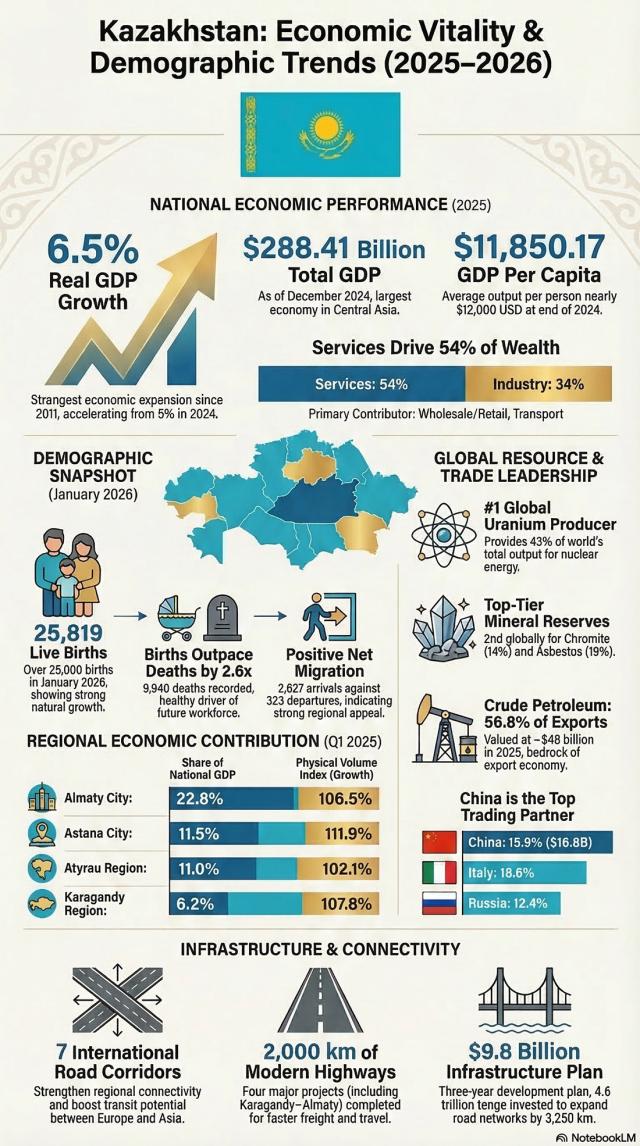
Kazakhstan, the giant of Central Asia with a population of approximately 20.4 million, stands as the region’s largest economy. By the end of 2026, its nominal GDP is projected to exceed $320 billion, firmly placing it among the world’s top 50 economies. While the nation has historically relied on "old industries" like oil, gas, and minerals, it is now undergoing a massive structural shift.Under a national goal to double its GDP by 2029, Kazakhstan is aggressively pivoting toward "new industries," including high-value manufacturing, artificial intelligence (AI), and digital finance.
This national ambition has transitioned into concrete action this year. On January 18, Kazakhstan enacted a pioneering "AI Law," one of the first of its kind globally. President Kassym-Jomart Tokayev has declared 2026 as the "Year of Digitization and AI," concentrating state resources on technological innovation.
Yet, these digital milestones are not merely technical adjustments; they represent the vanguard of a broader new industrial pivot intended to redefine the nation's competitive edge. The Kazakh leadership recognizes that a high-tech economy cannot thrive on an analog political foundation. Consequently, this referendum is targeted at a comprehensive overhaul of Kazakhstan's politics and society, acting as the critical "software synchronization" required to ensure the nation’s institutional architecture is as agile and transparent as the digital systems it is now deploying.
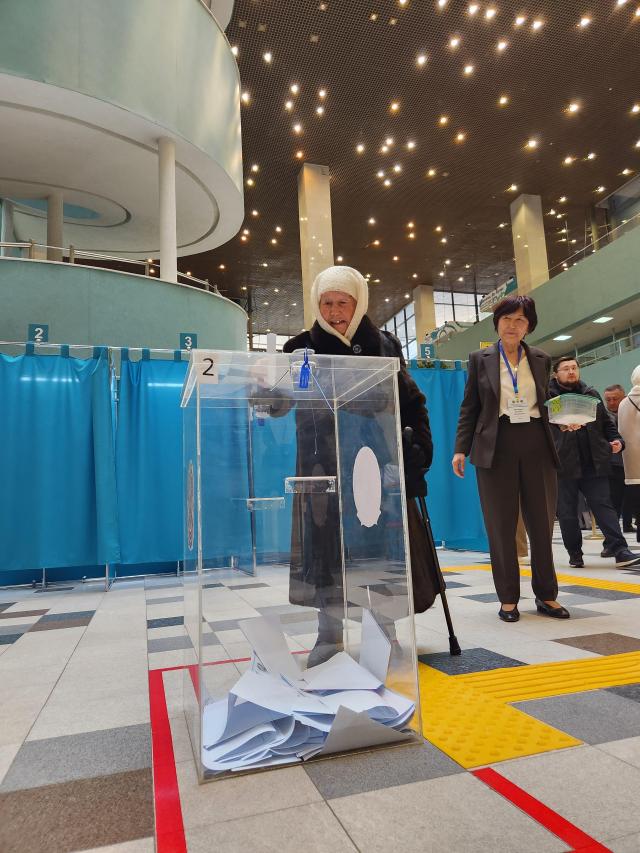
Inside the grand, glass-fronted Al-Farabi Palace of Schoolchildren, the atmosphere shifted instantly from the harsh exterior to a scene of quiet, focused civic purpose. Citizens filtered into Polling Station No. 50 to cast a ballot that represents the most significant tectonic shift in the nation’s governance in decades. The referendum is designed to transition the country from a "super-presidential" system toward a more balanced "Presidential-Parliamentary" model, introducing a unicameral parliament known as the Kurultai and restoring the office of the Vice Presidency.
Among the early arrivals was Roza, 61, whose bright, observant eyes offered a sharp contrast to the somber weather outside. She didn't see the freezing morning as a deterrent, but rather as a threshold. "Naturally, I believe that today, this new project is necessary for us," she said. "Because times are changing, people are changing, the era itself is changing. Therefore, it is necessary. I think it is only for the better, for the good".
Roza’s hopes were grounded in a sense of urgency. "I don't have much time, I'm 61 years old," she remarked, noting that she paid particular attention to the changes that affect her personally—namely medicine, education, and the new direct access to the Constitutional Court. Despite the ticking clock, she remained optimistic: "I think everything will be very good in the near future". She confirmed she was fully informed before casting her vote.
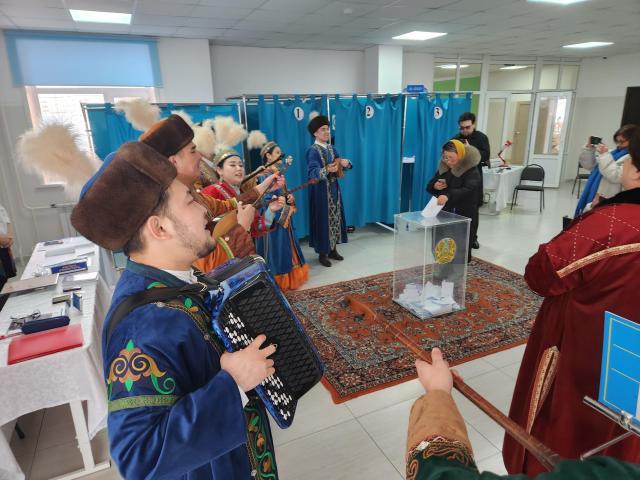
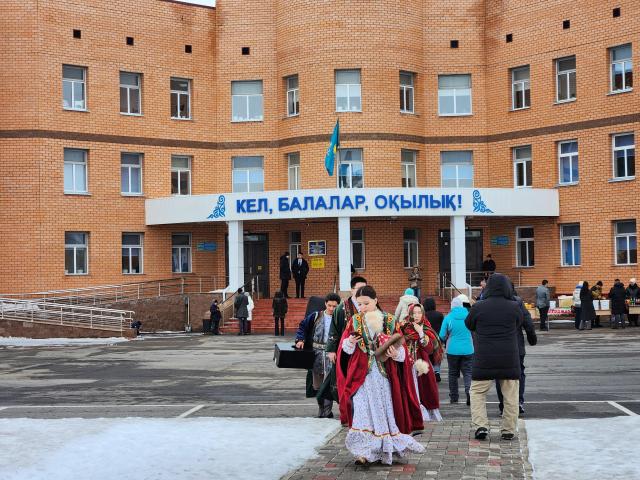
The mood took on a more rhythmic, festive energy in the residential suburb of Koshy. Inside Secondary School No. 3, the cold was a distant memory as the percussive strumming of traditional bands echoed through the hallways. The sound of the dombra turned what could have been a dry bureaucratic exercise into something closer to a cultural homecoming.
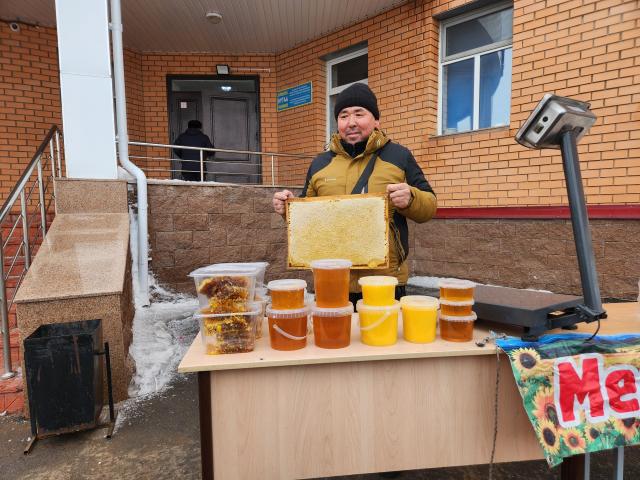
Near the entrance, residents had set up unassuming, improvised stalls to greet the morning crowds. Golden jars of honey and royal jelly sat alongside piles of local confectioneries, turning the polling station into a modest community hub where neighbors paused to chat before heading to the booths.
Kaisar Seifullin, the 39-year-old chairman of the precinct referendum commission at the school, watched the flow of families with an approving eye. "Most people are coming with a positive reaction, as you can see for yourself," Seifullin said. "Many Kazakh parents want to show and illustrate to their children how the polling station works".
One of those parents was Almas Jexenbekov, 38, who arrived navigating the icy schoolyard patches with his pre-school son. For Jexenbekov, who works in mass media, the referendum is a necessary "upgrade" to the country’s fundamental software. "As for me, the new Constitution is like the upgrade of the Supreme Law of Kazakhstan that will affect the other laws because it is the priority," he explained. He noted that his professional background meant he was well-informed, having translated the discussions surrounding the changes.

He was particularly struck by the inclusion of "digital rights" in the text, calling the legal evolution essential "immunity" for a nation in the age of digitalization. He praised the transformation of the parliament into a unicameral body, arguing that it "emphasizes public democracy" and aligns with models in developed nations. Like his fellow voters, he reported being "100 percent informed" through digital platforms and television.
Copyright ⓒ Aju Press All rights reserved.