The Smart Bricks will be difficult for rivals to copy, according to a senior Lego executive, who cited years of proprietary development and built-in security features as major barriers to imitation.
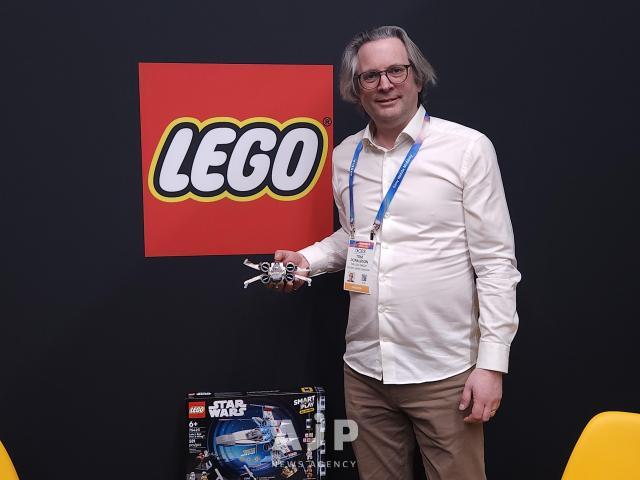
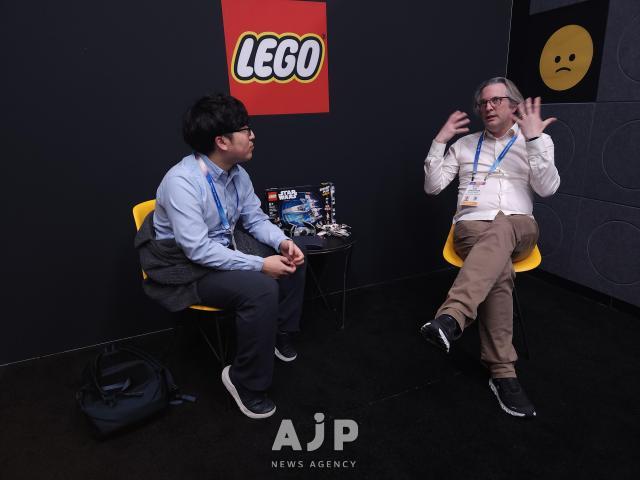
"I think the technology is going to be quite hard for people to recreate," said Tom Donaldson, senior vice president at the Lego Group, in an interview with AJP on Thursday at the Las Vegas Convention Center during CES 2026.
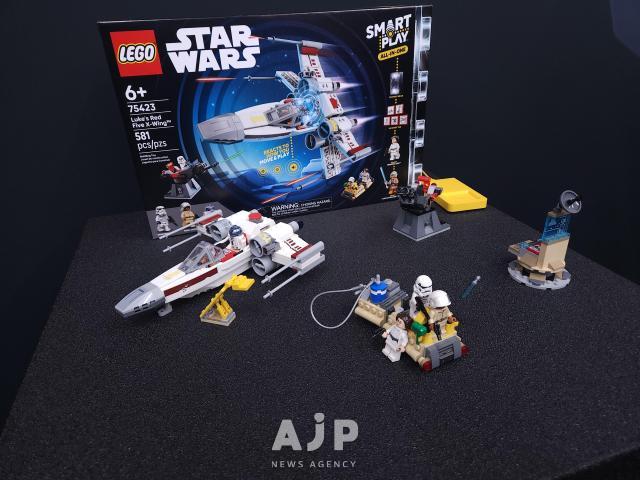
The Smart Brick system, unveiled during Lego's keynote presentation at this year's Consumer Electronics Show, embeds NFC sensors and Bluetooth connectivity into the iconic two-by-four brick, enabling sound, light and real-time interaction between Lego models.
Donaldson said that even if competitors manage to replicate some elements of the hardware, security measures would prevent unauthorized products from functioning within Lego's ecosystem.
"There's security in place so that people might find it hard to — even if they can recreate some of the aspects — make it work with our system," he said.
"We'd really prefer that other people's systems don't work with ours unless we've been very deliberate about it, just from a child-safety perspective," he said.
The Smart Brick concept dates back roughly eight years, with about six years of intensive development, according to Donaldson. The lengthy timeline reflected the absence of suitable technologies when the project began.
"We found that the technologies didn't really exist — or at least not in the format that we felt we needed — and that's why it turned into a challenging technology development," he said.
The system is designed to address three areas Lego identified as opportunities: social play, dynamic interactivity and user agency. Traditional Lego models, Donaldson noted, remain largely static compared with digital games that evolve over time.
"You do something in the morning, you go to school, you come back, something's changed," he said. "Whereas that maybe hasn't been the case with traditional Lego models."
Donaldson acknowledged that electronic components cannot match the multi-generational lifespan of traditional plastic bricks, which families often pass down over decades. Still, he said Lego engineered Smart Bricks to significantly outlast typical consumer electronics.
"We don't want you to just buy a brick and then have to buy another one the next year," he said. "We want a brick that works even if you bought it three or four years ago. If you get a new set, the old bricks should still work."
Durability was also a key design requirement, given the realities of children's play. Donaldson noted that the bricks had to withstand poking, dropping and impacts while protecting internal electronic components from damage and potential hazards.
Lego chose CES as its launch venue to emphasize that Smart Play represents a long-term platform rather than a one-off product line, he said.
Asked about future form factors — such as different-sized Smart Bricks or tag-based components — Donaldson declined to provide specifics but suggested the platform could expand over time.
"We see this as a platform that will last many, many years," he said. "And therefore it's likely that over time we'll discover additions that bring entirely new dimensions to the pieces."
The first Smart Play sets feature Star Wars themes, including an X-wing, TIE Fighter and classic Episode VI characters. Donaldson cited Lego's decades-long partnership with Lucasfilm as a key factor behind the launch choice.
"When you do something new like this, you need to have a tremendous partner with you," he said. "Lego Star Wars is a galaxy where people make their own stories. There are a lot of fans creating great narratives, and that type of play lends itself perfectly to what we're trying to do."

Copyright ⓒ Aju Press All rights reserved.