SEOUL, January 13 (AJP) -Special Counsel Cho Eun-suk on Wednesday sought the death penalty for former President Yoon Suk Yeol, accusing him of leading an insurrection through his short-lived imposition of martial law on Dec. 3, 2024.
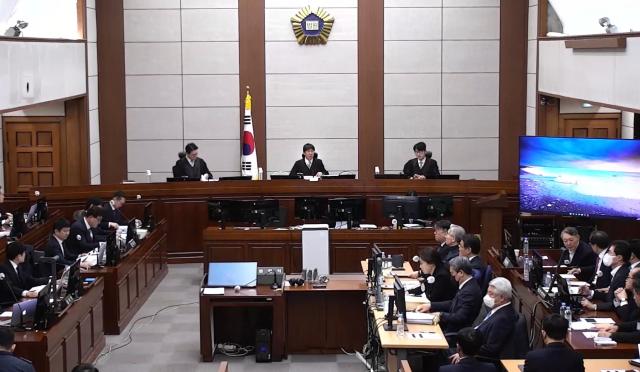
Cho’s team asked the Seoul Central District Court’s Criminal Division 25, presided over by Judge Ji Gui-yeon, to impose the maximum sentence during the final sentencing hearing, describing Yoon as the “ringleader” of an anti-constitutional attempt to seize control of the state.
The prosecution’s sentencing request had originally been expected on Jan. 9 but was postponed after the review of documentary evidence and final arguments by Yoon and other defendants ran past midnight. The court scheduled an additional hearing, which concluded on Wednesday.
Special counsel Park Eok-su said the martial law episode “betrayed the constitutional duty to safeguard citizens’ freedoms” and “essentially infringed upon national security and the survival of the people,” adding that its purpose, methods and execution bore “the character of anti-state activity.”
Park said it had become clear whom Yoon had labeled “anti-state forces” to justify the declaration, criticizing what he called an unprecedented “serious destruction of the Constitution.” He cited the storming of the National Assembly and the National Election Commission, as well as attempts to cut off electricity and water supplies to media outlets.
According to the prosecution, Yoon declared martial law to seize control of the judiciary and legislature and to remain in power for an extended period, mobilizing state resources meant to serve the national community. Park added that Yoon had shown no reflection on the harm caused to constitutional order and democracy, arguing that “the biggest victims were the people who protected democracy through sacrifice against dictatorship and authoritarianism.”
Yoon is accused of conspiring with former Defense Minister Kim Yong-hyun and others to declare unconstitutional and illegal martial law despite the absence of war, armed conflict or a comparable national emergency. Prosecutors allege he incited a riot aimed at undermining the constitutional order.
He is also accused of deploying martial law troops and police to block access to the National Assembly in an effort to prevent lawmakers from voting to lift the decree, and of attempting to arrest and detain key political figures.
Those allegedly targeted include National Assembly Speaker Woo Won-shik, President Lee Jae Myung, who was then leader of the Democratic Party, former People Power Party leader Han Dong-hoon, and senior officials at the National Election Commission.
The trial involves eight defendants regarded as ringleaders of the martial law attempt, including Yoon and Kim.
Yoon triggered a major political crisis when he announced the suspension of civilian rule in December 2024 and dispatched troops to parliament. The attempt collapsed within hours after lawmakers scaled fences and broke through a security cordon to convene and vote down the decree.
He was detained in January 2025, becoming the first sitting South Korean president to be taken into custody.
If convicted, Yoon would become the third South Korean president found guilty of insurrection, following former military leaders Chun Doo-hwan and Roh Tae-woo, who were convicted for their roles in a 1979 coup. In 1997, the Supreme Court upheld life imprisonment for Chun and a 17½-year sentence for Roh, though both were later pardoned.
Even if Yoon is sentenced to death, an execution is considered highly unlikely. South Korea has observed an unofficial moratorium on capital punishment since December 1997, following President Kim Dae-jung’s inauguration in 1998.
The court is expected to deliver its verdict in February, bringing to a close more than a year of political upheaval following Yoon’s failed martial law declaration.
Copyright ⓒ Aju Press All rights reserved.