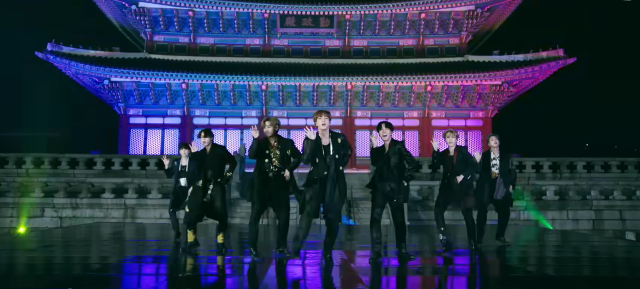
When BTS step onto the stage for their upcoming Arirang performance, they are expected to open the show not with pyrotechnics, but with a procession — along a path once reserved for kings.
The route is deliberate: from Geunjeongmun to Heungnyemun, onward to Gwanghwamun, and finally to the Woldae. Plans reportedly include a pre-recorded or partially live sequence of the group walking this restored axis — known historically as the “king’s road.”
This is not merely a comeback stage. It is a symbolic event.
For when BTS walk that path, it is not power that returns to the royal axis, but meaning. And meaning, in Korea, is never improvised. It is accumulated through record. Few records are as unflinching — or as revealing — as the Annals of the Joseon Dynasty.
In Joseon, the line connecting Geunjeongmun, Heungnyemun, Gwanghwamun and the Woldae was not a matter of convenience. The annals repeatedly marked movement along this axis as an event. The reason was simple: the moment the king left the inner halls and descended toward spaces where the gaze of the people could meet his own, governance shifted — from proclamation to encounter.
The Woldae makes this clear.
In the 15th year of King Taejong’s reign, when a solar eclipse struck in May 1415, the king did not remain inside. The annals record that he appeared on the Woldae of Injeongjeon, dressed in plain mourning robes, to perform the prescribed rites. Faced with a cosmic disturbance, the king chose visibility over retreat.
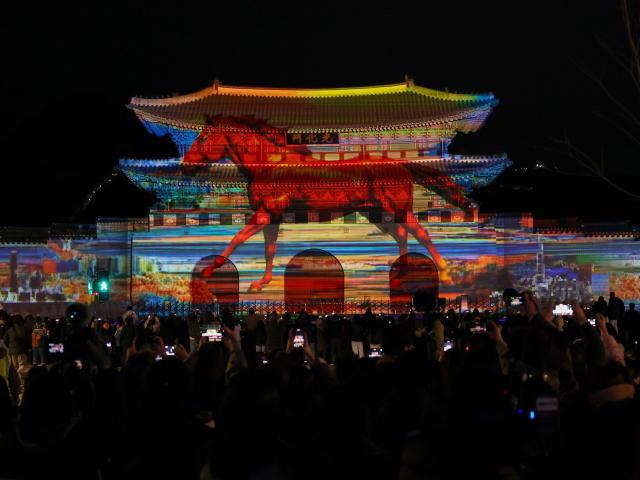
The Woldae was not a platform of elevation, but one of accountability.
Later records from King Yeongjo’s reign soften the image further. In 1772, after completing rituals at Gyeongbongak, Yeongjo moved directly to the Woldae to lecture on The Lesser Learning. Ceremony flowed into scholarship, and scholarship faced outward. During a prolonged drought that same year, Yeongjo again returned to the eastern Woldae after rites, holding morning court and meeting his ministers there. In moments of strain, the Woldae functioned as connective tissue — between heaven and earth, ritual and governance, authority and people.
Yeongjo even summoned soldiers to the Woldae to distribute food and drink, noting that he was following “the old custom of receiving people on the Woldae.” It was never a balcony for celebration. It was a place for eye contact.
The king’s road, then, was not a path upward. It was a route of self-lowering.
That route was severed in 1923, during tramline construction. With the Woldae gone, the memory of encounter faded. When the platform was restored in 2023 — a century later — it was not merely an architectural recovery, but a return of public meaning.
Now, onto that restored path step seven men.
This will be BTS’s first full-group performance since completing military service. The title is Arirang. The significance lies not in scale or spectacle, but in the grammar of the place. The Woldae has always been where a decision to be open becomes visible in the body. For a king, stepping onto it meant refusing concealment.
Today, the “people” gathered there are no longer bounded by borders. Through platforms and live streams, millions around the world will stand, virtually, at the end of that path. Where kings once faced heaven and subjects together, K-heritage now meets the world’s collective gaze.
The language of rule has disappeared.
But the structure of encounter remains.
This is why the performance is not an event.
It is a rite — one in which tradition meets the present, and the present opens outward to the world, in a space long validated by record.
The king’s road opens again.
This time, it is not power that walks it —
but song.
And at the end of that song, K-heritage meets the world’s heart — quietly, unmistakably, and in full view.
Copyright ⓒ Aju Press All rights reserved.