

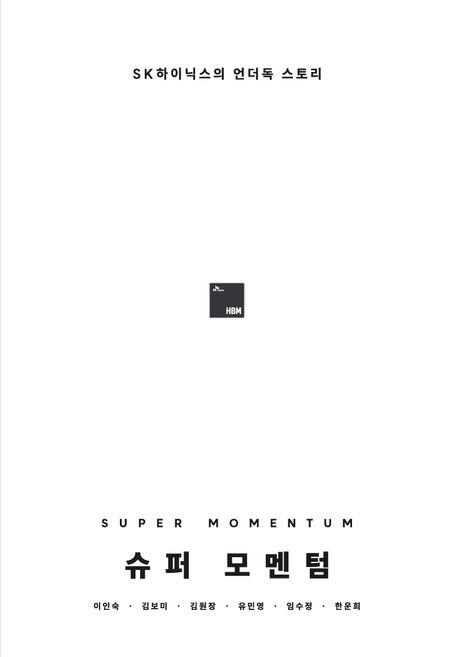
Super Momentum= Lee In-sook and others, Platform 9 and 3/4.
A new book recounts SK hynix’s success story as the company that first developed high-bandwidth memory, or HBM. It traces the roughly 20-year push that took a long-time No. 2 chipmaker to a global leader by promoting products aimed at easing data bottlenecks in artificial intelligence systems. Drawing on testimony from key executives — including SK Group Chairman Chey Tae-won, SK hynix CEO Kwak Noh-jung and former vice chairman Park Sung-wook — as well as current and former engineers, it describes why the company kept investing in technology despite market downturns and worsening profitability.
The final chapter includes an audio interview with Chey, titled “Chey Tae-won Note,” on SK Group’s future. The book also recounts episodes from his management journey, including when he first met Nvidia CEO Jensen Huang in 2021 and became convinced of an AI vision, an anecdote about receiving advice on the semiconductor industry from TSMC founder Morris Chang, the “oath” between Hynix and AMD, and a promise between Chey and his father.
"I’ve always had a habit of looking at the entire ecosystem. That way, I can see how the problem I need to solve is connected to other problems. That kind of thinking definitely helps. Studying physics as an undergraduate gave me a framework for that approach. People often make the mistake of getting too absorbed in a single problem. Because there are many possible solutions and approaches, you need a view of the overall structure to decide at what level to solve it." (Page 237, from “Chey Tae-won Note: We Were Standing at a Crossroads”)
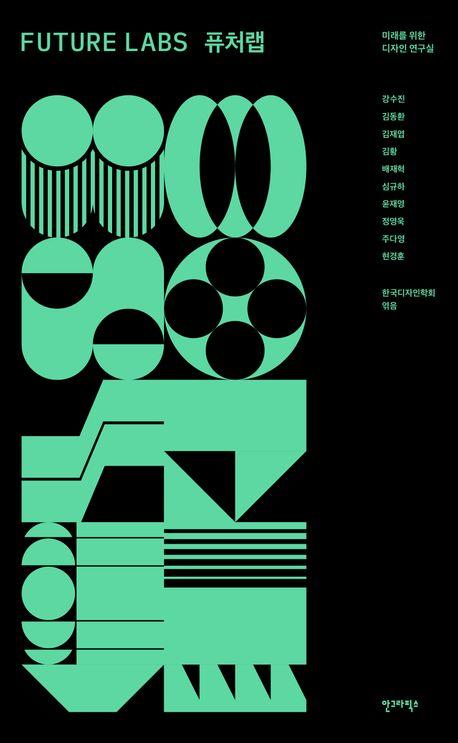
FutureLab= Kang Su-jin and others, Ahn Graphics.
Ten designers who contributed to the book argue that designers should accept AI as a team member and expand the possibilities of future design through collaboration. Based on experience across companies and public institutions — including Samsung, SK, LG, Naver and Kakao — the authors describe practical ways of working with AI. They liken designers who collaborate with AI to conductors: Rather than consuming AI-generated outputs at random, designers, like orchestra leaders, decide which results to choose.
“AI creates an idealized ‘me,’ and the gap between that and the real ‘me’ keeps widening. I get confused about whether everything happening to me is truly because of me, or whether I’m being controlled by AI. And if we delegate more and more to AI for convenience, we risk ultimately becoming beings shaped and managed by external technology.” (Page 108)

The sociolinguist author reflects on the importance of listening after experiencing hearing impairment following a sudden accident. To get what you want, the author advises, stop talking and start by listening in a way that moves the other person. The book analyzes listening in a scientific way, offering standards for distinguishing truth from lies in what someone says and tips for “listening” to a person’s face to grasp what is going on.
“In a survey of 1,112 American women conducted by The Associated Press and a pet company, one-third of respondents said their spouse is worse at listening than their pet. (Omitted) Two-thirds of respondents received help from a human listener, and the remaining one-third received help from a pet listener. If we assume half the world’s population is male, we could also conclude that about 17% of couples think a pet is a better listener than a spouse.” (Page 13)
* This article has been translated by AI.
Copyright ⓒ Aju Press All rights reserved.