Review: Kim Tae Yong’s ‘Number One’ Finds Quiet Comfort in Family Meals
by Choi SongheePosted : February 11, 2026, 00:03Updated : February 11, 2026, 00:03
Share
facebook
twitter
URL
Text size
“It’s romantic. This lighting, the temperature, the humidity …” a guest on a variety show once said. The point was that place, weather and even how you feel combine to create a mood. Movies work the same way: your day and your experiences can become the yardstick. “Choi’s Review” introduces films through the writer’s perspective, in a more relaxed, everyday tone.
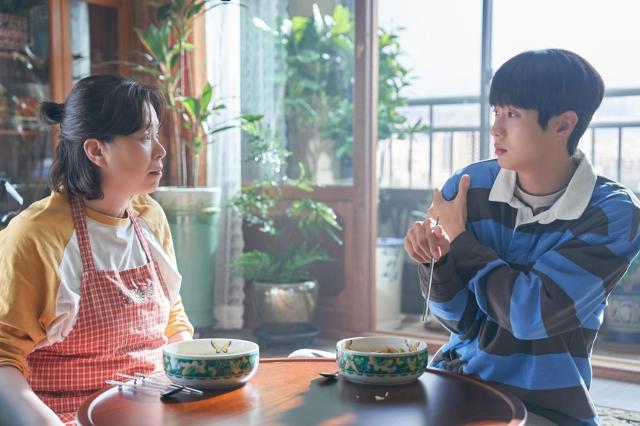
A still from “Number One” [Photo=By4M Studio]
Mother, family and home-cooked food can be a sure-fire formula in South Korean cinema — and also a reason some viewers brace for another tear-jerker, especially around the Lunar New Year holiday. “Number One” seems to invite that assumption, but it largely avoids squeezing emotions for effect. Instead, it turns into a quiet mirror held up to everyday life.
The premise is simple and cruel: Whenever Ha-min (Choi Woo-shik) eats his mother’s cooking, he starts seeing an unexplained number. As it drops, he learns, death is getting closer. The meals prepared by his mother, Eun-sil (Jang Hye Jin), become not comfort but a countdown. Ha-min pushes away the table with excuses to protect her time, while Eun-sil responds by cooking with even more care. The film focuses on the sad irony of two people who love each other but feel forced to create distance, capturing subtle shifts in the air between them.
The movie is based on Uwano Sora’s Japanese novel, “You Have 328 Chances Left to Eat Your Mother’s Home-Cooked Meals,” reworked with a distinctly Korean sense of family conversation at the dinner table.
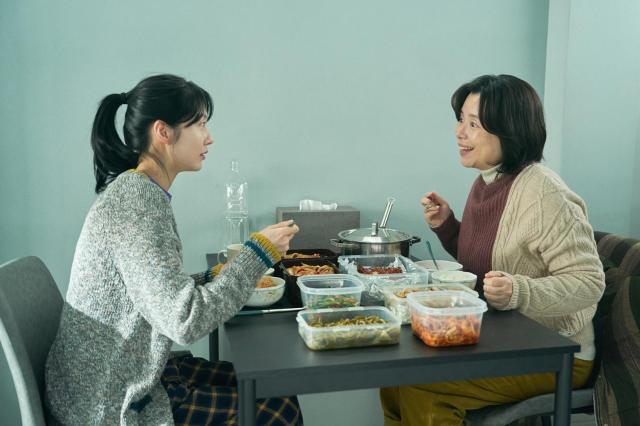
A still from “Number One” [Photo=By4M Studio]
Director Kim Tae Yong, known for probing characters’ inner lives in films such as “Giant” and “A Girl at My Door,” softens that sharp gaze here into something closer to understanding.
One of the film’s key choices is how it sidesteps melodrama. At moments that could tip into heavy sadness, Kim often pulls back — slipping in humor or letting grief dissolve into the noise of ordinary life rather than putting it on display. The dialogue stays grounded in how people actually speak, and that plain tone carries much of the film’s sincerity.
Locations also do narrative work. The contrast between Busan and Seoul reflects the story’s split emotions: Busan, where Ha-min spends time with Eun-sil, is portrayed as warm and familiar; Seoul, where he imagines a new start with Ryeo-eun (Gong Seung-yeon), is framed as a place of hard-edged working life. Kim, who is from Busan, uses local dishes such as beef radish soup and pickled bean leaves not as props but as emotional connectors, and fills scenes with eateries tied to memories shared by the director and cast.
A still from “Number One” [Photo=By4M Studio]
Performances are central. Jang and Choi, who played mother and son in “Parasite,” reunite with a deeper ensemble. Choi plays Ha-min with a restrained, matter-of-fact emotional register as he carries his secret through daily life. Jang gives Eun-sil a realistic face — hurt by her son’s distance but continuing on without spectacle. Gong’s Ryeo-eun, portrayed as someone capable of steady love, becomes a turning point that broadens the story.
“Number One” aims less for a dramatic feast than for the feeling of a simple home meal: understated, but warming. It opens in theaters on Feb. 11. Running time is 104 minutes, and it is rated for ages 12 and older.