Global leaders and technology executives gathering in New Delhi this week for India’s artificial intelligence summit are not simply attending another diplomatic forum. They are meeting at a moment when the direction of technological change feels unusually consequential.
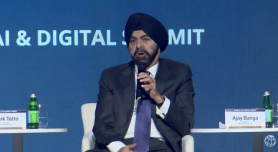
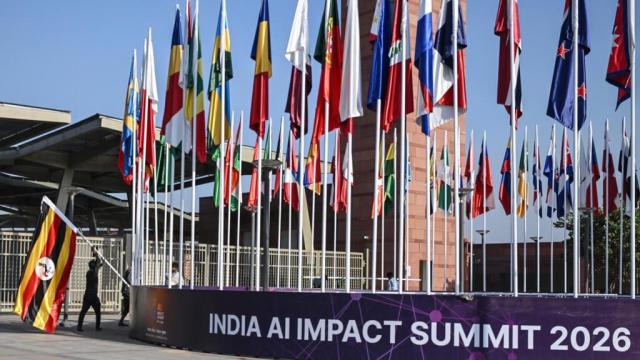
The summit, attended by more than 20 heads of state including Emmanuel Macron and Luiz Inácio Lula da Silva, and hosted by Indian Prime Minister Narendra Modi, reflects how deeply artificial intelligence has entered the domains of economic policy, industrial strategy and national security.
Earlier AI gatherings focused primarily on safety and ethics. Those questions remain important. But the conversation has broadened. Manufacturing capacity, supply chains, talent pipelines and regulatory design are now central to the discussion. AI is no longer treated solely as software innovation; increasingly, it is viewed as infrastructure.
India’s Strategic Positioning
For India, hosting the summit carries symbolic and practical weight.
As the world’s most populous country and one of its fastest-growing digital markets, India has sought to position itself as a bridge between advanced economies and the Global South. Its experience building large-scale digital public infrastructure — national identity systems, payment platforms and broadband connectivity — has demonstrated that technology can be deployed at scale and relatively low cost.
Now New Delhi is looking to extend that model to AI.
By convening executives from Google, Microsoft and OpenAI, India signals its intention to participate not just as a consumer market, but as a contributor to the evolving AI ecosystem.
The aim is not to replace existing centers of innovation, but to ensure that the benefits and standards of AI development are shaped more broadly.
The next phase of artificial intelligence is likely to extend well beyond chatbots and data analytics.
Increasingly, attention is turning to what some describe as “physical AI” — systems embedded in robots, manufacturing equipment, logistics networks, vehicles and medical devices. In this realm, intelligence must interact with materials, sensors and real-world constraints.
Software remains crucial. But industrial context matters just as much.
Here, countries with deep manufacturing experience may find themselves better positioned than is often assumed.
AI-driven factories require not only code, but decades of accumulated process knowledge. Autonomous systems must be trained in real production environments. Industrial robots must integrate seamlessly with supply chains and safety standards.
Korea’s industrial development since the 1960s — spanning steel, shipbuilding, automotive production, semiconductors and batteries — has produced more than economic growth. It has generated institutional memory and engineering expertise that are difficult to replicate quickly.
These assets may become increasingly valuable as AI moves from the cloud into the factory floor.
Korea’s digital infrastructure offers another advantage.
Following the 1997 financial crisis, the country invested heavily in nationwide broadband and mobile networks. Today, high-speed connectivity is nearly universal. This provides a practical foundation for deploying AI systems across logistics, mobility and manufacturing.
Often summarized as “ppalli-ppalli” culture, Korea’s emphasis on rapid implementation reflects experience navigating industrial transitions under time pressure. In technology cycles that evolve quickly, the ability to align policy, capital and research in short order can be a meaningful strength.
None of these factors guarantee leadership. But they create optionality.
The broader AI race remains dominated by the United States and China.
American firms control much of the global platform infrastructure, advanced chips and cloud computing capacity. China combines state-backed investment, large-scale data and industrial coordination.
For many Asian countries, the challenge is not overt competition with these powers, but avoiding technological dependence.
History suggests that industrial revolutions often create hierarchies. Countries that set standards and control core technologies shape the ecosystem. Others adapt within it.
The current AI transition presents both risks and opportunities.
Cooperation as Leverage
In this context, regional cooperation could be more consequential than headline rhetoric.
India brings software talent and scale. Korea contributes manufacturing expertise and hardware integration capabilities. Together, they could explore complementary strengths in robotics, smart factories and mobility systems.
Such cooperation need not be framed as a bloc or counterweight. It could instead focus on joint research, shared testing environments and alignment on technical standards.
Fragmentation would likely weaken Asia’s position in the long term. Coordination, even if incremental, could strengthen it.
Artificial intelligence also raises legitimate concerns — about employment displacement, security vulnerabilities and ethical boundaries. International efforts, including at the United Nations, are attempting to build consensus on risk management. Researchers such as Yoshua Bengio have warned of systemic risks in advanced systems.
The regulatory challenge is to avoid extremes. Overregulation may discourage experimentation. Underregulation may erode trust.
Stable rules, transparency and accountability frameworks can help markets develop sustainably. The question is less whether to regulate than how to do so in ways that preserve innovation.
India’s AI summit may not produce binding agreements. Most such gatherings conclude with non-binding declarations.
Yet the symbolism is meaningful.
The geographic rotation of AI summits — from the United Kingdom to Korea, France and now India — reflects a gradual diffusion of influence in global technology governance.
Asia’s role in this process is still evolving. For Korea, the opportunity lies not in dramatic gestures but in steady investment: in research, in industrial integration and in regional partnerships. Manufacturing depth, digital infrastructure and operational agility provide foundations. Whether they translate into durable influence will depend on consistency rather than rhetoric.
The summit in New Delhi is unlikely to define the future of AI on its own. But it does highlight a broader shift: artificial intelligence is becoming a core element of economic strategy. Countries that approach it as such — pragmatically, cooperatively and with institutional patience — may be better positioned in the years ahead.
The question is not whether Asia will participate. It is how deliberately it chooses to shape its participation.
*The author is a columnist for AJP.
Copyright ⓒ Aju Press All rights reserved.