

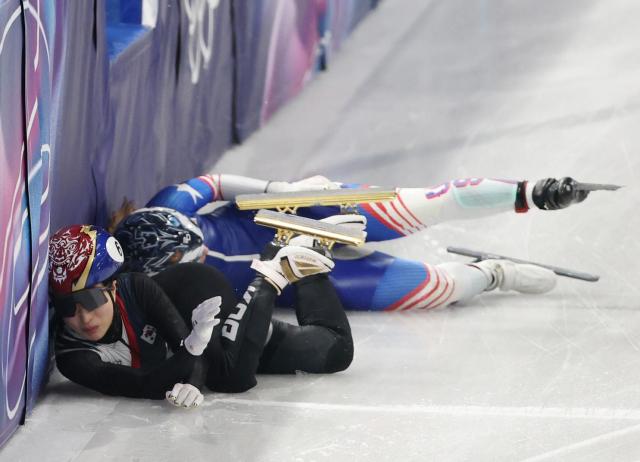
South Korea’s bid for a medal in the short track mixed 5,000-meter relay ended in disappointment, and online criticism has focused on the International Skating Union’s protest rules.
South Korea finished third in its semifinal on Monday (Korea time) at the Milan Ice Skating Arena in Italy, sending the team to the B final and a sixth-place overall finish.
The team said it was undone by bad luck. Midrace, American Corinne Stoddard, who was leading, slipped, and Kim Gil Ri, who was chasing, collided with her and fell. In some cases, skaters can be advanced when they are unable to compete normally due to unavoidable contact.
But South Korea did not receive an advance because it was running third at the moment of the collision. A team official said ISU rules require a team to be in first or second place at the time of the incident to qualify for an advance. “We were third at the time, so the rule was clear, and we had no choice but to accept the ISU decision,” the official said.
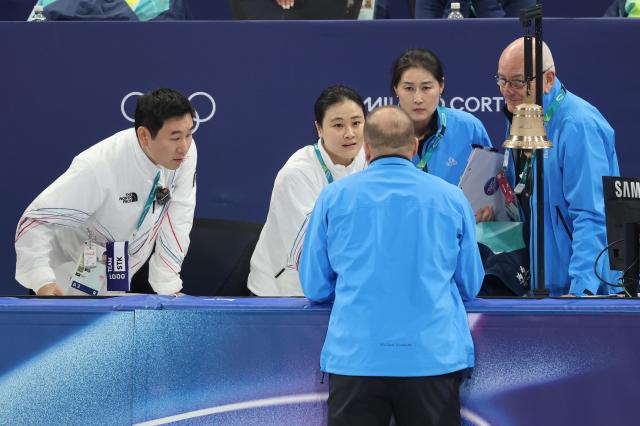
Coach Kim Min Jung drew attention by running to officials with $100 to lodge a protest. Under ISU rules, a written protest generally must be submitted with 100 Swiss francs or an equivalent amount in foreign currency to deter frivolous complaints. The fee is returned if the protest is upheld; if not, the ISU keeps it. In this case, South Korea did not even get to submit the $100 because officials did not accept the advance request.
Kim said she believed Kim Gil Ri was “level with” the second-place team when she fell and appealed because she thought there were grounds for an advance. “The officials judged we were in third, and if we protested further we could have been disciplined, so we had to accept it,” she added.
Some online commenters also questioned South Korea’s late-surging race strategy, saying it can leave teams without recourse when incidents occur before they move into the top two. Others criticized the pay-to-protest system, posting reactions such as, “Isn’t the ISU openly taking money?” and “Do you have to pay even when it feels unfair?”
* This article has been translated by AI.
Copyright ⓒ Aju Press All rights reserved.