

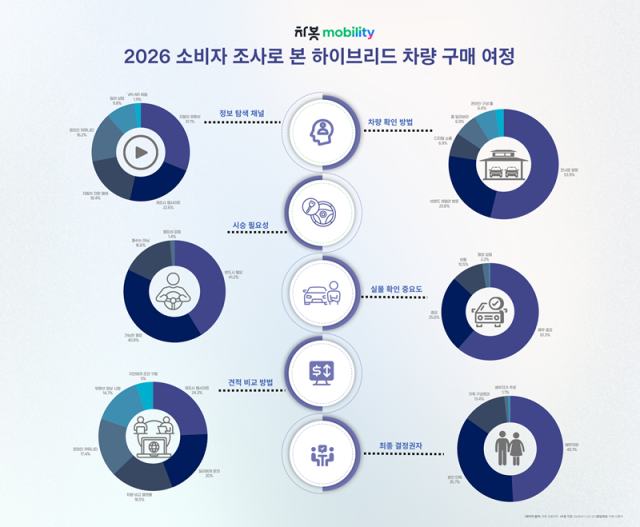
Chabot Mobility said on the 23rd that it analyzed each stage of the car-buying journey for 450 people planning to purchase a new vehicle this year. More than half of respondents, 58.1%, said they got new-car information from YouTube auto reviews. Manufacturer websites followed at 42.2%, then automotive news outlets at 34.3% and online communities and cafes at 30.3%.
Traditional channels lagged, with dealer consultations at 18.4% and visits to offline showrooms at 14%. The results suggest shoppers are narrowing candidates through digital channels first, then using consultations to make a final choice.
By gender, men reported higher use of YouTube (59.9%) and online communities (32.6%). Women more often cited recommendations from acquaintances (30%), social media (22%) and dealer consultations (22%). By age, YouTube use was most active among people in their 30s to 50s, at about 57% to 62%.
For comparing vehicles and checking quotes, the most common method was visiting manufacturer websites directly (48.7%). But asking dealers directly (40.1%) and using integrated comparison platforms (37.2%) were close behind. Next were online community information (35.0%), YouTube comparison videos (29.6%) and automotive media (23.1%).
On the importance of seeing a vehicle in person, 61.4% said it is “absolutely necessary,” and 25.6% said they would “check if possible,” meaning 87% viewed an in-person look as a core step. Only 2.2% said online information is enough, and 0.4% said it is not important at all.
The share calling it “absolutely necessary” rose with age: 68.6% among people in their 50s and 71.0% among those 60 and older.
Offline channels dominated how shoppers check vehicles. Visits to traditional dealership showrooms ranked first at 79.4%, while visits to premium showrooms and brand experience centers were also high at 34.7%.
On test drives, 41.2% said they are “absolutely necessary,” and 40.8% said they would “like to if possible,” for a combined 82% treating a test drive as essential or near-essential. Among respondents with monthly income of 10 million won or more, the “absolutely necessary” share was 48.7%, above the overall average.
For final purchase decisions, 49.1% said they decide jointly with a spouse, the largest share. Another 35.7% said they decide alone, and 13.4% said they decide jointly with other family members.
A Chabot Mobility official said the survey clearly shows a hybrid buying journey in which consumers gather information through digital channels and then make a final decision after offline verification such as test drives.
* This article has been translated by AI.
Copyright ⓒ Aju Press All rights reserved.