

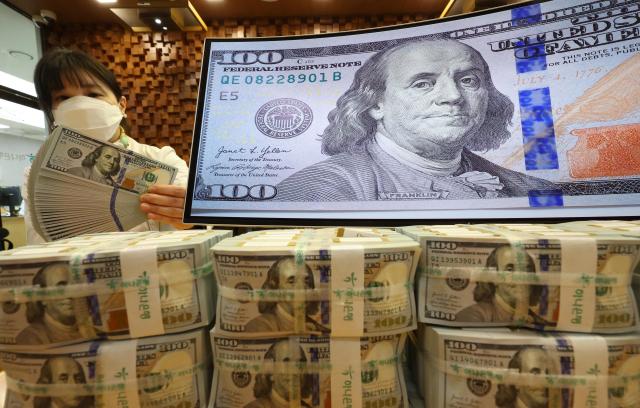
SEOUL, Mar 05 (AJP) - South Korea’s foreign exchange reserves increased for the first time in three months in February, helped by a $3 billion overseas debt issuance aimed at bolstering ammunition to stabilize the Korean won against major currencies. However, questions remain over how long the increase can be sustained, with the local currency hovering near crisis-era levels in the war aftermath.
Foreign reserves rose $1.72 billion from the previous month to $427.67 billion as of end-February — the first increase since November — according to data released Thursday by the Bank of Korea (BOK).
The BOK attributed the monthly rise to the successful issuance of foreign exchange stabilization bonds and subsequent investment gains from those funds. Earlier in the month, the central bank tapped global markets with a $3 billion bond issuance to strengthen its intervention capacity.
The government issued the U.S. dollar-denominated bonds on Feb. 5, aiming to calm the exchange rate and respond to shifting market dynamics.
FX reserves had been declining as authorities intervened to buttress the won, which weakened sharply against major currencies amid rapid capital outflows into U.S. securities.
Korean financial authorities deployed a total of $4.7 billion — including $2.6 billion in December and $2.1 billion in January — primarily through a currency swap arrangement between the BOK and the National Pension Service.
The currency’s average exchange rate in December consequently appreciated 2 percent to 1,434.9 won per dollar from November’s 1,464.8. It gained a further 0.6 percent in January to 1,427, aided by a broader softening of the U.S. dollar.
Those gains were largely erased after the launch of U.S.-Israeli attacks on Iran last Friday and the widening conflict across the Middle East following Iran’s retaliatory strikes on neighboring countries.
The dollar briefly surged to around 1,480 won as the KOSPI lost more than 20 percent in two sessions after the war broke out. It later eased to 1,463.50 won as of 8:00 a.m. Thursday amid a partial recovery in oil prices.
Despite the volatility, South Korea’s standing in global FX reserve rankings remains largely intact.
The country slipped to 10th place globally, losing its ninth-place position to Hong Kong. The shift was primarily driven by the Hong Kong Monetary Authority (HKMA), whose reserves rose $7.7 billion to $435.6 billion in January after realizing substantial gains from asset management operations.

Copyright ⓒ Aju Press All rights reserved.
