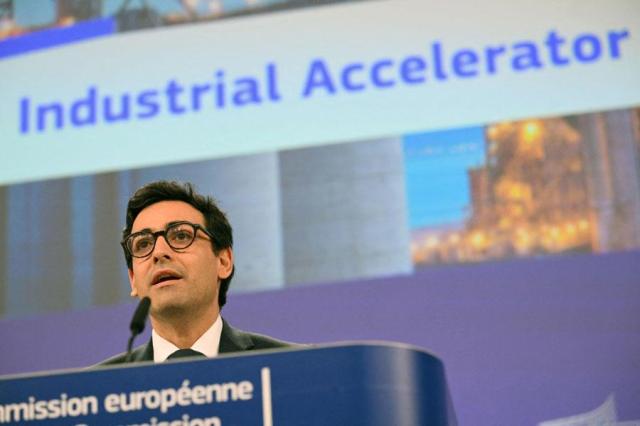
In a press release out on Wednesday, the European Commission said it has "adopted a legislative proposal to increase demand for low-carbon, European-made technologies and products," adding that IAA will "boost manufacturing, grow businesses, and create jobs in the EU, while supporting industry's adoption of cleaner, future-ready technologies."
The commission also said the act "sets a goal to increase manufacturing's share of EU GDP to 20 percent by 2035."
Once fully implemented, the IAA would require South Korean automakers to produce at least 70 percent of their vehicles' parts in the EU to be eligible for subsidies offered for eco-friendly vehicles.
The country's largest automaker Hyundai Motor Group, which manufactures more than 80 percent of its European EV exports in South Korea, now needs to adjust to comply with the new rules under the IAA.
The commission indicated that these requirements would cover "selected strategic sectors" such as steel, cement, aluminum, cars, and net-zero technologies, with the possibility of being expanded to "other energy-intensive sectors such as chemicals."
The IAA also sets rules on foreign direct investment. If a country controlling more than 40 percent of global production capacity invests over 100 million euros in Europe, it must ensure at least half of its workforce are EU workers, limit foreign ownership to below 50 percent, and meet other obligations such as technology transfers.
"Most automakers including Hyundai and its affiliate Kia export the majority of the EVs they sell in Europe rather than assembling them locally," an industry official said. "Unlike South Korea, which provides subsidies regardless of where a vehicle is made, Europe's proposed rules would effectively disadvantage imported vehicles."
Hyundai and Kia sold 183,912 electric vehicles in Europe last year, but locally produced models stood at about 31,722 units, accounting for just a 17.2 percent of the total. Hyundai currently operates two manufacturing facilities in Europe — in Nošovice, the Czech Republic and Izmit, Türkiye — while Kia has one in Žilina, Slovakia.
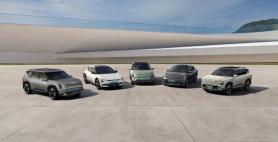
But their production capacity remains heavily concentrated on internal combustion models, while key EVs such as the Ioniq 5 and 6 and the EV5, EV6 and EV9 are all produced in South Korea and exported to Europe.
The two automakers plan to gradually expand the production of EV models in Europe.
Hyundai plans to begin mass production of the Ioniq 3 in the Czech Republic in August and convert its plant in Türkiye to EV production, targeting an annual capacity of 200,000 units.
Kia already began mass production of the EV4 in Slovakia in August last year, with plans to rapidly expand its EV production by 2027.
"We will speed up the transition of our plants for EV production ahead of the IAA's implementation," said a Hyundai staffer. "At the same time, we aim to maintain our market share by offering a broader range of EVs tailored to European motorists."
However, a long legislative road still lies ahead for the implementation of the IAA, as it must be negotiated and approved by both the European Parliament and the Council of the European Union before adoption.
Copyright ⓒ Aju Press All rights reserved.