

SEOUL, Mar 06 (AJP) - The war in the Middle East is reverberating far beyond the battlefield. For South Korea — one of the world’s most energy-dependent industrial economies — the shock is moving rapidly through the core channels of the macroeconomy: the currency, bond yields, financial markets and ultimately consumer prices.
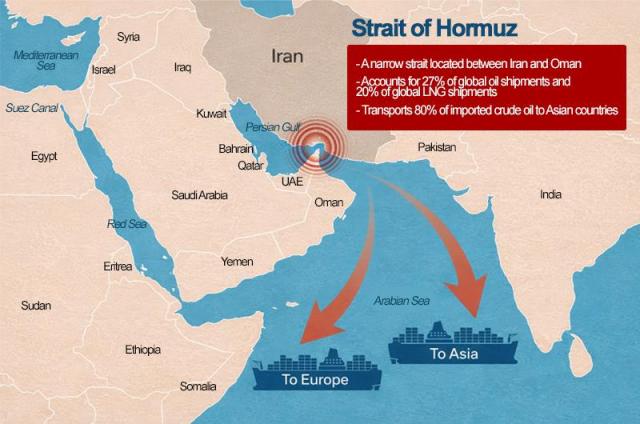
The immediate trigger is the Strait of Hormuz, the narrow maritime corridor off Iran’s coast through which a large share of the world’s seaborne oil passes. Even without a formal closure, the risk of disruption has been enough to push energy prices, freight costs and financial volatility sharply higher.
For Seoul, the result has been a swift repricing of risk across markets.
The Korean won has been the first pressure point.
As of 2 p.m. Friday, the currency was trading around 1,471 per dollar, nearly 3 percent weaker than the Feb. 25 pre-war level of 1,426.69.
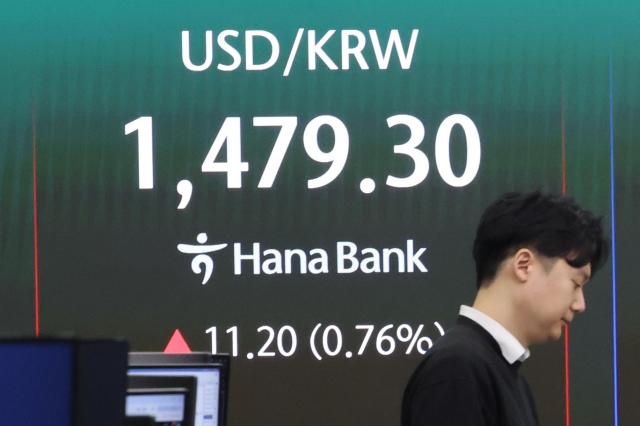
During Wednesday’s overnight trading, the won briefly slipped past the 1,500 mark, its sharpest intraday drop since the Asian financial crisis. Verbal intervention from the Bank of Korea (BOK) helped stabilize the currency near 1,462, though it weakened again toward 1,480 the following day.
Between the New York close on Feb. 26 and March 3, the won fell 3.15 percent, the steepest decline among major currencies. Over the same period, the New Taiwan dollar dropped 1.39 percent, the Japanese yen 1.01 percent and the euro 1.54 percent.
Bond markets reacted just as sharply.
On March 3, the yield on Korea’s three-year government bond rose 13.9 basis points to 3.18 percent, while the 10-year yield climbed 14.8 basis points to 3.594 percent — a steeper increase than the rise in U.S. Treasury yields that day.
The pressure on the currency reflects Korea’s structural exposure to energy shocks and global capital flows.
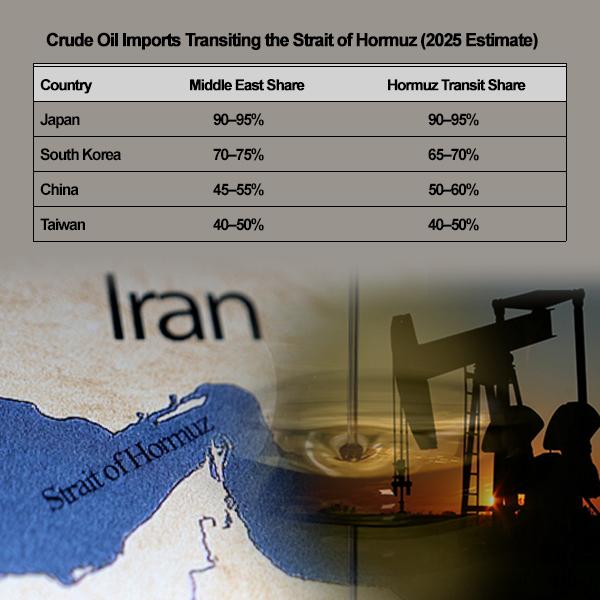
South Korea imports roughly 70 percent of its crude oil from five Middle Eastern suppliers — Saudi Arabia, the UAE, Kuwait, Iraq and Qatar.
More critically, around 95 percent of those shipments must pass through the Strait of Hormuz, one of the world’s most important energy chokepoints.
Shipping data suggests traffic through the waterway has slowed dramatically since hostilities began. On Monday only two vessels reportedly transited the strait, far below the usual daily average of 50 to 80 tankers.
Freight costs have surged as well.
The Baltic Dirty Tanker Index, a benchmark for crude transport rates, jumped 54 percent in a week, rising from 1,991 on Feb. 27 to 3,083 on March 5.
In global currency markets the won is often treated as a risk-sensitive proxy for trade and energy exposure, meaning geopolitical shocks that push oil prices higher tend to trigger outsized moves in Korea’s exchange rate.
The currency shock has been amplified by extreme volatility in equity markets.
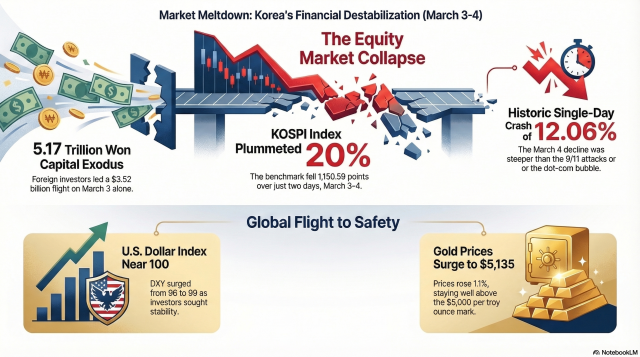
Over the two sessions from March 3 to March 4, the KOSPI plunged nearly 20 percent, including a 12.06 percent single-day crash — a drop steeper than the declines following the September 11 attacks in 2001 or the dot-com crash in 2000.
Foreign investors drove much of the selling.
More than 5.17 trillion won ($3.5 billion) in foreign capital exited Korean equities on March 3 alone, accelerating the pressure on the currency.
The selling was concentrated in large-cap exporters — particularly semiconductor and automobile stocks that had led the market rally over the past year.
Analysts say the move reflects rapid portfolio rebalancing rather than a deterioration in corporate fundamentals.
Oil shock threatens inflation and growth
The larger concern now lies in the real economy.
Energy costs feed directly into inflation, and the recent surge in oil prices could quickly reverse Korea’s disinflation trend.
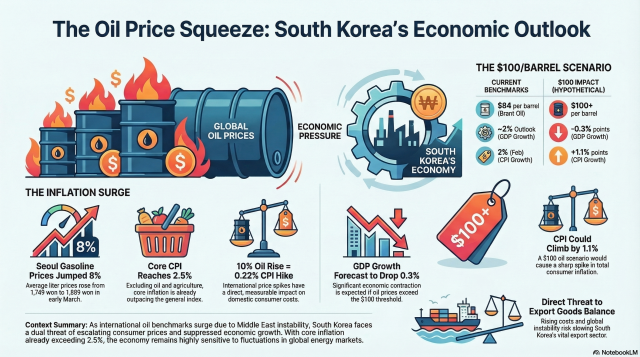
South Korea’s consumer price index rose 2 percent in February, while core inflation excluding food and energy stood at 2.5 percent.
At that time, oil prices were relatively stable. That situation has changed quickly.
Dubai crude futures have climbed to around $81 per barrel, Brent crude trades near $84, and U.S. WTI remains close to $79, with markets increasingly focused on the possibility of prices exceeding $100 if Hormuz disruptions intensify.
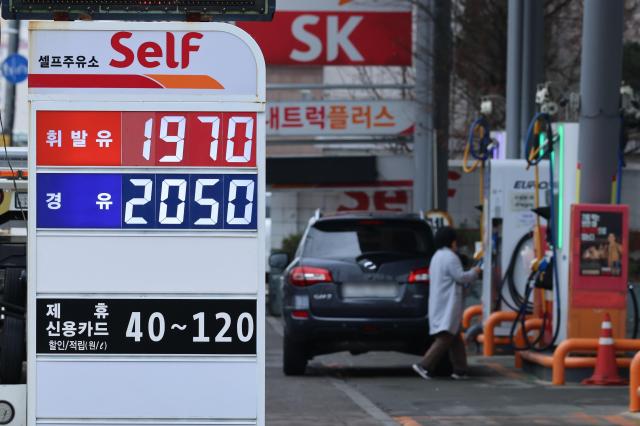
Retail fuel prices are already rising. In Seoul, the average gasoline price increased about 8 percent in a week, from 1,749 won per liter on Feb. 28 to roughly 1,889 won.
According to estimates from the Hyundai Research Institute, oil prices above $100 per barrel could reduce South Korea’s annual GDP growth by 0.3 percentage points while raising consumer inflation by around 1.1 percentage points.
“A 10 percent rise in international oil prices is estimated to lift South Korea’s CPI growth by about 0.22 percentage points,” said Kwon Hee-jin, a researcher at KB Securities.

The Bank of Korea has warned that prolonged conflict could amplify those pressures.
“If the Middle East conflict is prolonged, international oil and energy prices are likely to rise,” said Yoo Seong-wook, head of the financial statistics department at the central bank.
He added that the shock could weaken global economic conditions and indirectly affect Korea’s trade balance by slowing exports, underscoring the close link between oil prices and growth.
For now, the central macro variable is the duration of the conflict.
Analysts broadly believe a prolonged war is unlikely, as few global powers have an appetite for sustained escalation.
“The crux of the matter is that no one wants a protracted war,” said Patrick Han, head of global business at SK Securities.
Still, the conflict has already reshaped financial expectations.
Han noted that market hopes for an early U.S. interest-rate cut have temporarily evaporated, as rising energy prices risk reigniting inflation pressures.
China’s role could also become decisive.
“If the Strait of Hormuz remains closed for an extended period, pressure from China — one of Iran’s key economic partners — will intensify,” said Lee Seung-hoon, a researcher at Meritz Securities.
Roughly 40 percent of China’s crude imports pass through Hormuz, while Iranian oil accounts for about 13 percent of its total supply.
Some analysts also point to the practical limits of military escalation.
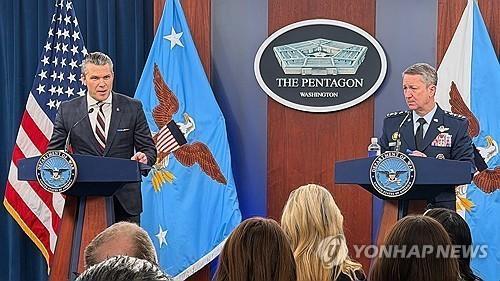
The Bank of Korea’s London office has estimated that high-intensity combat could last one to two weeks, shorter than earlier projections, due to constraints on ammunition reserves on both sides. U.S. military officials said Iranian missile launches had already fallen sharply by Thursday.
Still, significant uncertainty remains.
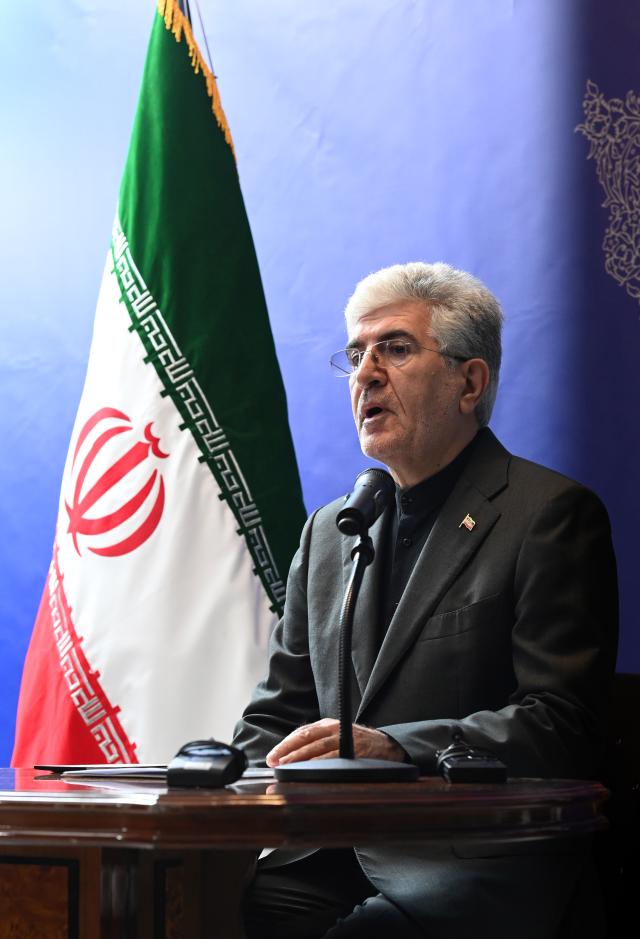
“For the war to end, negotiations must begin, but it is unclear whether such dialogue can even start,” Han said, noting that Iran’s trust in Washington and Jerusalem may have been shattered by the strikes.
“The speed with which negotiations begin will ultimately determine how quickly the conflict can end.”
Until shipping flows through Hormuz normalize, South Korea’s macro outlook will remain closely tied to developments thousands of kilometers away in the Persian Gulf.

Copyright ⓒ Aju Press All rights reserved.
