

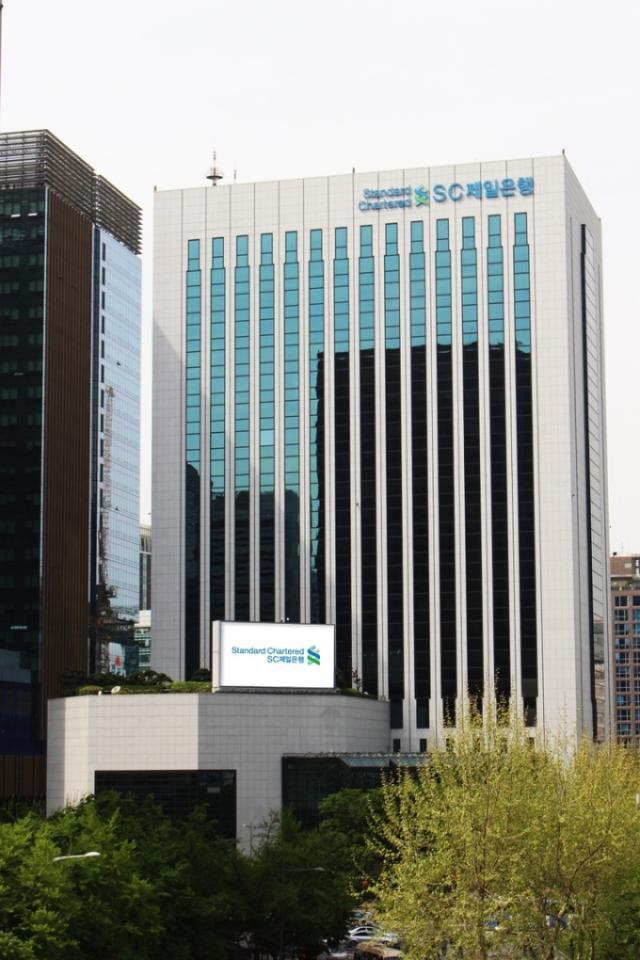
The bank said Thursday that net profit for the year totaled 141.5 billion won, down 57.3% from 331.1 billion won a year earlier.
The decline was driven largely by sizable one-off charges. In the fourth quarter, the bank booked 88.0 billion won in special retirement costs and set aside 151.0 billion won in provisions related to sanctions over Hong Kong H-index ELS.
Net interest income fell as the net interest margin narrowed amid lower market rates. Net interest income came to 1.2076 trillion won, down 2.0% from 1.2321 trillion won the previous year, and the net interest margin dropped 0.16 percentage points over the period.
Noninterest income also declined. While wealth management performed well, gains from securities and foreign-exchange derivatives fell, pulling noninterest income down 8.0% to 311.2 billion won from 338.3 billion won.
Selling and administrative expenses rose on special retirement costs and higher labor and inflation-related expenses. The bank reported 1.0754 trillion won in such costs, up 17.7% from 913.6 billion won a year earlier.
By contrast, total expected credit losses and other provisions fell 16.9% to 106.7 billion won from 128.4 billion won.
Assets expanded. Total assets stood at 92.2781 trillion won at the end of last year, up 7.5% from 85.8409 trillion won a year earlier.
Profitability indicators weakened. Return on assets was 0.15%, down 0.23 percentage points, and return on equity was 2.56%, down 3.53 percentage points. The ratio of nonperforming loans rose 0.14 percentage points to 0.56%.
The bank also said its board approved a year-end dividend of 125.0 billion won and will submit it as an agenda item for a regular shareholders meeting on the 30th. After the dividend, the bank said its BIS total capital ratio was 18.59% and its common equity Tier 1 ratio was 15.65% as of the end of last year, remaining above regulatory requirements.
* This article has been translated by AI.
Copyright ⓒ Aju Press All rights reserved.