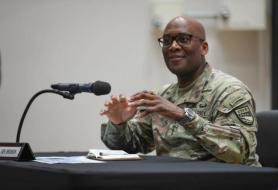
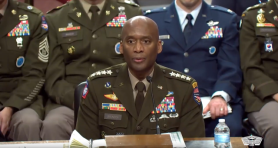
Defense authorities in Seoul and Washington stressed Monday that the combined defense posture on the Korean Peninsula remains “ironclad,” regardless of any tactical redeployment.
Major international outlets including Bloomberg and Axios reported Monday that the U.S. Department of Defense and the Israeli military are finalizing plans for the latter phase of “Operation Epic Fury.” The objective would be to secure or destroy roughly 450 kilograms of uranium enriched to 60 percent believed to be hidden inside underground tunnels in Isfahan, Iran.
Uranium enriched to 60 percent — considered near weapons-grade — can be further refined to weapons-grade levels of 90 percent within weeks. Experts estimate the amount in question could be sufficient to produce as many as 11 nuclear bombs.
Most of Iran’s highly enriched uranium is believed to remain in underground facilities within the Isfahan nuclear complex, which was heavily damaged during U.S.-Israeli strikes last year. Intelligence assessments suggest portions of the stockpile may have been dispersed to the Fordow and Natanz nuclear facilities.
The strategic shift toward possible ground operations reflects growing military assessments that airstrikes alone may not be sufficient to eliminate nuclear material buried deep underground.
U.S. President Donald Trump hinted at such a possibility during a recent briefing.
“We haven’t talked about it. At some point maybe we will. It would be a great thing. Right now we’re just decimating them,” Trump said when asked about the possibility of deploying ground troops into Iran, leaving open the prospect that the air campaign could eventually expand into a limited ground operation.

Signs of potential preparation for such an operation have been detected as far away as the Korean Peninsula.
Six C-17 Globemaster transport aircraft and two C-5 Galaxy strategic airlifters departed Osan Air Base between Feb. 28 and March 7, according to flight tracking data. While the aircraft’s final destinations were not disclosed, flight times exceeding 14 hours suggest they were bound either for the U.S. mainland or staging areas in the Middle East.
The movements have drawn particular attention because the C-5 Galaxy is the only aircraft capable of transporting an entire Patriot PAC-3 missile defense battery in a single lift.
Flight tracking data indicates the aircraft likely traveled through Anchorage, Alaska, with potential onward staging points including Ramstein Air Base in Germany or Diego Garcia in the Indian Ocean — both key hubs used for Middle East operations.
Military experts say such redeployments could indicate that U.S. Forces Korea (USFK) air defense units — widely regarded as among the most experienced in the world — are being repositioned to help shield allied special forces from potential Iranian ballistic missile retaliation during any ground raid.

Analysts cautioned that the movements should not immediately be interpreted as a weakening of defenses on the Korean Peninsula.
“Of the eight Patriot batteries operated by USFK, only those positioned at core strategic sites are actively deployed, while others remain in reserve storage,” said Jung Kyeong-woon, a research fellow at the Korea Association of Military Studies.
“If the assets moved were drawn from these reserve units, it would be difficult to conclude that current interception readiness has been reduced,” Jung said.
He added that the U.S. Central Command continuously monitors Iranian missile inventories and the consumption rates of allied interceptors to determine where global air defense assets are most urgently required.
“Such decisions are typically made after assessing that redeployment will not compromise deterrence levels in other regions, including the Korean Peninsula,” he said.
Both USFK and South Korea’s Ministry of National Defense declined to comment on specific operational movements.
“For reasons of operational security, we do not comment on the movement or relocation of specific assets,” a USFK spokesperson said.
The spokesperson added that USFK “remains focused on maintaining a robust and ready combat posture on the Korean Peninsula” and reiterated that the U.S. commitment to the defense of South Korea “remains ironclad.”
A Ministry of National Defense official similarly said it would be inappropriate for Seoul to comment on the internal force operations of USFK.
“South Korea and the U.S. will continue close communication and coordination to maintain a combined defense posture that contributes to peace and stability in the region,” the official said.

Copyright ⓒ Aju Press All rights reserved.