

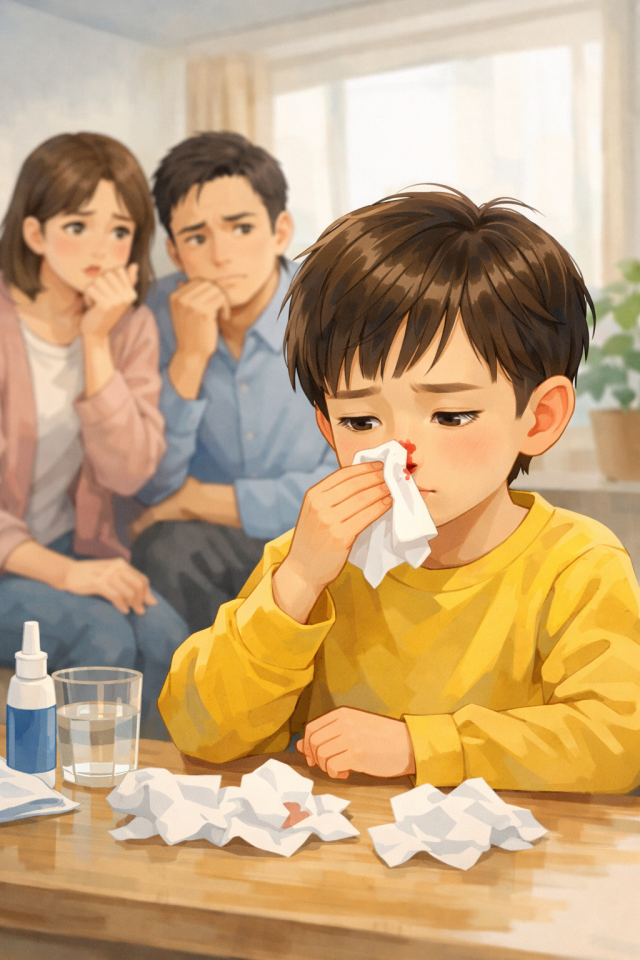
"My child suddenly gets nosebleeds a lot."
That is a common concern among parents who visit clinics in March. With the new school year starting, repeated nosebleeds can prompt worries that a child is struggling at school or keeping problems to themselves.
But the most common cause this time of year is often not psychological stress. It is frequently seasonal allergic rhinitis, as the nasal lining dries out and becomes irritated. In many cases, the issue is physical rather than emotional.
Spring can be a difficult season for people with rhinitis. Pollen begins to circulate, and irritants such as yellow dust and fine particulate pollution increase. Large day-to-night temperature swings and dry air can leave the nasal lining easily dried and sensitive.
When the lining is inflamed, it can become thinner and itchier, with a stronger sensation of irritation. Children may rub or pick at their noses, and the weakened tissue can bleed with minor contact. Some wake to find blood on a pillow after touching their nose during sleep. This is especially common among preschoolers and younger elementary school students.
Allergic rhinitis can be confused with a common cold because symptoms overlap. One early clue is fever. Repeated clear runny nose without fever, along with mucus dripping down the back of the throat, points more toward rhinitis. Fever and overall fatigue suggest a viral cold.
Duration also matters. Colds typically improve in about a week, but rhinitis can last for months as long as the trigger remains in the environment. Complaints such as "It feels like my child has a cold all month" are often linked to rhinitis.
Itching is another hallmark. Rhinitis often causes intense itching of the nose and eyes. If a child frequently rubs their eyes or repeatedly scrunches their nose, allergic rhinitis may be the cause. Cold-related nasal discharge tends to thicken over time, while allergic rhinitis more often keeps producing clear, watery discharge.
More accurate diagnosis requires tests to distinguish conditions. Doctors may examine the inside of the nose with a nasal endoscope and use skin-prick or blood tests to check reactions to specific allergens. Allergic rhinitis is also associated with family history; if one parent has an allergic disease, the likelihood is higher.
Rhinitis is not just a minor nuisance. Kim Seong-won, a professor of otolaryngology at Seoul St. Mary’s Hospital of the Catholic University of Korea, said it is not life-threatening, but chronic cases can cause sleep problems and reduced concentration and may lead to sinusitis, making management important. He said it can affect a growing child’s learning and daily life.
Experts say rhinitis should be managed rather than endured. Washing bedding in hot water of at least 60 degrees and maintaining appropriate indoor temperature and humidity can help. Reducing dust-collecting items such as carpets, fabric sofas, heavy curtains and stuffed animals is also recommended. Switching to leather furniture or using blinds instead of curtains can help lower dust mite levels.
Daily care can also matter. Kim said prolonged dry weather can dry the nasal lining and worsen symptoms. He recommended using a humidifier to keep target humidity at 50% or higher and spraying saline in the nose every 30 minutes to an hour to keep the lining moist.
Environmental changes alone may not fully prevent symptoms because pollen, fine dust and school conditions cannot be controlled. In those cases, medication is used alongside lifestyle measures. Antihistamines can reduce runny nose and sneezing, though they can also dry the nasal lining, so use is typically adjusted based on symptoms.
Steroid nasal sprays are among recommended treatments. Many parents hesitate because of the word "steroid," but unlike oral steroids, these act locally on the nasal lining and are absorbed into the bloodstream only minimally. They can be used by children and older adults. However, they generally need to be used consistently for at least two weeks before anti-inflammatory effects appear.
By contrast, decongestant sprays that quickly open a blocked nose should be limited. They temporarily work by constricting blood vessels in the nasal lining, but should be used only for up to five days. They may be appropriate for short-term use in urgent situations, such as when congestion prevents sleep or when a person must fly.
For long-term treatment, immunotherapy is considered a fundamental approach for allergic rhinitis. Kim said sublingual immunotherapy, which does not require injections and is considered safe, can help reduce discomfort from allergic rhinitis and improve quality of life.
* This article has been translated by AI.
Copyright ⓒ Aju Press All rights reserved.