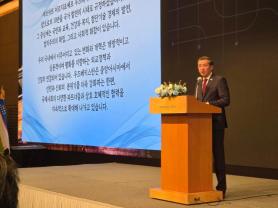
SEOUL, March 19 (AJP) - The Center for Economic Research and Reforms has determined Thursday that mutual trade between Uzbekistan and Tajikistan possesses the potential to increase by 30 to 40 percent. This assessment was presented today in Tashkent during an international conference regarding new prospects for a regional alliance. The center, an analytical body under the Administration of the President of Uzbekistan, indicates that bilateral engagement remains only partially realized despite recent growth. Asadov Khurshed, the deputy director of the organization, stated that the relationship between the two nations has reached a qualitatively new level.
From 2017 to 2025, trade volume between the neighboring states expanded 3.8 times, rising from 238 million dollars to 912 million dollars. During this period, exports from Tashkent grew 3.7 times while imports from Tajikistan increased more than fourfold. The country now ranks ninth among the leading importers of Uzbek products. This growth is supported by a foundational institutional framework established through the 2024 Treaty on Allied Relations (Source: Ministry of Foreign Affairs of Uzbekistan).
The potential for a 30 to 40 percent increase is linked to the substitution of Tajik imports from third countries with goods manufactured by Uzbek producers. Geographical proximity and shared transport infrastructure provide an advantage for the delivery of automobiles, household appliances, textiles, and chemicals. The deputy director emphasized that the most promising model for cooperation involves the establishment of joint processing facilities in border regions. These centers would prioritize the handling of agricultural raw materials and the development of new agrologistics networks.
The ongoing development of transport infrastructure and transit opportunities is expected to serve as a primary driver for further economic integration. This shift toward a deeper investment model is a factor in strengthening connectivity across the region. The current level of allied relations provides the necessary foundation for transitioning toward shared regional infrastructure projects. The international scientific and practical conference brought together experts from government institutions and the academic community to discuss these prospects.

Copyright ⓒ Aju Press All rights reserved.