PYEONGTAEK, March 20 (AJP) - Riding a two-year windfall from the global AI boom, Samsung Electronics is ramping up investment and shareholder returns at an unprecedented scale — but one stakeholder feels left out of the bounty: its employees.
The company is pouring more than 110 trillion won ($74.6 billion) into semiconductors and has pledged to return 50 percent of its free cash flow to shareholders. Yet workers say the rewards of the AI-driven surge are not being shared on the ground.
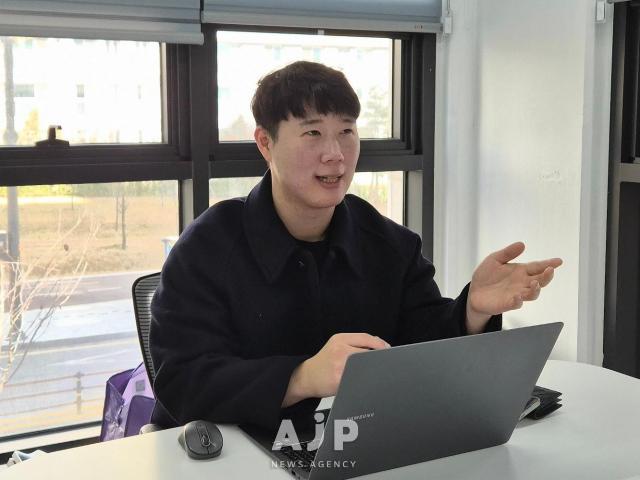
“We aren’t asking for the impossible,” said Choi Seung-ho, chairman of the Samsung Electronics Union Joint Action Committee, in an interview with AJP near the company’s Pyeongtaek fabs. “We are asking the company to act like the world-class leader it claims to be.”
“Profit-hoarding days must end.”
The rhetoric marks a shift from wage negotiations to a broader challenge of Samsung’s corporate identity, as the union escalates pressure following a 93.1 percent vote in favor of industrial action. Plans are now underway for a mass rally in April and a potential general strike in May.
At the core of the dispute is compensation — and a widening gap with rival SK hynix that the union warns is fueling a “talent exodus.”
While Samsung employees are widely perceived as elite earners, Choi pointed to a different reality for mid-level staff. A manager earning a base salary of around 76 million won ($57,000) often struggles to reach 100 million won in total compensation after taxes and relatively modest bonuses — a level increasingly out of step with the industry’s AI-driven gains.
The contrast with SK hynix is stark. In 2025, its employees received average performance bonuses of 120 million to 130 million won under a transparent profit-sharing model. Comparable roles at Samsung, the union says, received roughly 37 million won — less than a third.
“That gap creates a profound sense of deprivation,” Choi said.
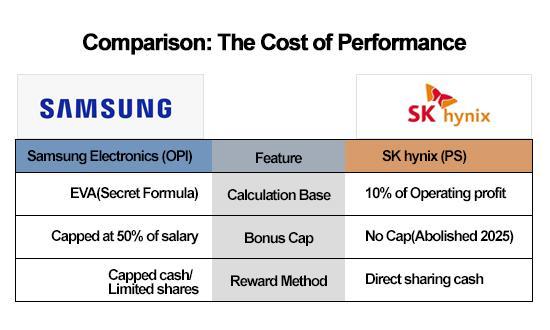
The union is demanding the removal of Samsung’s “Economic Value Added” (EVA) bonus cap, which limits payouts to 50 percent of salary and is based on a complex internal formula widely criticized by employees as a “black box.”
By contrast, SK hynix shares 10 percent of operating profit directly with employees and removed its bonus cap last year.
Tensions have been further aggravated by what the union calls a “divide-and-conquer” approach. Management recently proposed conditional bonuses tied to 100 trillion won in operating profit — but only for the Memory division, excluding Foundry and System LSI workers.
“We were hired on the promise of equal treatment across the semiconductor pillar,” Choi said. “Excluding certain divisions now is nothing short of employment fraud.”
The internal conflict comes as Samsung accelerates investment to maintain its lead in AI chips and high-bandwidth memory. Under its latest value-up plan, the company will boost facility and R&D spending to 110 trillion won this year, including a 37.7 trillion won R&D budget.
At the same time, it reaffirmed its shareholder return policy, maintaining a payout ratio of 50 percent of free cash flow and planning to distribute 9.8 trillion won in dividends this year.
For the union, the contrast is stark.
“The company says it cannot afford to improve compensation, yet it commits over 100 trillion won to capital and generous shareholder returns,” Choi said. “There is no equivalent concept of ‘employee return.’”
The stakes are rising quickly. Samsung’s Pyeongtaek production lines are estimated to generate up to 10 billion won per hour, meaning an extended strike could inflict losses exceeding 5 trillion won.
“We are preparing,” Choi said, noting plans for large-scale mobilization ahead of April’s rally.
He dismissed criticism that the dispute reflects excessive demands from high-paid engineers, framing it instead as a structural issue behind the so-called “Korea discount.”
“If Samsung wants to maintain leadership in the HBM race, it must choose coexistence over disruption,” he said. “Without fair rewards, we cannot stop the outflow of talent.”
Choi added that feedback from engineers who have already moved to SK hynix has been telling.
“They report extremely high satisfaction,” he said. “When a company provides what employees feel they deserve, the result is obvious.”
His final warning was blunt.
“If this continues, the union may end up helping people leave,” Choi said. “We will support each other in finding opportunities elsewhere.

Copyright ⓒ Aju Press All rights reserved.