

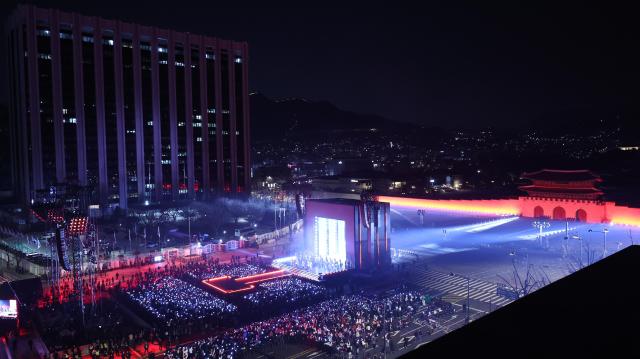
SEOUL, March 22 (AJP) -It was billed as a comeback. It became something larger: a test of scale, identity and control — and, ultimately, a quiet assertion of how far K-pop, and Korea, have come.
BTS returned to Gwanghwamun Plaza not just as artists resuming a career, but as men who had completed a national duty and reassembled a global phenomenon. Thirteen years into their journey, the performance was less about proving relevance than about defining legacy.
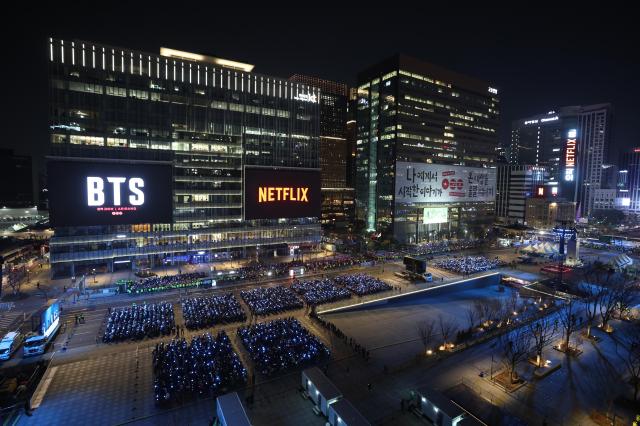
The numbers alone strained belief. Roughly 40,000 filled the tightly managed square, while tens of thousands more watched from surrounding streets and screens. Beyond Seoul, audiences in 190 countries tuned in via Netflix, turning a historic civic space into a synchronized global venue.
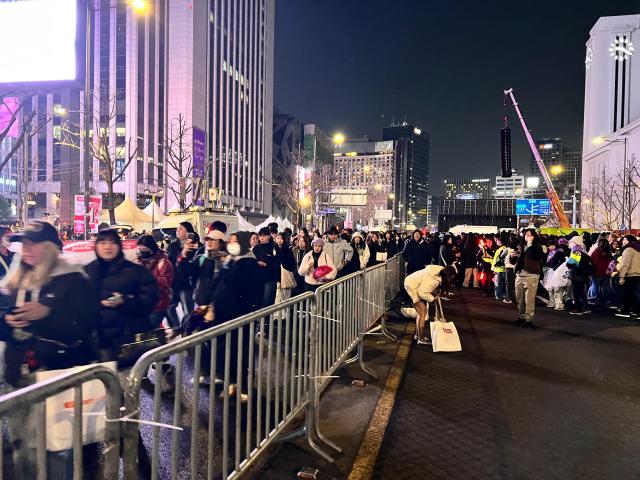
Yet scale was not the defining feature. Control was.
Nearly 15,000 personnel — an extraordinary deployment — managed the crowd with strict routing, metal detectors and enforced movement through narrow corridors. The experience, at times, felt excessive, even rigid. Fans waited, shuffled, and surrendered spontaneity to structure.
And still, not a single major incident.
In an era where mass gatherings often carry an undertone of risk, the absence of chaos became its own statement. Order was not incidental; it was engineered — and, notably, accepted. Fans from across continents complied with patience, even humor, some carrying trash bags and leaving the site as clean as they had found it.
That discipline, as much as the music, defined the night.
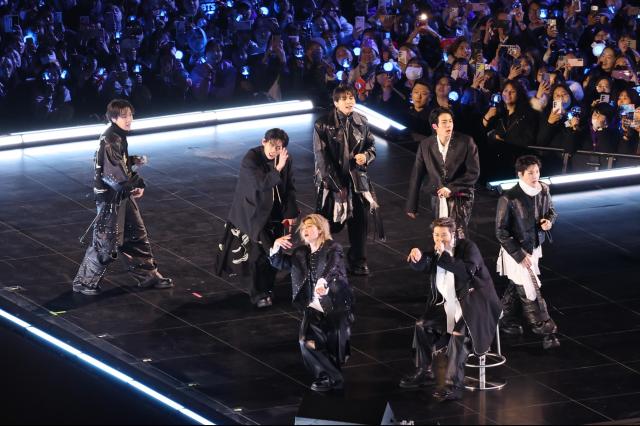
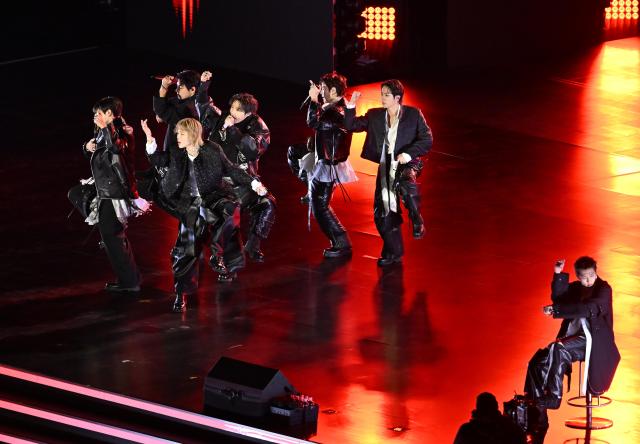
On stage, the narrative was deliberately balanced. New tracks from the fifth album ARIRANG — including “Body to Body” and “SWIM” — were interwoven with global hits like “Dynamite” and “Butter.” The message was continuity, not reinvention.
RM, seated with an injured ankle, declared simply: “We’re back.” Jimin, voice wavering, offered the album’s thesis in a single line: “Keep swimming.”
It was less spectacle than reassurance — a reaffirmation of presence after absence, of identity after uncertainty.
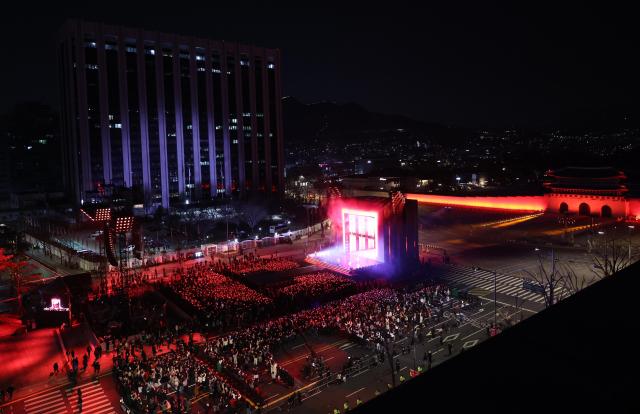
The setting amplified that message. Framed by Gyeongbokgung Palace, and watched over by statues of King Sejong the Great and Admiral Yi Sun-sin, the performance fused heritage with hyper-modern production.
This was not accidental staging. It was narrative architecture: a global act returning to a national axis.
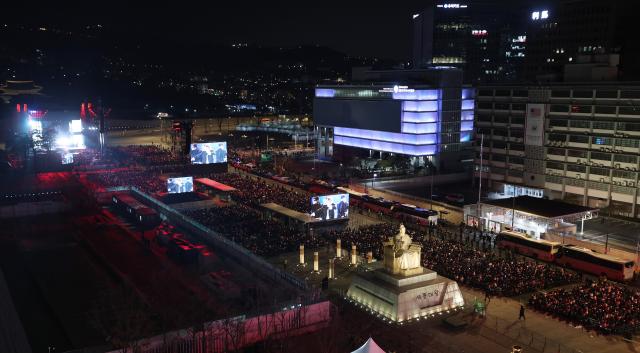
Even the broadcast carried symbolic weight. The live stream held steady under immense global traffic, marking a technical milestone for Netflix’s expansion into large-scale live music. The platform proved it could handle not just content, but simultaneity — a crucial distinction in the evolving competition for live audiences.
There were imperfections. Safety protocols thinned out visible crowd density on screen, muting some of the visceral energy that defines concerts. Subtitles lagged, and the user interface occasionally fell short of the production’s visual ambition.
But these were, in essence, second-order problems — the kind that emerge only after first-order challenges have been solved. And that is the point.
What unfolded at Gwanghwamun was not merely a concert. It was a demonstration: that a dense urban core can host a massive live event without disorder; that a global fandom can self-regulate; that a cultural product can integrate tradition, technology and scale without losing coherence.
K-pop has long excelled at spectacle. What it showed here was something subtler — governance.
The century-defining aspect of the show was not its size, nor even its global reach. It was the way it was carried out: with restraint, coordination and a collective awareness that the moment was bigger than any individual.
In the end, the loudest message was delivered quietly.
Not just that BTS is back.
But that the system around them has matured.
Copyright ⓒ Aju Press All rights reserved.
