

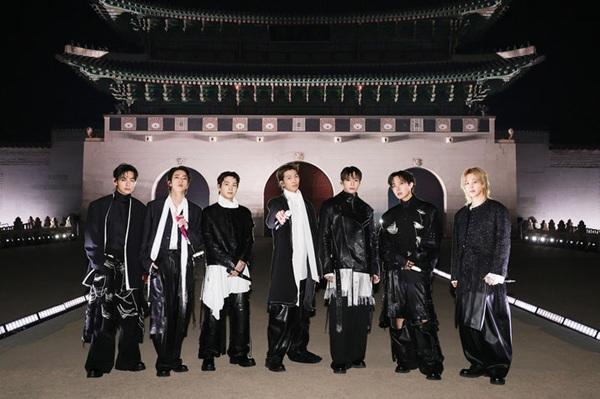
BTS’ return is no longer just entertainment news. The group’s comeback show held March 21 at Gwanghwamun Square was treated as a citywide event, not a brief item on the arts page. The Seoul Metropolitan Government activated a separate safety plan that included phased entry, traffic controls and even a plan for subway trains to pass through without stopping, anticipating the possibility that more than 260,000 people could gather. Newspapers also printed BTS special editions. One group’s comeback rippled through city administration, public safety, mass transit and newsroom decisions.
The immediate impact around central Seoul was striking. Convenience store sales near Gwanghwamun rose about fourfold compared with a week earlier, and department store sales in nearby Myeongdong also climbed sharply. Hotels in the Myeongdong and Gwanghwamun areas were close to fully booked, and reservations by foreign visitors surged. A free concert shifted sales, hotel occupancy and visitor flows — a sign that the event was moving the local economy, not just drawing fans.
That scale also helped fuel a cooler public reaction. For some residents, the fatigue was less about disliking BTS than about questions such as why the city had to be controlled to that extent and why a public space had to be reshaped around a single star act. After the show, criticism grew that the response was excessive. Yonhap reported that the crowd was estimated at 104,000 by organizers and about 48,000 based on Seoul’s real-time city data, while about 10,000 public workers were deployed, including 6,700 police officers. Some merchants said strict controls kept them from seeing as much of the expected foot-traffic boost.
Seen that way, the debate is not simply “people who love BTS” versus “people who hate BTS.” Gwanghwamun is a symbolic public space, tied both to the city’s royal-era landscape and to modern political rallies and civic memory. A BTS performance there showcased South Korea’s cultural reach, and its free admission and global live broadcast gave it a measure of public value. But public value does not mean residents should be expected to accept any level of disruption. The central issue is not whether BTS belongs on such a stage, but what standards, public agreement and after-the-fact evaluation should apply when a mega cultural event uses a major public space.
In that sense, calling BTS’ return a social event is not only praise for popularity. When a single comeback can close roads, mobilize security, prompt special newspaper editions and affect retail sales and lodging demand, it reflects a new reality. BTS is not just a pop act; it is a force that tests how a city prepares for and manages mass gatherings. The mix of excitement and exhaustion is a predictable result of that scale.
* This article has been translated by AI.
Copyright ⓒ Aju Press All rights reserved.