

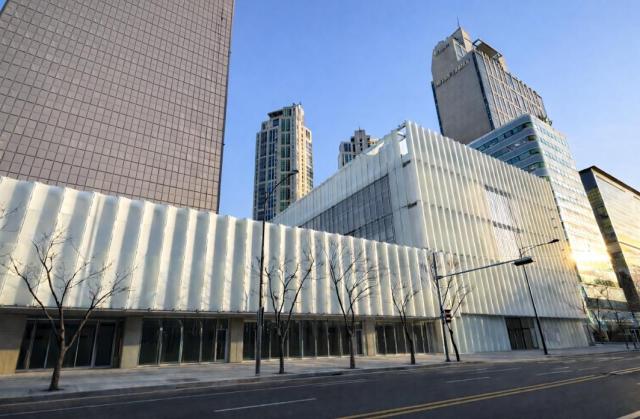
Hanwha Culture Foundation and France’s Pompidou Center will open Pompidou Center Hanwha in June at the 63 Building in Seoul’s Yeouido district.
The foundation said Monday that the museum, completed in late February, is finishing interior work and opening preparations and plans to welcome visitors starting June 4.
Over the next four years, Pompidou Center Hanwha will stage two exhibitions a year based on the Pompidou’s internationally known collection. It also plans to present two to three in-house exhibitions focusing on Korean and global contemporary art, aiming to connect major currents in international art history and today’s debates with Korea’s cultural context.
The opening exhibition, “The Cubists: Innovators of Vision,” begins June 4 and focuses on Cubism, the movement that marked a turning point in 20th-century art. The museum said the show is meant to signal a “new beginning” through Cubism, which opened new ways of seeing in modern art. It was organized through joint Korean-French curatorship rather than as a simple touring display of Pompidou holdings, and will fill two combined galleries totaling 1,000 pyeong.
The exhibition features leading Cubist artists including Pablo Picasso, Georges Braque, Fernand Leger, Juan Gris, and Sonia and Robert Delaunay. It also introduces artists less commonly seen in Korea, including Albert Gleizes, Amedee Ozenfant and Natalia Goncharova. A special section titled “KOREA FOCUS” revisits the symbolic and cultural meaning Paris held during the formation of modern Korean art in the first half of the 20th century.
The museum said its four-year program will trace major developments in 20th-century modern art through Pompidou collection-based exhibitions while highlighting avant-garde innovation and a range of media and genres.
Starting with Cubism, exhibitions through 2027 will include shows on Marc Chagall, Wassily Kandinsky, Henri Matisse and Fauvism, it said. After that, it plans to spotlight Surrealism and abstract art and to bring women artists who remained on the margins of art history to the forefront. The museum is also planning what it described as Korea’s first large-scale exhibition of Constantin Brancusi, a pioneer of abstract sculpture. Other plans include early digital art that looks back at the origins of the 21st century’s digital and AI revolution, combining key works from the Pompidou collection with in-depth interpretation.
* This article has been translated by AI.
Copyright ⓒ Aju Press All rights reserved.