

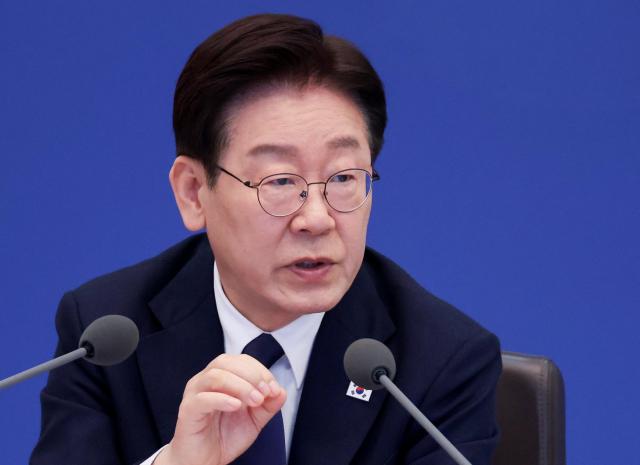
Determined to fend off bigger damage, Lee indicated during a cabinet meeting on Tuesday approving a supplementary budget — just the third month into the year — that he could bypass legislative approval, if necessary, by invoking rarely used emergency executive fiscal powers to press ahead with proactive budgeting.
The emergency fiscal authority, stipulated under Article 76 of the Constitution, allows the president to issue measures with the force of law in times of severe economic or national crisis when legislative delays are untenable. It has been used only once in modern history — in 1993, when then-president Kim Young-sam enforced the financial real-name system.
According to the National Assembly Budget Office (NABO), total expenditure in the 2026 budget stands at 727.9 trillion won. If the supplementary budget bill is passed, this year’s total government spending is expected to rise to 754.1 trillion won.
The government maintains it can keep the managed fiscal deficit at 3.8 percent of GDP, as the extra budget could be financed through excess tax revenue from strong chip sales in the first quarter rather than additional debt issuance.
The urgency reflects the scale of the shock. Oil prices have surged amid tensions around the Strait of Hormuz — a chokepoint for roughly one-fifth of global oil and LNG trade — exposing South Korea’s deep reliance on imported energy.
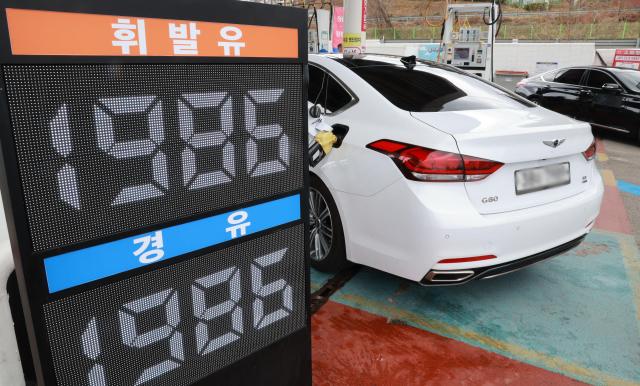
With the risk of the economy falling into a technical recession after contracting in the fourth quarter, international economists broadly see proactive fiscal policy as the right direction.
“This is not just an energy problem; it is an inflation, exchange-rate, and confidence problem at the same time,” said Sumit Agarwal, a professor of finance and economics at the National University of Singapore (NUS).
While fiscal intervention is justified, he advised it be “temporary, targeted, and explicitly linked to the shock.”
Donghai Zhang, an economist at NUS, described the oil shock as effectively a “negative income shock” for an importing country like South Korea.
“Temporary and targeted support can help cushion this,” he said, noting that lower- and middle-income households are more likely to spend additional income quickly, stabilizing demand in the short term.
But Zhang also warned of a more insidious risk: inflation expectations.
“Higher energy costs raise firms’ production costs and can spread beyond fuel and transportation. If expectations become unanchored, inflation becomes more persistent and more costly to reverse.”
Under the “war” label, the budget package is explicitly designed to counter the energy shock.
Another 5 trillion won has been earmarked to cap fuel costs and ease transport expenses, including support for a temporary oil price ceiling and expanded public transport rebates. Additional measures target energy-vulnerable households and fuel-intensive sectors such as agriculture and fisheries.
More controversial is the 4.8 trillion won set aside for direct cash transfers to roughly 35.8 million people — about 70 percent of the population — ranging from 100,000 to 600,000 won per person.
The populist element ahead of the June 4 local elections has ignited heated debate even before reaching parliament.
Rep. Kim Sang-wook, a lawmaker from the ruling Democratic Party of Korea and its candidate for mayor of Ulsan, framed the package as an urgent social safety measure.
“High oil prices inevitably lead to high inflation, and that hits ordinary people hardest,” he said. “This is a ‘social disaster.’ The most vulnerable — low-income households and small businesses — must be protected, and speed is critical.”
The opposition, however, sees something more cynical.
Rep. Park Soo-young, the People Power Party’s ranking member on the National Assembly’s Strategy and Finance Committee, criticized the cash transfers as both inefficient and politically motivated.
“If you subsidize fuel for 70 percent of the population, other prices — rice, meat, vegetables — will rise,” he argued. “Why not simply cut fuel taxes? Instead, this looks like vote-buying ahead of local elections.”
The fiscal easing could also complicate monetary policy, as the inflationary effects of high oil prices are expected to seep through the economy in the coming months.
David E. Cook of Hong Kong University of Science and Technology warned that broad price controls can backfire.
“Capping consumer energy prices prevents efficient adjustment and makes the transition more costly overall,” he said.
Massimo Filippini, professor of public and energy economics at ETH Zurich, urged a more forward-looking approach.
“High energy prices, while painful, encourage households and firms to reduce consumption, improve efficiency, and adjust behavior,” he said, adding that such dynamics can ultimately support investment in cleaner and more efficient technologies.
Korea’s vulnerability underscores its structural dependence on imported fossil fuels and reinforces the need to view the energy transition not only as a climate objective, but also as a strategy for economic resilience and security.
“Overall, the most economically sound approach is a balanced mix: targeted support for households, conditional aid for firms, and policies that preserve incentives to reduce energy use,” he said.
He added that the current crisis could serve as a turning point in how the energy transition is framed — less as an environmental imperative alone, and more as an issue of security, independence and quality of life.

“The right policy is to protect households from an oil shock without pretending that the state can permanently shield the economy from global prices,” he said.
Temporary measures — cash transfers, transport subsidies and targeted industry support — are relatively easy to enact. Rolling them back once the crisis subsides, however, will be far more difficult, he warned.
Copyright ⓒ Aju Press All rights reserved.
