[This opinion piece was contributed by columnist Choe Chong-dae]
SEOUL, April 10 (AJP) - Last October, I had the pleasure of visiting the Korea University Museum at the invitation of its director, Professor Song Wan-beom. The visit was organized by the second graduating class of the ‘Creative CEO’ program, originally established by the National Museum of Korea in 2010.
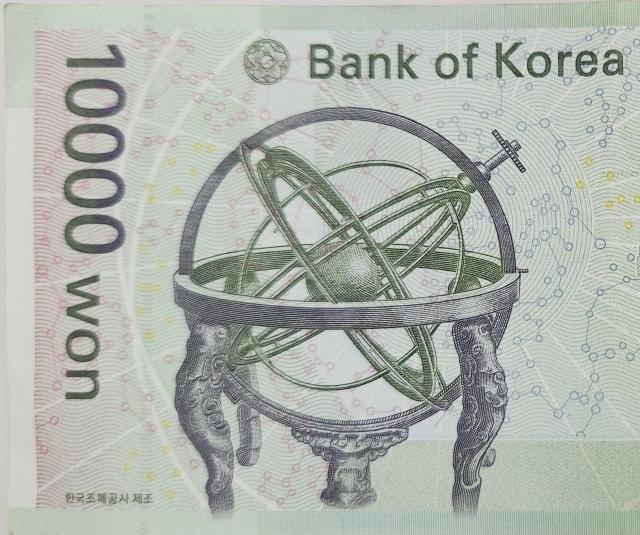
Among the many treasures on display, the Honcheonui (National Treasure No. 230) was the most striking. Created by Song Yi-yeong in 1669, this armillary astronomical clock is a marvel of technical synthesis; it masterfully integrates Western pendulum-based clockwork with traditional Korean astronomical systems. It stands as a profound testament to the innovative spirit of the Joseon Dynasty. Remarkably, it was completed only thirteen years after the Dutch scientist Christiaan Huygens introduced the pendulum clock to Europe.
Despite its scientific significance, a modern paradox persists: although the Honcheonui is depicted on the reverse of the 10,000-won banknote, the image is frequently overlooked in daily use. We carry this symbol of historical mastery in our pockets every day, yet the story of the brilliant artisan-scientists who created it remains largely forgotten.
The evolution of horological innovation in Joseon began in 1631, when the diplomat Jeong Doo-won returned from Ming China with scientific instruments and texts acquired from the Portuguese Jesuit missionary João Rodrigues. Initially, the Joseon court greeted these tools with deep skepticism. While King Injo expressed a flickering interest, conservative officials dismissed foreign clocks as mere “ornaments.” They cited an alleged incompatibility between Western 24-hour cycles and traditional Korean time systems, viewing these mechanisms as curiosities rather than apparatuses worthy of serious study.
However, a generation of pioneers saw beyond mere aesthetic intrigue. Figures like Lee Min-cheol (1613–1715) practiced what we now recognize as reverse engineering. Historical records describe how Lee would isolate himself with imported artifacts, painstakingly dismantling and reassembling their intricate gears until he decoded their inner logic.
This endeavor demanded immense intellectual and financial audacity. At the time, an alarm clock cost significantly more than renting a house in Seoul. Dismantling such an object was akin to staking one’s life on a gamble. These artisans sought knowledge wherever it could be found, even traveling clandestinely to Waegwan—the Japanese trading settlement in Busan—to acquire the technical skills needed to bridge foreign theory with local application. In doing so, they moved beyond political sensitivities in an uncompromising pursuit of learning. Through these efforts, Joseon moved from a consumer of technology to an active innovator.
Other masters pushed these boundaries further: Choi Cheon-yak became Joseon’s first professional clockmaker after repairing King Yeongjo’s personal clock, and later, Na Kyung-jeok collaborated with the scholar Hong Dae-yong to construct the Nongsugak observatory in 1762. This represented a rare, potent intersection of mechanical craftsmanship and theoretical astronomy.
Today, we must do more than carry their work on our currency; we must learn from our ancestors’ struggle. Their legacy teaches us that true innovation requires a social framework that respects technical mastery. This lesson is vital as we navigate the 21st century. While AI can process data at incredible speeds, it still requires the human eye to find value in the margins. In the AI era, we must pay particular attention to seemingly trivial scientific matters, for they often lead to the developments that most benefit human life.
Ultimately, Joseon’s horological history is a cautionary tale of social stratification. Despite their brilliance, these masters were marginalized by a Neo-Confucian hierarchy that dismissed technical skill as "vulgar" labor. Lacking the structural support to turn individual genius into a national industry, the momentum of this renaissance evaporated. By honoring the "hidden genius" of forerunners like Lee Min-cheol and Song Yi-yeong, we ensure that the spirit of inquiry is finally given the credit it deserves.
----About the Author---
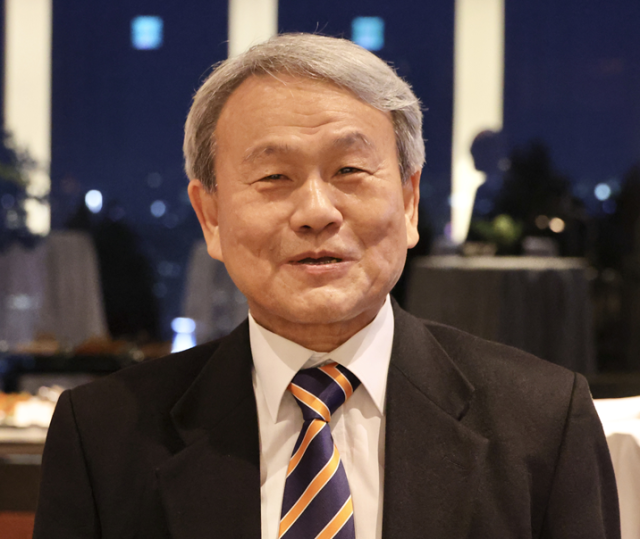
Choe Chong-dae is a prominent columnist and a longstanding member of the Royal Asiatic Society Korea. An enthusiast of international cultural and historical affairs, he has contributed regular opinion columns to The Korea Times for more than four decades. He also serves on the editorial board of the Newsletter of the Korea-America Association and is the founding director of the Korea–Swedish Association. In 2010, he was awarded Sweden’s Royal Order of the Polar Star, one of the country’s most prestigious honors.
Copyright ⓒ Aju Press All rights reserved.