

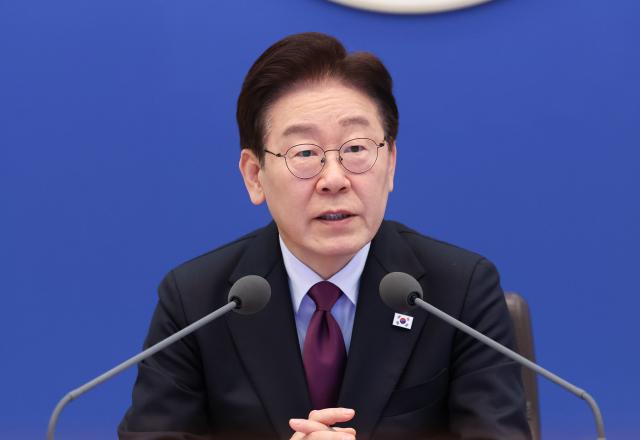
SEOUL, April 11 (AJP) - South Korea defended its president on Saturday after his explicit comparison between Israeli military operations and 20th-century historical atrocities ignited a diplomatic quarrel with Tel Aviv.
The rupture started on Friday when President Lee Jae Myung shared a video on the social media platform X, formerly known as Twitter. The footage, posted by a user named Jvnior and captioned with claims that Israeli soldiers were torturing a Palestinian child, was from September 2024. Bridging the current conflict with East Asian historical trauma, Lee wrote, "Wartime homicide is no different from matters that we take issue with, such as the forced (enslavement of) comfort women, and the massacre of Jewish people."
The Israeli Foreign Ministry issued a swift condemnation, accusing Lee of relying on a fake account to spread anti-Israeli disinformation. Arguing that the South Korean leader trivialized the mass murder of Jews right before Holocaust Remembrance Day, the ministry stated, "The remarks by the President of Korea, Lee Jae Myung … are unacceptable and warrant strong condemnation."
It further noted, "Yet we have not heard a single word from the President about the terrorists who were at the center of this event. Nor have we heard a word from the President regarding the recent Iranian and Hezbollah terror attacks against Israeli citizens."
Lee refused to retract the statement. Shifting the argument to international law, he posted an update expressing frustration with Israel's reaction. "It is disappointing that the Israeli Foreign Ministry has not once reflected on the global community's criticism of its relentless inhumane and internationally unlawful actions, which have caused immense suffering," he wrote.
He added, "For the sake of universal human rights and the national interests of the Republic of Korea, I must work harder to find things I can do."
By Saturday morning, the escalating friction forced the South Korean foreign ministry to intervene. Attempting to manage the fallout, the ministry posted on its official X account that Israel had misunderstood the president's intent. The government expressed regret that Tel Aviv interpreted a statement of belief in universal human rights as an attack on a specific geopolitical issue.
This explicit departure from Seoul's usual quiet alignment with Washington stems from a mix of personal ideology and acute economic pressure. The president's political lens was shaped by his childhood as an underage factory laborer and his career as a human rights lawyer. His reference to comfort women points to the unresolved trauma of Korean women sexually enslaved by imperial Japanese forces during World War II, a history that deeply influences his view on state violence.
At the same time, the expanding Middle East conflict is creating immediate problems for South Korea. With Israel conducting strikes in Iran and Lebanon, and civilian casualties mounting, the resulting disruption to the global economy is hitting South Korea hard. The country relies heavily on exports and imported energy, making the regional instability a direct threat to its national interests.
The foreign ministry concluded its intervention by balancing its defense of the president with reassurances to Israel.
"The Government of the Republic of Korea remains steadfast in its opposition to all forms of violence and anti-humanitarian acts, including the acts of terrorism pointed out by Israel," the ministry stated, adding: "Furthermore, we continue to empathize deeply with the unspeakable suffering endured by Israel due to the Holocaust, and we once again express our profound condolences to the victims of the Holocaust.."
Copyright ⓒ Aju Press All rights reserved.
