

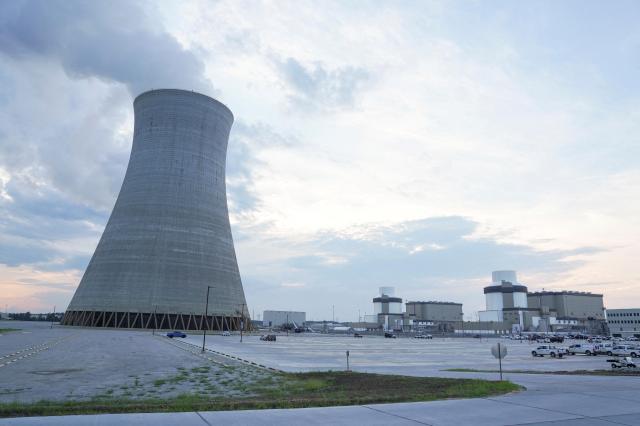
South Korea is the world’s fifth-largest energy importer by value and one of the four largest importers of LNG globally, regularly purchasing around 40 million tonnes per year.
With virtually no domestic fossil fuel reserves, the country imports nearly 95% of its primary energy needs — a structural vulnerability that has driven decades of debate about energy security.
Electricity demand has grown relentlessly to around 600 terawatt-hours annually, powered by energy-intensive industries from semiconductors to shipbuilding, making decarbonization both urgent and structurally difficult.
Fuel self-sufficiency has become national priority after the Gulf war that disrupted the core waterway along the Iran coast responsible for one fifth of the world's oil and gas shipments, accelerating U-turn in states that chose phase-out over safety issue since the Fukushima meltdown from Germany to South Korea and Japan.
For South Korea, heavily exposed to Gulf supply routes and entirely dependent on energy imports, the takeaway has been immediate: energy security cannot be left to geography.
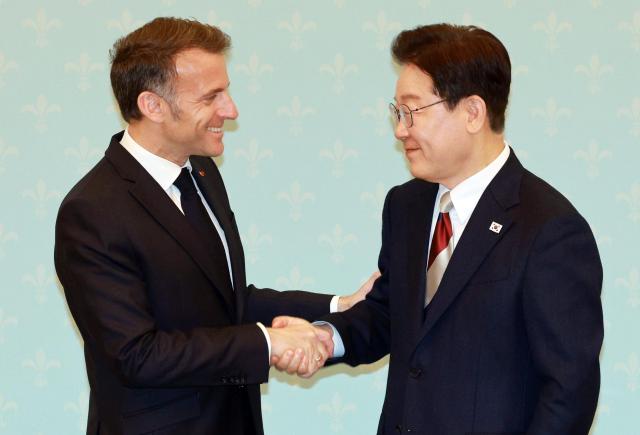
Under President Lee Jae Myung, that realization is translating into policy. The administration is moving toward renewed nuclear expansion as the phase-out trajectory of the Moon Jae-in era is effectively being overruled by necessity.
“Nuclear, SMRs, and next-generation technologies must be accelerated alongside energy diversification and industrial transformation,” Lee said in an April 7 senior secretariat meeting, signaling that nuclear is no longer a transitional option but a core pillar of future growth.
Renewables, contributing just over 10 percent, remain constrained by intermittency and land use, while LNG — accounting for roughly a quarter of supply — is increasingly vulnerable to shipping disruptions.
In that equation, nuclear stands out as the only large-scale, low-carbon baseload energy source that can be generated domestically.
In March 2026, Korea Hydro & Nuclear Power confirmed that four local governments — Ulju, Yeongdeok, Gyeongju and Gijang — submitted bids to host new nuclear facilities, including both large-scale reactors and the country’s first small modular reactor (SMR), with timelines extending into the late 2030s.
A global reversal, not a local exception
South Korea’s pivot is part of a broader, if understated, global reversal.
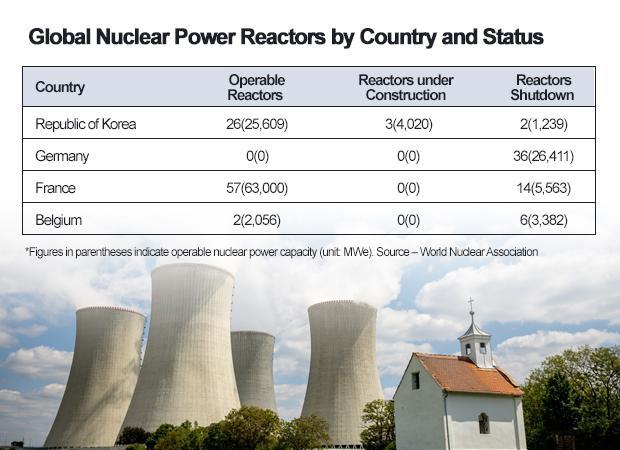
In the aftermath of Fukushima, countries across Europe and Asia embraced nuclear phase-out policies. Today, many are retracing their steps.
In Germany, debate has reopened over restarting recently shuttered reactors as energy costs rise. Italy is preparing for reintroduction after decades without nuclear power, while Switzerland has moved to lift restrictions on new construction.
In Asia, Taiwan—once committed to a nuclear-free future—has begun steps toward restarting reactors to support its semiconductor-driven economy.
Even the European Commission has acknowledged that sidelining nuclear may have been a strategic miscalculation, reflecting a broader recognition that decarbonization without baseload stability is incomplete.
The Gulf crisis has underscored how concentrated global energy risk has become. A handful of chokepoints — led by the Strait of Hormuz — can disrupt supply chains on which entire economies depend.
Nuclear power offers insulation from that volatility. Once fueled, reactors can operate for extended periods without continuous imports.
But that insulation comes with a paradox.
South Korea imports 100 percent of its uranium and remains constrained under its nuclear cooperation framework with the United States, limiting enrichment and reprocessing. This creates a new layer of dependency—less visible than oil tankers, but equally strategic.
As next-generation reactors such as SMRs move toward commercialization, that constraint is becoming more binding. Advanced designs increasingly rely on fuels such as high-assay low-enriched uranium (HALEU), requiring more complex enrichment capabilities and tighter supply chains.
Seoul is now pushing to expand its role within that fuel cycle, with Washington signaling conditional openness under the existing bilateral framework, often referred to as the “123 Agreement.”
What is emerging is not just a reactor buildout, but a negotiation over nuclear sovereignty.
A key feature of South Korea’s strategy is its emphasis on SMRs.
Smaller, modular and faster to deploy, they offer flexibility in siting and scalability for a grid increasingly shaped by decentralized, high-density demand such as data centers. More importantly, they represent an industrial opportunity.

Nuclear, in this sense, is becoming industrial policy.
Copyright ⓒ Aju Press All rights reserved.
