

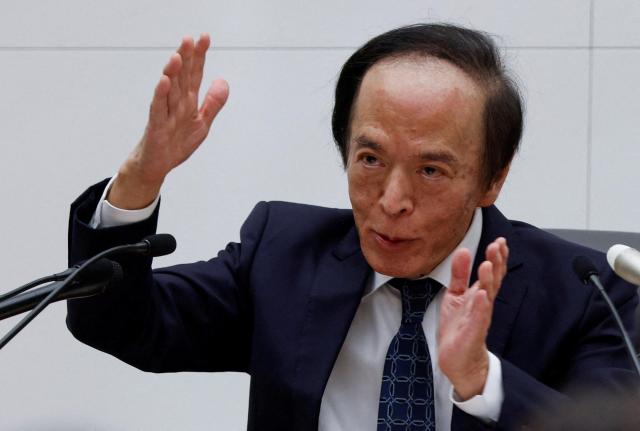
The Bank of Japan is increasingly expected to keep its policy rate unchanged at its late-April meeting, as instability in the Middle East drives up oil prices and raises concerns about supply disruptions, making the impact on Japan’s economy and inflation harder to gauge. A decision on a rate increase is likely to be pushed to the June meeting.
Yomiuri Shimbun, Nikkei and Asahi Shimbun reported on April 22 that the BOJ is seriously considering holding the policy rate at about 0.75% at its April 27-28 policy meeting. With uncertainty over Middle East developments persisting, the central bank is seen prioritizing a review of broader economic effects over a premature hike.
The outlook is being closely watched in South Korea as well. If a hike is delayed, the U.S.-Japan rate gap would remain, keeping pressure on the yen and potentially affecting South Korean export competitiveness through the won-yen exchange rate.
The key variable is Middle East risk. Japan relies heavily on the region for crude oil imports, and higher oil prices can push up inflation. The BOJ is reportedly considering raising its forecast for fiscal 2026 consumer inflation in its April “Outlook for Economic Activity and Prices” report to reflect the impact of higher oil prices.
Even so, the durability of inflation trends remains uncertain. Energy-driven price gains may prove temporary, while prolonged high oil prices could squeeze corporate profits and curb consumption, slowing growth. Asahi reported that the BOJ is holding off judgment between upside inflation pressure and downside economic risks, and that the probability of an April rate hike fell to 9% as of the afternoon of April 21, from more than 70% at one point. With markets largely positioned for no change, a surprise hike could increase financial-market volatility, the report said.
Internal support for a hike also appears limited. Nikkei reported that while some policy board members may argue for an increase, there is no clear momentum for an early move. At the March meeting, board member Hajime Takata, described as hawkish, proposed a hike, but it was voted down by a majority.
Yomiuri said concerns are also spreading over supplies of petrochemical feedstocks such as naphtha, as the Strait of Hormuz remains blocked, a key chokepoint for Middle East energy shipments. If crude supply disruptions materialize, Japan could slip into a slowdown, the report said.
The BOJ has held rates steady for two straight meetings since raising the policy rate from 0.5% to 0.75% last December. If it stands pat again, it would extend a cautious approach to tightening.
Still, the central bank’s overall policy direction has not changed. Yomiuri reported that the BOJ is maintaining its stance that it will make additional rate increases to adjust the degree of monetary accommodation if the economy and prices move in line with its projections. Market attention is now shifting to whether the June meeting will bring an actual hike.
* This article has been translated by AI.
Copyright ⓒ Aju Press All rights reserved.