

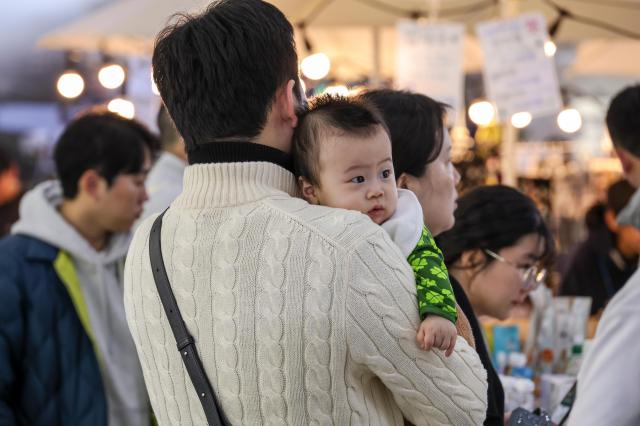
According to the Ministry of Data and Statistics Wednesday, the number of births reached 22,898 in February, up 2,747, or 13.6 percent, from a year earlier — marking the highest February figure in seven years since 2019.
The increase was the third-largest on record in absolute terms for February and the fastest growth rate since data collection began in 1981.
The data extend a sustained recovery trend, with births rising for 20 consecutive months since July 2024.
The total fertility rate — the average number of children a woman is expected to have over her lifetime — rose to 0.93 in February, up 0.10 from a year earlier. Adjusted for February’s shorter calendar, officials said the figure represents a relatively strong reading.
A breakdown by age shows the rebound was led decisively by women in their 30s, the core childbearing cohort.
The birth rate for women aged 30–34 climbed to 86.1 per 1,000, up 9.1 from a year earlier, while that for those aged 35–39 rose to 61.5, up 9.2 — the largest gains across age groups.
Among younger cohorts, the rate for women aged 25–29 edged up 1.6 to 23.9, while births among those aged 40 and above rose modestly by 0.7 to 5.1. The rate for women aged 24 and under, however, slipped 0.2 to 2.2.
By birth order, first-born children accounted for 63.0 percent of total births, up 1.2 percentage points from a year earlier, while the shares of second-born and third-or-higher երեխան declined by 0.5 and 0.6 percentage points, respectively.
Despite the rise in births, South Korea’s population continued to shrink, as deaths outpaced births.
The number of deaths stood at 29,172 in February, down 3.5 percent on-year, partly due to milder and drier weather conditions compared to last year. Still, the country recorded a natural population decline of 6,275 during the month.
Marriage figures — a leading indicator of future births — showed a temporary pullback.
The number of marriages fell 4.2 percent on-year to 18,557 in February, snapping a 22-month streak of increases since April 2024. Officials attributed the decline largely to fewer working days due to the Lunar New Year holiday, noting that on a comparable basis, marriages would have likely increased.
Divorces also declined sharply, falling 15.6 percent on-year to 6,197 — the lowest February figure since 1997. Authorities cited both a longer-term downtrend and fewer administrative working days during the holiday period.
The latest data follow a strong start to the year. In January, births rose 11.7 percent on-year to 26,916, pushing the monthly fertility rate to 0.99 — its highest level since monthly tracking began in 2024.
The recent gains are partly attributed to demographic effects, including the so-called “second echo boom,” as those born in the early 1990s enter peak marriage and childbearing years, as well as a backlog of delayed marriages following the COVID-19 pandemic.
Copyright ⓒ Aju Press All rights reserved.
