

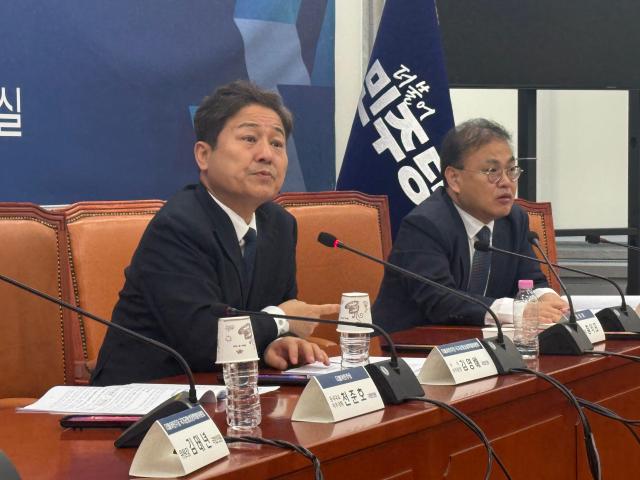
The Democratic Party is considering special subsidies and support from a 30 trillion won National Growth Fund to attract companies to “mega special zones” it is promoting in five regional hubs outside the Seoul metropolitan area, according to reporting by Aju Business Daily.
The party has been discussing a package of measures aimed at boosting regional economies and fostering national strategic industries. The plan would offer what it calls top-level preferential treatment for anchor companies and partner firms in the designated zones, including special subsidies, large-scale investment through the National Growth Fund and an expansion of industry-academia convergence districts, the report said.
As part of broader investment incentives, the party plans to create a new “growth engine” special subsidy. It is also considering expanding subsidies for local investment and foreign investment, with additional preferential support tied to the growth-engine program.
In finance, the party plans to invest 30 trillion won in the National Growth Fund and 700 billion won in a Regional Growth Fund by year’s end, the report said. The package would include preferential policy-finance loan rates, expanded insurance and guarantee limits, and continued export voucher support.
The plan also includes tax support. For large-scale local investment, the party would designate “opportunity development special zones” and provide tax benefits using investment, employment and R&D tax credits, according to the report.
The party also discussed steps to strengthen the business environment and build a more active industrial ecosystem in the regions to help the mega special zones take hold.
Measures under review include establishing nine “growth engine” branded colleges and convergence research institutes at key national universities, expanding industry-academia convergence districts, and strengthening cooperation programs such as “K-Quick Start,” which trains job candidates.
For infrastructure, the plan would use advanced national industrial complexes, MAX clusters and RE100 industrial parks to build regional hubs and concentrate investment in core facilities and innovation infrastructure, the report said.
To develop industrial ecosystems, the party is considering expanding regional block-funding R&D, including large “growth engine” projects that combine technology development, talent training, and testing and demonstration infrastructure. Other measures include building startup cities and giving preferential treatment to startup support programs.
The party is also considering operating a one-stop corporate investment support center to provide close, one-on-one assistance and speed up permitting and approvals within the mega special zones.
In addition, the party is pushing to enact a special law to support the policies. It plans to draft legislation covering designation and operating procedures for the mega special zones, broad regulatory exemptions and the policy package, then submit a bill after consultations with relevant ministries, the report said.
A lawmaker on the party’s Special Committee on Balanced National Growth said in a phone interview with Aju Business Daily on the 22nd that the amount and scale of subsidies have not been finalized.
“The amount and scale of the subsidies are not yet clearly set,” the lawmaker said. “But we will continue support at a fairly large level.” The lawmaker added that the party aims to pass the special law for designating mega special zones within this year, saying it will move as quickly as possible to establish a legal foundation.
* This article has been translated by AI.
Copyright ⓒ Aju Press All rights reserved.