

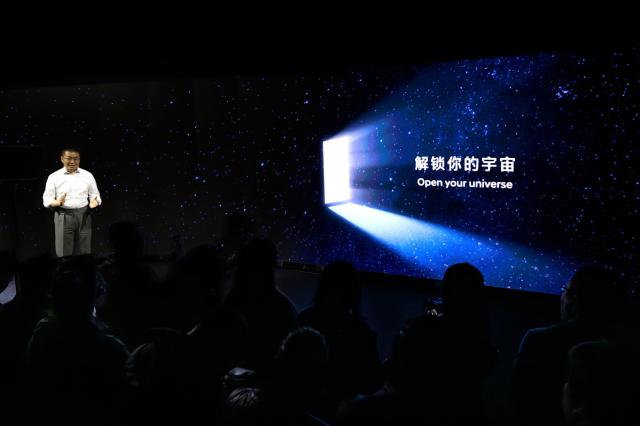
"In China, For China, To Global." (Jose Munoz, president of Hyundai Motor)
Hyundai Motor Group is launching what it calls a second push in China, 24 years after entering the market, aiming to move beyond its image for value-priced gasoline cars and reposition itself around electric vehicles and other eco-friendly models. The group set a goal of building a China-tailored lineup of six new EV models by 2030 and reaching annual sales of 500,000 vehicles in the country.
Hyundai Motor Group said Thursday it will formally declare a shift to a new-energy vehicle (NEV) brand at the 2026 Beijing International Motor Show, known as Auto China 2026, which opens April 24 local time. It will also unveil the first China mass-production model under its Ioniq brand. The move marks the group’s biggest local change since Hyundai Motor and Beijing Automotive established the 50-50 joint venture Beijing Hyundai in October 2002.
The group is seeking to regain ground after its China business shrank sharply following the THAAD dispute. Up to 2016, Hyundai brands posted double-digit combined market share, with Beijing Hyundai at 6.5% and Dongfeng Yueda Kia at 3.7%, and were considered part of the market’s “big three” alongside Volkswagen and General Motors. The downturn was compounded by a boycott of South Korean products and by Hyundai’s slower response to rapid advances in China’s EV and autonomous-driving sectors.
Over the past decade, China’s auto market has shifted from internal-combustion vehicles to NEVs. EV makers such as BYD and Geely have moved into the leading group, and technology companies including Huawei and Xiaomi have entered the auto industry through electronics and semiconductors. According to a survey by the China Automotive Research Institute, NEVs account for 54% of new-vehicle sales in China.
Hyundai said localization is its top priority, beyond simply introducing new EVs. It has applied autonomous-driving technology developed by Chinese IT company Momenta to new models and plans to build an “Ioniq ecosystem” combining services reflecting local preferences and charging infrastructure.
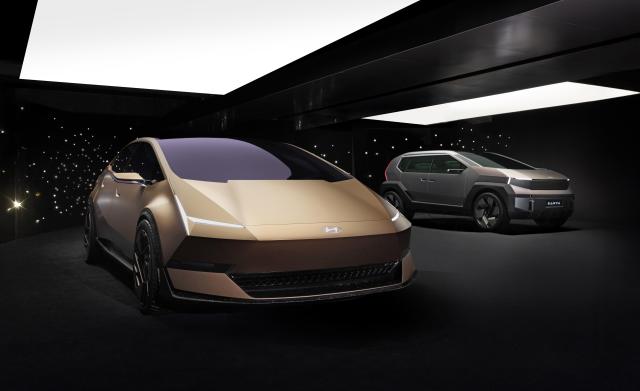
Hyundai also plans to launch an extended-range electric vehicle, or EREV, in 2027, citing China’s vast geography and charging conditions. The company described the EREV as running on battery power in normal use, while using fuel to generate electricity for the motor on long-distance drives.
The group also sees opportunity in China’s oversupply and shifting government policies. Under China’s 15th five-year plan for 2026-2030, the government narrowed support by classifying only “intelligent connected NEVs” as an emerging industry. A subsidy program that pays consumers to replace older vehicles with NEVs, known as “yigu huanxin,” was also changed from a fixed-amount payment to a percentage-based system, raising the likelihood that buyers will shift toward AI-enabled smart NEVs or premium brands.
With local brands strong in mass-market EVs, Hyundai said it aims to build an image as a premium AI smart-car brand. Kia is also accelerating its electrification push in China. Kia is mass-producing the EV5 at its Yancheng plant and exporting it not only within China but also to Central and South America and Australia, after unveiling the model at the Chengdu Motor Show in August 2023.
Hyundai Motor Group is also expanding cooperation with Chinese companies in future industries. In January, group executives discussed broad cooperation with major firms in batteries, energy and autos, including CATL, Sinopec and Yueda Group, to review technology trends in China and refine mid- to long-term strategy.
With CATL, the group exchanged views on next-generation battery technologies such as cell-to-pack (CTP) and ways to build a stable supply chain. With Sinopec, it agreed to cooperate on building a hydrogen ecosystem centered on its hydrogen fuel-cell system unit in Guangzhou, HTWO Guangzhou. With Kia’s local joint-venture partner Yueda Group, it agreed to pursue a sustainable business structure spanning batteries, hydrogen and future mobility beyond finished-vehicle sales.
* This article has been translated by AI.
Copyright ⓒ Aju Press All rights reserved.