

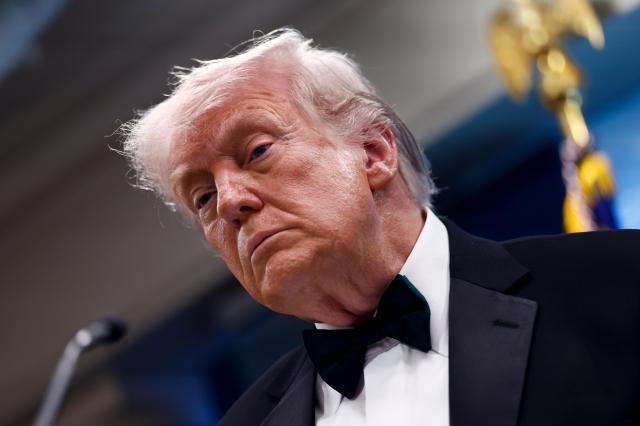
A symbolic Washington gathering was again shaken by gunfire. At the White House Correspondents’ Association dinner attended by U.S. President Donald Trump, an armed suspect carrying a shotgun opened fire on April 25 (local time) while trying to breach a security screening area, prompting an emergency evacuation of Trump and other key guests. The suspect was arrested at the scene, and the president and attendees were not hurt. The episode, however, cannot be dismissed as a routine security lapse.
The correspondents’ dinner has long been a high-profile venue where U.S. politics and the press share the same room, a public display of the relationship between an administration that wields power and journalists tasked with scrutinizing it. A shooting at such an event underscores how social division and violence have reached even the country’s institutional and symbolic center, putting a democratic stage under physical threat.
Investigators must determine whether Trump was targeted, whether the suspect acted alone, and whether there was a political motive. Whatever the motive, the effect is the same: when guns enter political space, debate gives way to fear. A society that shifts conflicts meant for elections, legislatures, the press and public assembly into the realm of weapons has moved into dangerous territory.
The United States has repeatedly argued over gun regulation for years. After major tragedies, calls to tighten rules have grown, but political leaders have repeatedly failed to reach conclusions amid partisan confrontation. Constitutional debates and arguments over individual liberty deserve respect, but they cannot justify neglecting the state’s basic duty to protect public safety. If even a top-tier, heavily secured event with the president present is not fully safe, ordinary citizens’ anxiety is likely to be greater.
Another concern is the normalization of political hostility. U.S. politics has grown accustomed to language that treats opponents not as rivals but as targets to be eliminated. Conspiracy theories, hatred and inflammatory rhetoric have spread between online spaces and real life. In such an atmosphere, violence by an extremist is less an accident than a foreseeable outcome.
The incident is not only an American problem. Democracies broadly face shared challenges, including political polarization, disinformation, hate-driven agitation and leader worship. Cracks can begin when people assume institutions are unshakable. South Korea is not necessarily an exception; as political distrust and factional confrontation deepen, society can overheat quickly.
The arrest of one gunman does not end the matter. The central task is to answer why such incidents keep recurring. Democracy is protected not by bullets, but by words, and the United States now faces that basic principle again.
* This article has been translated by AI.
Copyright ⓒ Aju Press All rights reserved.