

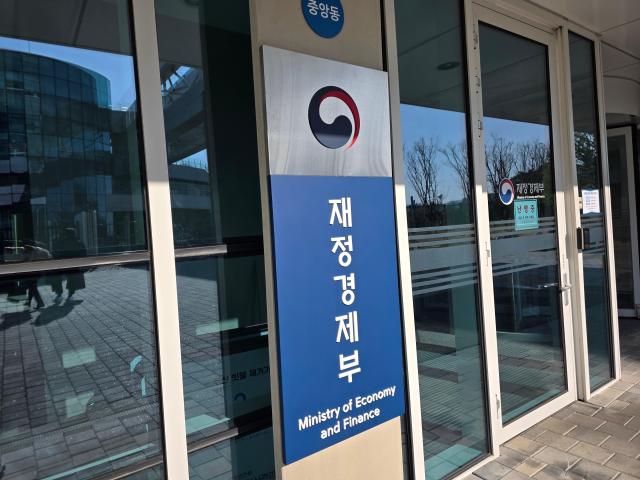
South Korea’s government is facing a pivotal choice in fiscal policy as tax revenue is expected to far exceed earlier projections, reversing several years of shortfalls. After an estimated 25 trillion to 35 trillion won in excess revenue this year, some forecasts say national tax revenue could top 500 trillion won next year, well above the government’s initial outlook.
As of the 26th, the Finance and Economy Ministry and other officials estimate this year’s national tax revenue will surpass 400 trillion won and reach about 415 trillion won, sharply higher than earlier projections. In its “2025-2029 National Fiscal Management Plan,” the government had forecast about 390 trillion won for this year and about 412 trillion won for next year, based on a conservative assumption of 4.6% average annual growth. Changing conditions are now forcing a revision.
Revenue conditions have improved quickly this year, helped by a semiconductor boom, a strong stock market and a recovery in employment. When the government drafted its first supplementary budget this year, it made a 22.6 trillion won revenue adjustment, a procedure used to revise the budget when tax receipts come in higher or lower than expected.
By category, corporate tax revenue was projected to rise by 14.8 trillion won, while the securities transaction tax and the rural special tax were expected to increase by 10.3 trillion won. Earned income tax was also projected to rise by 4.8 trillion won, reflecting broader gains in the tax base.
With growth across major tax items now expected to be steeper than previously assumed, some observers say excess revenue this year could exceed the 25 trillion won used to finance the first supplementary budget and reach as much as 35 trillion won.
Next year’s increase could be even larger. Using operating profit forecasts that reflect a “semiconductor supercycle” for major companies such as Samsung Electronics (300 trillion won) and SK hynix (198 trillion won), a simple calculation suggests corporate tax revenue from those two firms alone could generate more than 130 trillion won in additional revenue. That has fueled speculation that next year’s national tax revenue could far exceed the 412 trillion won forecast and climb well past 500 trillion won.
If the unexpected surge materializes, debate is expected to intensify over how to use the windfall. Some argue it should be used to repay government bonds and strengthen fiscal soundness, saying rapid growth in national debt during years of revenue shortfalls makes this a chance to rebuild fiscal room.
Others say the government should play a more active fiscal role during a period of low growth. The government has also stressed the need for spending to strengthen the growth foundation. Park Hong-geun, minister of the Planning and Budget Office, said at a news briefing on the 21st, “To raise the growth rate, the role of fiscal policy is needed,” signaling support for an expansionary stance. With the decline in potential growth becoming entrenched, the government sees fiscal spending as unavoidable for investment in new industries and structural reform.
Questions remain about sustainability, however, because the revenue boom may be temporary and tied to a specific industry cycle rather than structural change. Critics note that external uncertainty remains high, including high oil prices and a weak won, and that tax receipts could still swing sharply with corporate earnings.
The broad direction of fiscal management is expected to take shape at a National Fiscal Strategy Meeting in June after local elections. Chaired by the president, the meeting sets medium- and long-term fiscal policy and the basic principles for drafting next year’s budget, effectively serving as the government’s fiscal control tower. Officials are also expected to outline a more concrete plan there for how to use excess revenue.
* This article has been translated by AI.
Copyright ⓒ Aju Press All rights reserved.