

Chinese automakers rolled out new electric models packed with the latest technology at the motor show, betting that strong battery engineering and AI-driven features can help them hold their ground at home against global brands’ premium appeal.
According to the industry on April 28, BYD applied the theme “All things move toward renewal” to its Dynasty lineup and introduced a wave of new vehicles, including the flagship SUV Datang, the third-generation Yuan Plus and the Song Ultra EV. BYD highlighted its second-generation Blade battery, flash-charging technology and an intelligent ecosystem connection aimed at younger Chinese buyers. The company said the second-generation Blade battery can reach 70% charge in five minutes at room temperature and a full charge in nine minutes; in minus 30 Celsius conditions, it said, a full charge takes about three minutes longer.
BYD said the Datang achieved a 950-kilometer range on a single charge by increasing energy density, calling it among the longest in the world. The Yuan Plus, which BYD said has topped 1.1 million global sales since its 2022 launch, adds a 240-kilowatt motor and is rated at 630 kilometers under China’s CLTC test cycle; BYD said flash charging is applied across the lineup. The models were presented as new-energy vehicles priced from 250,000 to 320,000 yuan.
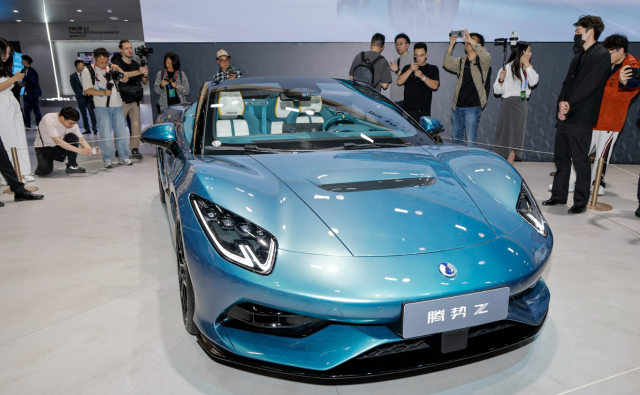
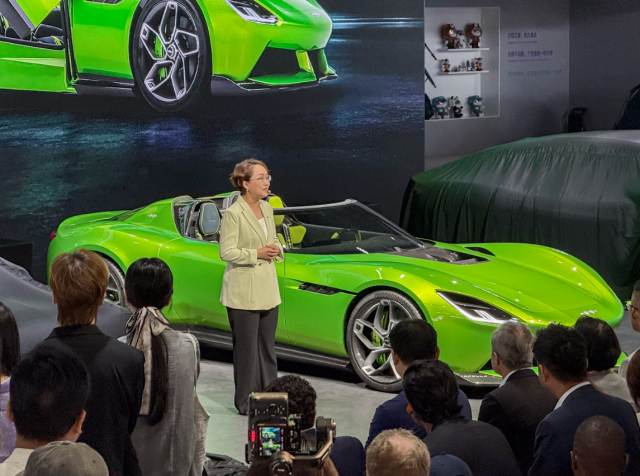
Across its flagship brands — including Fangchengbao, Yangwang and Denza — BYD also unveiled new sedans, SUVs, multipurpose vehicles and supercars. Yangwang showed the 2026 U7, U8 and U8L Dingchang Edition, along with the U9, which it said was the first Chinese supercar to appear in “Gran Turismo 7.” The company said the Yangwang U9 Extreme (U9X) set a world record with a top speed of 496.22 kph. BYD said the Denza Z uses an intelligent vehicle control technology platform to improve cornering, driving safety and tuning performance.
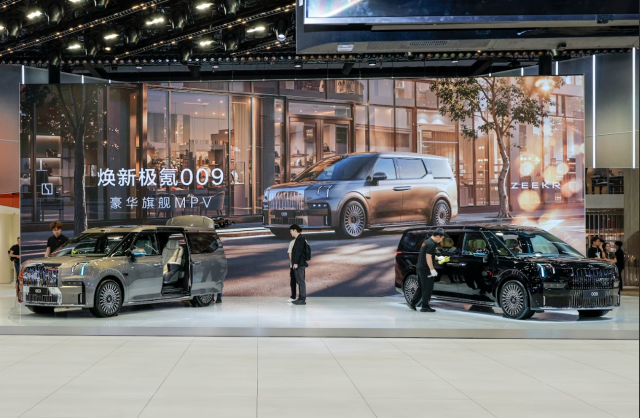
Geely Holding Group showcased mobility solutions across its brands — including Zeekr, which is slated for domestic launch this year — as well as Lynk & Co, Geely Galaxy, Lotus and Smart. It highlighted technologies such as the EVA-cap robotaxi, Super EVA and the Smart Egg cockpit, underscoring capabilities spanning AI, autonomous driving and next-generation eco-friendly technology.
Zeekr introduced the high-performance hybrid flagship SUV “8X,” calling it the only midsize hybrid SUV in the world capable of 0-100 kph acceleration in the three-second range. Geely attributed the performance to a 900-volt high-voltage platform, a 2.0 turbo super-hybrid engine, a 145-kilowatt (197-horsepower) generator, an AI digital chassis and dual Nvidia Drive Thor-U chips.
Geely Automobile also presented new models featuring a fresh design concept and advanced technology, including its second concept car, the “Galaxy Light,” and the brand’s first off-road NEV architecture. The company also promoted its i-HEV intelligent hybrid system.
A Geely Holding Group official said the products unveiled at Auto China 2026 showed the group’s “clear trend” toward intelligent electrification. The official added that, as the industry enters an era of intelligent electrification marked by both challenges and opportunities, the group will seek growth by creating strong synergies across its businesses.
* This article has been translated by AI.
Copyright ⓒ Aju Press All rights reserved.