

The Seoul Arts Center, located at the foot of Woomyeonsan in Seocho-dong, is more than just a performance venue. It serves as a mirror reflecting a nation's cultural level and a symbol embodying the spirit of an era. Like the traditional hat perched atop the opera house's roof, the Arts Center is a place where Korean tradition meets global artistry.
However, an institution cannot survive on symbolism alone. Beautiful architecture does not cover maintenance costs, and reputation alone cannot offset deficits. Culture must ultimately move people's hearts, draw their footsteps, and become a platform for the times.
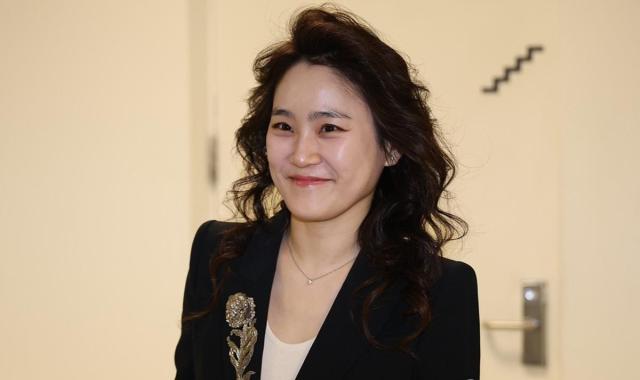
In this context, the appointment of world-renowned cellist Hanna Chang as president of the Arts Center is not just a personnel change. It signifies a shift in the direction of Korean cultural administration and raises a crucial question about what the Arts Center should become in the future.
One of the most striking statements in her inaugural speech was:
“The competitors of the Arts Center are not Japan's Arts Center, America's Lincoln Center, or China's National Centre for the Performing Arts. Our real competitors are Netflix and YouTube.”
This statement instantly dismantles the long-standing walls of Korean cultural administration. In the past, the Arts Center was viewed merely as a 'facility.' Good performance spaces, excellent acoustics, and quality exhibition areas were the focus.
However, today is the era of platforms, not spaces. People do not necessarily go to performance venues. They watch Netflix on their smartphones and consume world-class performances on YouTube. Time has become fragmented, appreciation has become personalized, and culture has already entered the subscription economy.
The chronic deficits of the Arts Center stem from this reality. Audiences are dwindling while costs rise. Innovation under the guise of a public institution has been slow, and past methods have failed to persuade the future. Accumulated deficits amounting to hundreds of billions of won are not just numbers; they are a warning. Cultural institutions must now declare a survival strategy.
Hanna Chang has recognized this point. By defining the competition not as foreign performance venues but as digital platforms, she envisions the Arts Center as a 'content company' rather than merely a 'building.' This perspective is modern and accurately penetrates the MZ generation and the age of artificial intelligence.
Today's younger generation chooses experience over authority. They prefer participation over formality and intuition over explanation. They consume short videos and memorable moments rather than lengthy explanations, and they remember shareable experiences more than the venue itself. Algorithms learn preferences, and platforms do not wait for audiences; they seek them out.
The Arts Center must shift from a strategy of “Come see our great performances” to “We will enter your life.”
Hanna Chang is a person with that potential. She is not just a famous performer; she is someone who has survived the harsh standards of world music history.
Initially, she learned piano. As a child playing the piano, she became captivated by the deep, human sound of the cello one day. This change was not merely a shift in hobby but a turning point in her destiny. The cello became her life, and she ultimately became a globally recognized master.
From a young age, she was called a genius, but the term 'genius' can be cruel. People see only the results, but behind those results lies unimaginable training and solitude.
At the age of eleven, she shocked the world music scene by becoming the youngest and first Asian winner of the Rostropovich International Cello Competition. This was the moment when the legendary cellist Mstislav Rostropovich personally acknowledged her talent.
The first proof of her genius is this 'victory at eleven.' Classical music is a world of early education, but it is nearly miraculous for a young performer to reach the top in a prestigious cello competition. It was a judgment that she was not just a prodigy but a fully formed musician.
The second example is her invitations to the world stage. She has since collaborated with top orchestras, including the New York Philharmonic, London Symphony Orchestra, and Berlin Philharmonic. The world does not consider nationality or age; only skill remains on stage.
The third is the evaluations from masters. World-renowned conductors and critics have described her performances as “simultaneously possessing fiery concentration and human depth.” Her recordings and live performances have become timeless art, not mere trends.
These three points illustrate that Hanna Chang's success is not a coincidence but a structure, and her genius is just the beginning; ultimately, it was her rigorous self-discipline that completed it.
She practiced for more than ten hours a day, moving her bow thousands of times for the sensitivity of her fingertips. Achieving ten minutes of perfection on stage requires tens of thousands of hours offstage.
There is a scene in the film “Tár” where a young student says, “I don’t like Bach.” The reason is not music but identity; he judges art based on the composer’s gender and race.
This scene symbolizes today’s cultural politics. Art is sometimes consumed based on identity rather than skill.
However, Hanna Chang's true greatness lies beyond that. She is not great because she is a woman or an Asian; she is great because she has silenced the world with her overwhelming skill.
Identity may be a starting point, but the ultimate judgment of art is always skill. The stage cannot be maintained by political correctness. If a single note is wrong, all rhetoric collapses. Hanna Chang is someone who has passed through that harsh truth.
Her musical achievements are not just tales of success; they are records of human will. Collaborating with the world's top orchestras means stepping onto the judgment stage every time. She has always survived.
Behind her success is her family.
Hanna Chang's family has essentially devoted their entire lives to nurture one genius. Her father could have chosen a stable path but changed the direction of his life for his daughter's talent. Her mother also helped create a musical foundation.
In fact, Hanna Chang's musical education began with her family's dedication. From learning piano to choosing the cello, the entire family went all-in for one artist. World-class geniuses are not created in isolation; behind one person's success lies the sacrifice of a family.
Applause may echo on stage, but the time that makes that applause possible always begins at home.
Hanna Chang understands this better than anyone. That is why she has always remained humble. Even on the grand stage, she refers to herself as “still a learner.” A true master knows how much they lack.
She has not just remained a performer; she has sought to nurture younger generations and return classical music to the public.
Notably, during the time when President Lee Jae-myung served as mayor of Seongnam, she contributed to popularizing classical music among youth through performances at the Seongnam Arts Center. She is not just a star performer but a cultural educator showing that classical music is not merely the privilege of a select few.
Therefore, what the Arts Center needs now is precisely that. It should no longer be a sanctuary for classical music enthusiasts alone. It must become the heart of K-Culture. It should be a living platform encompassing classical music, opera, ballet, film, AI art, game music, digital performances, and global collaborations.
The world’s best performance venue is not just a good concert hall; it is a place that the world seeks out first. To compete with the Lincoln Center in the U.S., Suntory Hall in Japan, and the National Centre for the Performing Arts in China, it requires more than mere comparisons of facilities. It needs the stories of Seoul, the emotions unique to Korea, and the strength of K-Culture.
Just as Gwanghwamun becomes a stage for BTS and Gyeongbokgung serves as a backdrop for the world, the Arts Center must also become a cultural landmark that the world seeks out. It should not just be a place to watch performances but a destination to experience the future of Korean culture.
In the age of artificial intelligence, culture is about 'participation,' not 'appreciation.' Audiences are no longer passive consumers. They connect, share, and recreate directly.
The Arts Center must now move beyond operating a performance venue to becoming a center for digital platforms, global streaming, educational content, and cultural technology industries. Viewing Netflix and YouTube as competitors ultimately means the Arts Center aims to enter the daily lives of people worldwide.
Laozi said in the Dao De Jing,
“大器晩成 (great vessels take time to form).”
The Arts Center is the same. It has long been a symbol of the nation, but now it must be reborn as a truly global platform. Deficits are just numbers, but vision can change the era.
Hanna Chang's appointment is not merely a personnel change; it poses a question about the next 30 years of Korean culture. The answer to that question is clear: The completion of K-Classical will be achieved by Hanna Chang.
Korea has already shaken the world with K-Pop. K-Dramas and K-Movies have captured the emotions of global audiences. The final pinnacle remains K-Classical. It is about Korea becoming the standard in the realm of the oldest, deepest, and highest art.
The baton for that completion is now in Hanna Chang's hands. Transforming the Arts Center is not just about turning one institution into the black; it is about rewriting the status of Korean culture. Beyond Netflix, beyond YouTube, the day will come when the world looks to Seoul's Arts Center. On that day, we will finally say,
“The completion of K-Classical was achieved by Hanna Chang.”
However, an institution cannot survive on symbolism alone. Beautiful architecture does not cover maintenance costs, and reputation alone cannot offset deficits. Culture must ultimately move people's hearts, draw their footsteps, and become a platform for the times.
In this context, the appointment of world-renowned cellist Hanna Chang as president of the Arts Center is not just a personnel change. It signifies a shift in the direction of Korean cultural administration and raises a crucial question about what the Arts Center should become in the future.
One of the most striking statements in her inaugural speech was:
“The competitors of the Arts Center are not Japan's Arts Center, America's Lincoln Center, or China's National Centre for the Performing Arts. Our real competitors are Netflix and YouTube.”
This statement instantly dismantles the long-standing walls of Korean cultural administration. In the past, the Arts Center was viewed merely as a 'facility.' Good performance spaces, excellent acoustics, and quality exhibition areas were the focus.
However, today is the era of platforms, not spaces. People do not necessarily go to performance venues. They watch Netflix on their smartphones and consume world-class performances on YouTube. Time has become fragmented, appreciation has become personalized, and culture has already entered the subscription economy.
The chronic deficits of the Arts Center stem from this reality. Audiences are dwindling while costs rise. Innovation under the guise of a public institution has been slow, and past methods have failed to persuade the future. Accumulated deficits amounting to hundreds of billions of won are not just numbers; they are a warning. Cultural institutions must now declare a survival strategy.
Hanna Chang has recognized this point. By defining the competition not as foreign performance venues but as digital platforms, she envisions the Arts Center as a 'content company' rather than merely a 'building.' This perspective is modern and accurately penetrates the MZ generation and the age of artificial intelligence.
Today's younger generation chooses experience over authority. They prefer participation over formality and intuition over explanation. They consume short videos and memorable moments rather than lengthy explanations, and they remember shareable experiences more than the venue itself. Algorithms learn preferences, and platforms do not wait for audiences; they seek them out.
The Arts Center must shift from a strategy of “Come see our great performances” to “We will enter your life.”
Hanna Chang is a person with that potential. She is not just a famous performer; she is someone who has survived the harsh standards of world music history.
Initially, she learned piano. As a child playing the piano, she became captivated by the deep, human sound of the cello one day. This change was not merely a shift in hobby but a turning point in her destiny. The cello became her life, and she ultimately became a globally recognized master.
From a young age, she was called a genius, but the term 'genius' can be cruel. People see only the results, but behind those results lies unimaginable training and solitude.
At the age of eleven, she shocked the world music scene by becoming the youngest and first Asian winner of the Rostropovich International Cello Competition. This was the moment when the legendary cellist Mstislav Rostropovich personally acknowledged her talent.
The first proof of her genius is this 'victory at eleven.' Classical music is a world of early education, but it is nearly miraculous for a young performer to reach the top in a prestigious cello competition. It was a judgment that she was not just a prodigy but a fully formed musician.
The second example is her invitations to the world stage. She has since collaborated with top orchestras, including the New York Philharmonic, London Symphony Orchestra, and Berlin Philharmonic. The world does not consider nationality or age; only skill remains on stage.
The third is the evaluations from masters. World-renowned conductors and critics have described her performances as “simultaneously possessing fiery concentration and human depth.” Her recordings and live performances have become timeless art, not mere trends.
These three points illustrate that Hanna Chang's success is not a coincidence but a structure, and her genius is just the beginning; ultimately, it was her rigorous self-discipline that completed it.
She practiced for more than ten hours a day, moving her bow thousands of times for the sensitivity of her fingertips. Achieving ten minutes of perfection on stage requires tens of thousands of hours offstage.
There is a scene in the film “Tár” where a young student says, “I don’t like Bach.” The reason is not music but identity; he judges art based on the composer’s gender and race.
This scene symbolizes today’s cultural politics. Art is sometimes consumed based on identity rather than skill.
However, Hanna Chang's true greatness lies beyond that. She is not great because she is a woman or an Asian; she is great because she has silenced the world with her overwhelming skill.
Identity may be a starting point, but the ultimate judgment of art is always skill. The stage cannot be maintained by political correctness. If a single note is wrong, all rhetoric collapses. Hanna Chang is someone who has passed through that harsh truth.
Her musical achievements are not just tales of success; they are records of human will. Collaborating with the world's top orchestras means stepping onto the judgment stage every time. She has always survived.
Behind her success is her family.
Hanna Chang's family has essentially devoted their entire lives to nurture one genius. Her father could have chosen a stable path but changed the direction of his life for his daughter's talent. Her mother also helped create a musical foundation.
In fact, Hanna Chang's musical education began with her family's dedication. From learning piano to choosing the cello, the entire family went all-in for one artist. World-class geniuses are not created in isolation; behind one person's success lies the sacrifice of a family.
Applause may echo on stage, but the time that makes that applause possible always begins at home.
Hanna Chang understands this better than anyone. That is why she has always remained humble. Even on the grand stage, she refers to herself as “still a learner.” A true master knows how much they lack.
She has not just remained a performer; she has sought to nurture younger generations and return classical music to the public.
Notably, during the time when President Lee Jae-myung served as mayor of Seongnam, she contributed to popularizing classical music among youth through performances at the Seongnam Arts Center. She is not just a star performer but a cultural educator showing that classical music is not merely the privilege of a select few.
Therefore, what the Arts Center needs now is precisely that. It should no longer be a sanctuary for classical music enthusiasts alone. It must become the heart of K-Culture. It should be a living platform encompassing classical music, opera, ballet, film, AI art, game music, digital performances, and global collaborations.
The world’s best performance venue is not just a good concert hall; it is a place that the world seeks out first. To compete with the Lincoln Center in the U.S., Suntory Hall in Japan, and the National Centre for the Performing Arts in China, it requires more than mere comparisons of facilities. It needs the stories of Seoul, the emotions unique to Korea, and the strength of K-Culture.
Just as Gwanghwamun becomes a stage for BTS and Gyeongbokgung serves as a backdrop for the world, the Arts Center must also become a cultural landmark that the world seeks out. It should not just be a place to watch performances but a destination to experience the future of Korean culture.
In the age of artificial intelligence, culture is about 'participation,' not 'appreciation.' Audiences are no longer passive consumers. They connect, share, and recreate directly.
The Arts Center must now move beyond operating a performance venue to becoming a center for digital platforms, global streaming, educational content, and cultural technology industries. Viewing Netflix and YouTube as competitors ultimately means the Arts Center aims to enter the daily lives of people worldwide.
Laozi said in the Dao De Jing,
“大器晩成 (great vessels take time to form).”
The Arts Center is the same. It has long been a symbol of the nation, but now it must be reborn as a truly global platform. Deficits are just numbers, but vision can change the era.
Hanna Chang's appointment is not merely a personnel change; it poses a question about the next 30 years of Korean culture. The answer to that question is clear: The completion of K-Classical will be achieved by Hanna Chang.
Korea has already shaken the world with K-Pop. K-Dramas and K-Movies have captured the emotions of global audiences. The final pinnacle remains K-Classical. It is about Korea becoming the standard in the realm of the oldest, deepest, and highest art.
The baton for that completion is now in Hanna Chang's hands. Transforming the Arts Center is not just about turning one institution into the black; it is about rewriting the status of Korean culture. Beyond Netflix, beyond YouTube, the day will come when the world looks to Seoul's Arts Center. On that day, we will finally say,
“The completion of K-Classical was achieved by Hanna Chang.”
* This article has been translated by AI.
Copyright ⓒ Aju Press All rights reserved.