

As Samsung Electronics overhauls its underperforming home appliance business, it is putting heat pumps at the center of its next growth push. The company said it will move more aggressively into electrified heating in South Korea, building on proprietary heat pump technology it says has been recognized in Europe and other global markets.
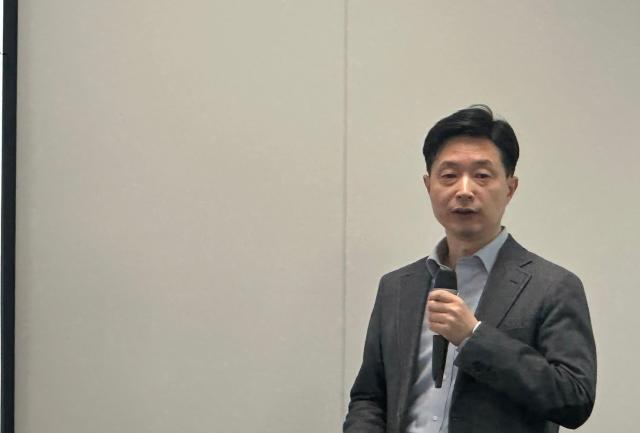
Song Byeong-ha, a group leader in Samsung Electronics’ DA (home appliances) business, said at a media briefing on April 29 for the company’s newly launched Korea-specific “EHS heat pump boiler” that heat pumps are “a key solution” for switching to electric heating and achieving carbon neutrality.
“Based on proven technology and global R&D infrastructure, we will continue to innovate so domestic consumers can enjoy both stable heating performance and energy efficiency,” Song said.
A heat pump absorbs heat energy from outside and uses it as an indoor heat source. It operates on a vapor-compression cycle in which a refrigerant repeatedly changes between liquid and gas, absorbing and releasing heat. The principle is similar to an air conditioner: refrigerant that has absorbed outside heat is compressed into a high-temperature, high-pressure gas, and the heat is transferred through a heat exchanger to indoor air or water. After releasing heat, the refrigerant expands, cools and returns to a liquid state that can absorb heat again.
Samsung said its heat pump uses a large-capacity heat exchanger and a more efficient valve structure inside the compressor to reduce energy loss during compression. The company said the system can supply about five times as much heat energy as the electrical power it consumes.
Samsung also said the system is designed to provide stable heating in severe cold. It said high-efficiency refrigerant compression and anti-icing technology allow operation at temperatures as low as minus 25 degrees Celsius, and that it can reliably supply hot water up to 70 degrees Celsius even at minus 15 degrees Celsius.
Song cited a user case in Yangpyeong, saying temperatures there fell to minus 15 degrees Celsius in January and the home maintained an indoor temperature of 15 degrees Celsius for about 20 days, leaving the customer “very satisfied.” He said oil boiler users often turn systems on and off to manage fuel costs, while a heat pump can be left running, offering a convenience advantage.
Samsung said heating costs can be reduced by up to 53% compared with typical city gas. Song said results vary depending on the relative prices of gas, oil and electricity, but the Yangpyeong customer cut heating costs by 53% after switching to a heat pump. He added that after about 2.5 to 3 years, a heat pump becomes clearly more cost-effective than city gas.
Samsung said carbon dioxide emissions are about 60% lower. It also said the product uses R32 refrigerant, which it said has a global warming potential 68% lower than R410A, a refrigerant commonly used in residential air conditioners and other heating and cooling equipment.
Song acknowledged limits, including difficulty installing the system in high-rise buildings such as apartments and higher upfront installation costs. He said heat pumps are currently optimized for typical houses, and that Samsung is working with Samsung C&T, a Samsung Group affiliate, to study what technology best fits high-rise apartments of 20 floors or more. He said the company expects to disclose results soon.
Separately, the government began a heat pump boiler support program this month for households using briquette or kerosene boilers and for areas without city gas supply in major local governments including Jeju, South Jeolla and South Gyeongsang. Applicants can check eligibility through local government notices and apply in person.
Eligible households can receive subsidies after installation is completed and verified through an on-site inspection by the local government. The subsidy can cover up to 70% per household, including purchase and installation costs.
* This article has been translated by AI.
Copyright ⓒ Aju Press All rights reserved.