

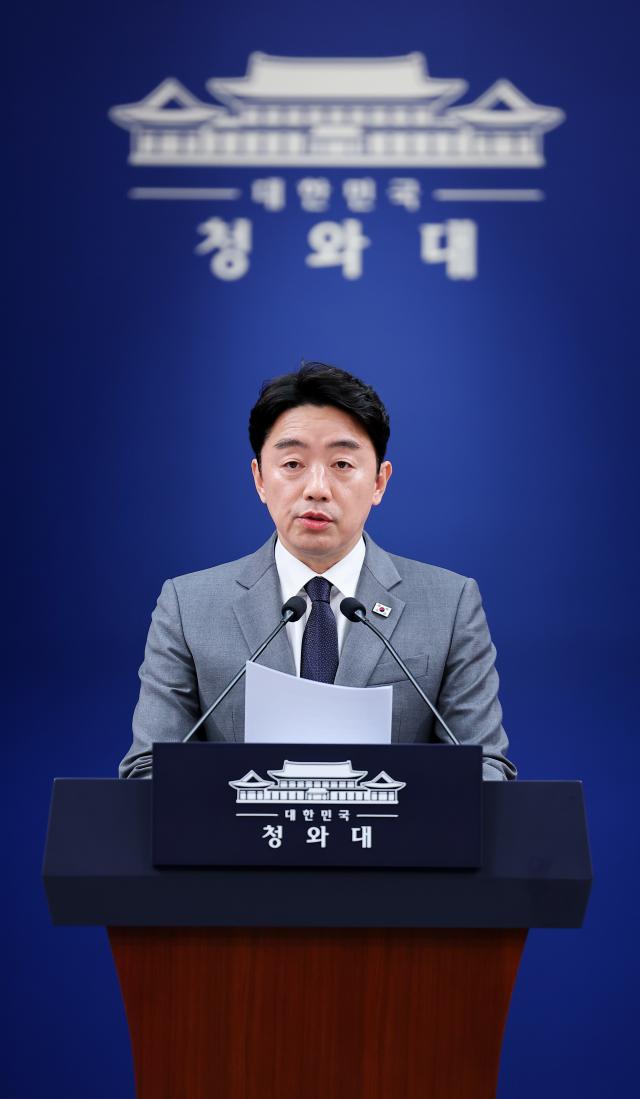
Presidential Chief of Staff Kang Hoon-sik told a briefing at the Blue House press center that the government needs stronger expertise and skills among public officials “not only to overcome emergency situations, but to turn crises into opportunities and make a leap forward.”
The government has operated a task force at the Blue House since late last year and, with relevant ministries, prepared five major initiatives aimed at boosting public-sector capacity.
First, it plans to develop specialist civil servants who are not rotated through posts. In areas requiring high expertise — including artificial intelligence, international trade and labor supervision — officials would serve for at least seven years, and the government would manage them across ministries rather than within individual agencies.
By converting existing general-service officials into specialists, the government plans to secure more than 700 this year and increase the total to more than 1,200 by 2028. When adding new positions, it would designate a set share as specialist posts and run a “two-track” personnel system.
The plan also introduces a “fast-track” promotion program for fifth-grade officials to help capable working-level staff move more quickly into management. Promotions would come earlier after performance and competency reviews, starting with 100 people this year and expanding gradually to embed a results-oriented culture.
To increase openness, the government will expand the inflow of private-sector talent. It plans to raise the share of open recruitment posts at the director-general and division director levels in central ministries to at least 12% by 2030, abolish salary caps tied to positions, and ease the burden of restrictions on post-retirement employment, Kang said.
It also plans to step up personnel exchanges between local and central governments and among ministries. A project-based exchange system to provide “one-stop” support for large regional projects will be piloted in integrated local governments, with the aim of leveling up government capacity and flexibly using talent inside and outside government to deliver policy results more quickly.
The government will also build a tailored training system to strengthen job skills. It plans to introduce self-directed learning accounts that officials can use for items such as AI subscriptions or professional certifications, along with “learning days” of up to three days a year dedicated to capacity building.
In addition, it will systematically manage overseas human networks and gradually integrate and link network information scattered across overseas missions, ministries and public institutions, with the goal of maximizing national interests and protecting citizens.
Kang said the government will “immediately revise relevant laws and regulations and move quickly to implement” the initiatives, adding that the measures will help the government and civil service “make a breakthrough leap” in a rapidly changing environment.
He said the government will continue to pursue reforms to remove entrenched practices in the civil service to support more proactive and responsible administration.
* This article has been translated by AI.
Copyright ⓒ Aju Press All rights reserved.