

South Korea’s diplomatic map is shifting. For decades, Seoul operated within a so-called “four-power diplomacy” centered on the United States, China, Japan and Russia — shaped by the peninsula’s division, the U.S.-South Korea alliance, economic dependence on China, historical disputes with Japan and outreach to Russia.
But today’s international environment no longer fits that frame. U.S.-China strategic rivalry has become prolonged, supply chains are being recast in security terms, and the wars in Ukraine and the Middle East have pushed the world deeper into uncertainty.
In that turbulence, India is emerging as a new diplomatic, economic and strategic axis. India is the world’s most populous country and a fast-growing economy. It is also a leading “Global South” power that maintains an independent foreign policy rather than aligning fully with either the United States or China. For South Korean companies, it is both a production base and a vast consumer market; for South Korean diplomacy, it can widen Seoul’s room to maneuver among major powers.
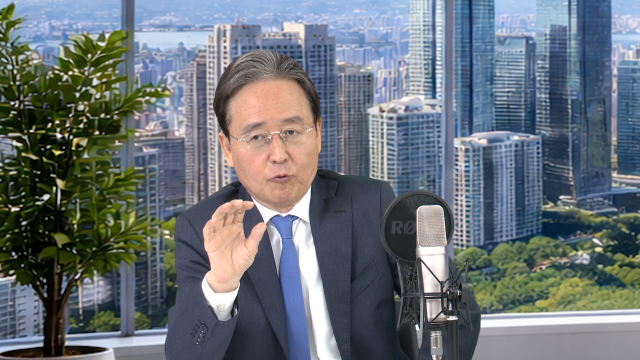
Shin Bong-gil, a former South Korean ambassador to India, said South Korea should move “beyond four-power diplomacy to five-power diplomacy that includes India.” Shin, a veteran diplomat with nearly 40 years in the field, also served as the first secretary-general of the Trilateral Cooperation Secretariat for South Korea, China and Japan. He now heads the Korea-India Future Association and argues for expanding the relationship with India.
Shin cautioned against viewing India simply as “post-China.” He called India a potential alternative manufacturing base, but said it operates with a distinct political, economic and diplomatic logic. “India is not an easy country,” he said, citing complex regulations, differing state administrations, and challenges in permits and labor. Still, he added: “Next is India,” arguing that difficulty is a reason to prepare more and enter earlier.
“This is an age of major turmoil, and India’s presence is growing”
Asked how he defines today’s international order, Shin said: “I’m not sure there is order. It’s an order of disorder — I want to call it an age of major turmoil.” He said the liberal international order that has underpinned global stability is in the process of collapsing, while a new order has not yet taken shape.
He traced the high point of the U.S.- and Western-led order to the fall of the Berlin Wall and the collapse of the Soviet Union, when political scientist Francis Fukuyama spoke of the “end of history.” Shin said the order began to shake with the 2003 U.S. invasion of Iraq, the Arab Spring, refugee and migration pressures, and moves after the Trump administration that he said undermined the system the United States had built. “You could say it’s an international order that began with the U.S. and is ending with the U.S.,” he said.
On India’s significance, Shin said he recently attended the Raisina Dialogue in New Delhi, where about 3,000 political scientists, diplomats and experts from 120 countries gathered. He said Finland’s President Alexander Stubb delivered a keynote arguing that as the Western-led order weakens, the Global South — led by India — will play a larger role.
Shin linked the Global South to the Non-Aligned Movement led by figures such as India’s Prime Minister Jawaharlal Nehru, whose core idea was peaceful coexistence. He said the world may be moving toward a multipolar order in which different values and ideologies coexist.
“South Korean diplomacy should move beyond four powers to five, including India”
Shin said South Korea is sometimes assessed as around fifth or sixth in overall national power when GDP, military strength, population and culture are considered. “It’s not a superpower, but it has reached the position of a major power,” he said.
But he said diplomacy has not fully caught up. He cited two reasons: South Korea’s limited room to maneuver because it is surrounded by the four powers, and a foreign policy that has been centered on the United States. “In a way, it has been diplomacy that can only be called dependent,” he said.
That is why India matters, he said. A visit to India, he said, is “to do five-power diplomacy.” He also described it as “G3 diplomacy” economically, arguing India is rising fast and is becoming a key partner for economic and investment diplomacy.
Shin said India is close to the United States but not a subordinate partner; it competes with China but does not fully sever ties; and it maintains an independent relationship with Russia. Building strong ties with such a country, he said, expands South Korea’s options and strengthens links to the Global South — which he estimated at about 120 countries — providing leverage in relations with the United States, China and Japan.
“A presidential trip to India is a relaunch of South Korea-India ties”
Shin said he served as ambassador to India during the Moon Jae-in government, when bilateral ties were strong under Seoul’s New Southern Policy and India also sought closer relations. He said later political issues made active diplomacy harder and relations cooled.
In that context, he said, President Lee Jae-myung’s visit to India carries the meaning of restarting the relationship. “I want to call it a ‘relaunch,’” he said, likening it to restarting a car’s engine.
Shin also pointed to historical symbolism. He said that when he was ambassador, South Korean history was barely mentioned in Indian middle and high school textbooks, while Japan and China each had six pages. He said South Korea later secured six pages, including the story of King Suro and Queen Heo Hwang-ok and an introduction to South Korea’s history and current standing.
He said that when Prime Minister Narendra Modi visited South Korea, Modi remarked that 10% of South Koreans are “our relatives,” emphasizing the symbolic link through descendants of King Suro and Queen Heo. Shin said such symbolism matters in diplomacy and warned that India, with strong civilizational pride, should not be approached only through market size.
“India is a production base, a market and a strategic partner”
Shin said India’s role as a production base and market rests on its vast labor force and huge population, conditions he said few countries can match. He called India a strategic partner because it has the scale and capacity to be a new frontier for South Korea, adding that while China has long been viewed as a strategic partner, South Korea is now moving away from China. “Next is India,” he said.
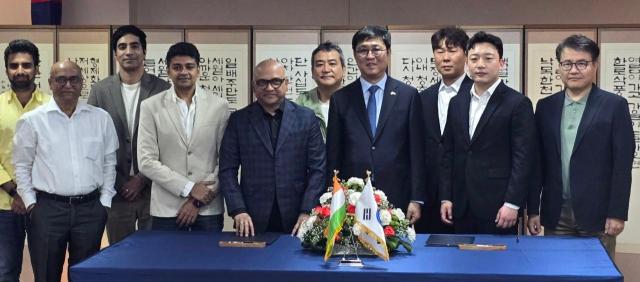
For South Korean companies, he cited Hyundai Motor’s initial public offering in India, saying it sold part of its shares to raise funds on the scale of several trillion won. He said LG is in a similar flow. He argued India is not only a place to manufacture for export, but a country where firms can produce locally, sell locally, use local capital markets and pursue technology cooperation with local companies.
Comparing India with China and Vietnam, Shin said South Korean firms need to diversify investment destinations. He said geopolitical risks have grown in China, and Vietnam remains an important production base but has limits of scale. India, he said, is difficult but large, with significant potential and strategic meaning, requiring long-term understanding rather than a China-style approach.
“‘Post-China’ is hard right now, but true in the medium to long term”
Shin said calling India “post-China” makes sense in the medium to long term, citing its population, potential GDP and the possibility of 7% to 8% growth. But he said it is difficult to compare India with China immediately because India still lags in infrastructure such as highways, subways and ports, and in manufacturing competitiveness built by China over decades.
He said India’s democratic federal system and diversity can slow decision-making and complicate regulation, but cited strengths including a huge domestic market, English-speaking talent, software capabilities, a young population and Global South leadership. He urged South Korean companies to analyze India by state, city and industry ecosystem rather than as a single market.
“India is changing — you can see it at the airport and on the streets”
Shin said he has noticed changes on repeated visits, including a cleaner Indira Gandhi International Airport and fewer visible trash piles on the way into New Delhi. He said the G20 summit helped lift India’s capacity, and he cited experts who say cows are disappearing from city roads — a visible sign, he said, that India is changing.
He said such changes reflect more than aesthetics: they suggest stronger administrative capacity, rising middle-class expectations and improved ability to host international events. “India is not a country you can read through old images,” he said.
“India is not easy — it takes real patience”
Shin said India has high entry barriers, with complex and uncertain regulations and a difficult administrative system. He noted India’s federal structure, with central rules and separate regulations across 28 states, and said taxes, permits and labor rules vary by state, making it more complicated than South Korea or China.
He said location choices matter because states differ in conditions and governance. “India looks like one market, but in reality it is closer to a country made up of many markets,” he said, adding that the choice of state, partner and relationship with local authorities can determine success.
He said companies need a long-term view, arguing quick results in one or two years may be difficult. But he said firms that build trust and brands can be rewarded over time, citing Samsung, LG and Hyundai Motor.
“After Samsung, LG and Hyundai, a second India investment boom is needed”
Shin said he hopes for a second wave of large-scale South Korean investment in India. He said India’s environment in the 1990s was far tougher, yet Samsung Electronics, LG Electronics and Hyundai Motor entered early and are now “household names” in India.
He said cooperation could expand in shipbuilding, AI data centers, electronics and infrastructure. He cited a flow in which Samsung Electronics is discussing cooperation on a large AI center with India’s Reliance Group, and said shipbuilding cooperation is also important. He urged South Korea to diversify beyond China and Vietnam and to invest decisively as India’s potential becomes clearer.
Shin said summit diplomacy can help by opening doors when business leaders travel with the president and cooperation meetings are held. But he said it should not end as a one-off event, calling for sector-by-sector road maps in areas including shipbuilding, AI, semiconductors, autos, batteries, power grids, infrastructure, defense and cultural content.
“Shipbuilding cooperation could create a second Ulsan in India”
Shin said shipbuilding is likely to be a key topic in South Korea-India talks. He said companies such as HD Hyundai are working with Indian state governments, with cooperation being pursued with Tamil Nadu and Kerala.
He said there is a vision of building a “second Ulsan” shipyard in Tamil Nadu — not simply exporting a factory, but planting a Korean-style shipbuilding ecosystem in India.
Shin said the cooperation has strategic value because India needs shipbuilding capacity for maritime security, logistics, defense and energy transport, while South Korea has top-tier shipbuilding technology and production know-how. He said India is strengthening its maritime strategy in the Indian Ocean, including managing sea lanes linking the Middle East, Africa and Southeast Asia.
“Getting closer to India means getting closer to the Global South”
Shin said India is a representative Global South country, rooted in the Non-Aligned Movement and still pursuing an independent line rather than fully aligning with either the United States or China. He repeated his estimate that the Global South includes about 120 countries and said closer ties with India can broaden South Korea’s support base in international organizations and multilateral forums.
“To be a bridge state, you need trust and strength”
Shin said a “bridge state” must be trusted by the parties it seeks to connect and must have the strength to stand on its own. He said South Korea must maintain its alliance with the United States while managing economic ties with China, and cooperate with Japan without ignoring historical issues. In that context, he said, India can serve as an additional axis for diplomatic balance, and India’s approach offers lessons for South Korea.
“If South Korea gets closer to India, it can slightly widen its diplomatic space when pressured to choose between the U.S. and China,” he said, adding that Global South ties can create new cooperation foundations in multilateral arenas.
“The principle of diplomacy is national interest, and its core is peace”Asked what principles should guide South Korean diplomacy amid U.S.-China competition, supply-chain restructuring, AI-driven change and wars in the Middle East, Shin said: “The principle is national interest.” He said national interest includes sovereignty, territorial integrity, citizens’ growth and prosperity, peace and national dignity.
He said peace should be the most important concept within national interest. “Diplomacy’s core is how to expand the space for peace,” he said, calling the wars in Ukraine and Iran the result of diplomatic failure.
He criticized “armchair warriors” who, he said, promote hard-line positions without solutions and equate that with patriotism, while branding calls for dialogue as appeasement. “That’s extremely dangerous,” he said.
“Be a diplomat with a story, not one guided by promotion”
Shin said he spent nearly 40 years on the front lines and, after seeing many retired senior diplomats, would tell younger officials not to use career advancement as their compass. He urged them to become “diplomats with a story,” guided by skill and direction, unafraid to go against the mainstream, and able to say at the end of their careers what they did for South Korean diplomacy.
Shin’s argument, he said, is not just market analysis but a proposal for South Korea’s next diplomatic direction: expand beyond a four-power framework to include India, treat India as a strategic partner, and approach the relationship as a sustained national strategy rather than a one-time summit event.
[Shin Bong-gil, former ambassador to India] Shin is a veteran diplomat with nearly 40 years of experience. He served as South Korea’s ambassador to India and as the first secretary-general of the Trilateral Cooperation Secretariat for South Korea, China and Japan. He now leads the Korea-India Future Association and argues that South Korea should expand beyond U.S.-China-Japan-Russia-centered “four-power diplomacy” to “five-power diplomacy” that includes India. He describes India as a production base, a vast consumer market and a strategic partner linking South Korea to the Global South. He says diplomacy should prioritize national interest, with peace at its core, and advises younger diplomats to pursue substance over promotion.
* This article has been translated by AI.
Copyright ⓒ Aju Press All rights reserved.