President Lee Vows to Recover All Profits from Price Collusion
by HAN Joon ho Posted : May 11, 2026, 10:00Updated : May 11, 2026, 10:00
Share
facebook
twitter
URL
Text size
President Lee Jae-myung has issued a strong warning to the business community, stating that the government will recover all profits gained from collusion and market disruption. This declaration makes it clear that practices such as price collusion, self-dealing by conglomerate families, and unfair internal transactions will no longer be tolerated as mere customs or compromises. The Fair Trade Commission is also working to significantly strengthen its penalties for collusion and increase sanctions against repeat offenders. This move is being interpreted in the market as a signal for the new government's commitment to 'reestablishing fair economic order.'
The government's stance goes beyond mere regulatory tightening. It directly targets long-standing issues that must be addressed for the South Korean economy to achieve sustainable growth. During its rapid development, South Korea's industry established a supply chain and market structure centered around large corporations, securing global competitiveness. However, this growth has also led to the accumulation of problems such as closed trading practices, repeated collusion, internal transactions among affiliates, and abuse of market dominance.
In particular, in some sectors, there have been repeated instances where the timing and extent of price increases move in tandem, prioritizing market order maintenance over competition among leading companies. This situation inevitably reduces consumer choice and increases price burdens. Small and new businesses find it increasingly difficult to enter the market. Ultimately, the collapse of fair competition slows down innovation across the entire industry.
A recent collusion case in the sugar industry sanctioned by the Fair Trade Commission symbolically illustrates this reality. Evidence emerged that major companies were sharing price information and effectively controlling transaction structures, leading to significant fines. The occurrence of collusion in essential items like sugar is particularly serious as it directly impacts the cost of living for citizens.
Businesses must now confront the changing times. In the past, a company's role could be justified solely by growth, investment, and job creation. However, the global market is beginning to view trust as a more critical competitive factor than size. Major companies in the U.S. and Europe are managing antitrust regulations, compliance systems, and ESG standards as core elements of their operations. There are numerous cases where a single instance of unfair trading has shaken a company's value, brand trust, and global trading relationships.
Strengthening internal compliance systems within companies has become an urgent task. Issues such as closed decision-making structures centered around family owners, preferential treatment for affiliates, and abuse of superior status over partner companies are increasingly unacceptable by global standards. Methods that disrupt market order for short-term results or internal benefits are likely to undermine the trust that companies have built.
The government also bears significant responsibility. Fair trade policies must be implemented consistently based on clear principles. A predictable system must be established where law-abiding companies are protected, and those engaging in repeated and organized unfair practices are held accountable. This will encourage companies to prioritize long-term trust over short-term profits.
Ultimately, the economy operates on trust. A structure where collusion, self-dealing, and market distortion are repeated cannot guarantee the future competitiveness of the South Korean economy. Fair economy is not a concept to pressure companies; rather, it is about ensuring that companies competing in good faith are fairly evaluated and that consumers and partner companies can trust the market order together. It is hoped that the strong principles of fair economy put forth by the Lee Jae-myung administration will serve as a turning point for a more transparent and healthy industrial structure in South Korea.
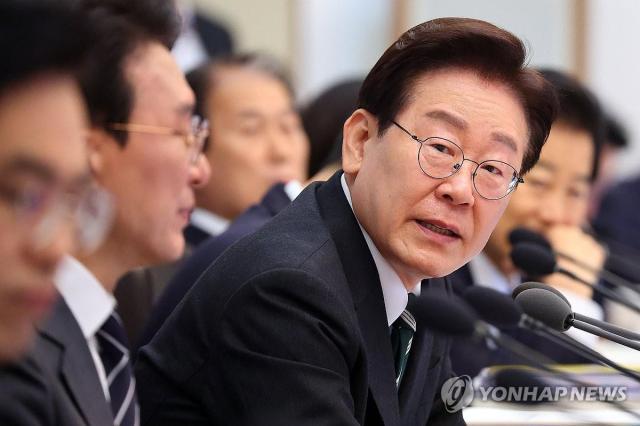
President Lee Jae-myung speaking at a Cabinet meeting. [Photo=Yonhap News]