

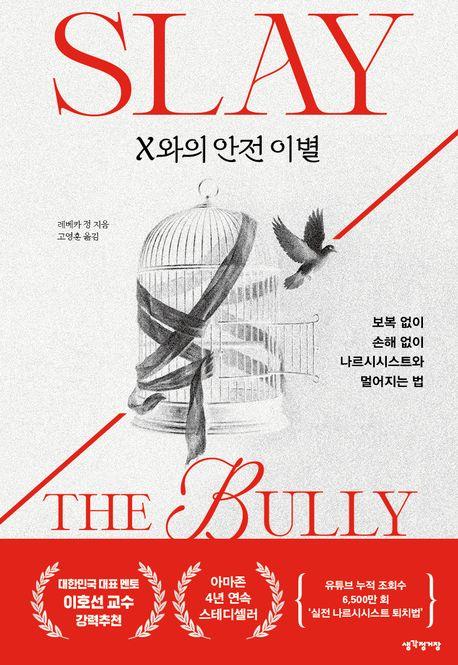
Safe Breakup with X = Written by Rebecca Jung, translated by Ko Young-hoon, published by Think Station.
The author, an American lawyer and negotiation expert, has developed the "Safe Breakup Formula (SLAY Method)" to help individuals win against narcissists. A mixed-race individual of Chinese descent, he overcame childhood experiences of racism but later fell into despair after encountering a narcissistic business partner. This experience led him to delve deeply into the nature of narcissists, resulting in his own "Narcissist Defeating Formula."
Narcissists typically approach their victims with excessive praise and affection, a tactic known as "love bombing." They then employ a "hot and cold" strategy, ridiculing their victims behind their backs or humiliating them in public. They also use "flying monkeys"—people around them—to demonize their victims. Narcissists employ various strategies, such as emotional invalidation and projection, to crush their opponents.
The author asserts that narcissists are not ordinary people, and conventional methods will not work against them. He advises maintaining composure, focusing on written communication, and keeping records of texts and emails. Phrases like "I will not respond to that" can disarm narcissists. Keeping a detailed daily log and creating a timeline of events can help individuals avoid being manipulated in future confrontations.
"I loved the movie
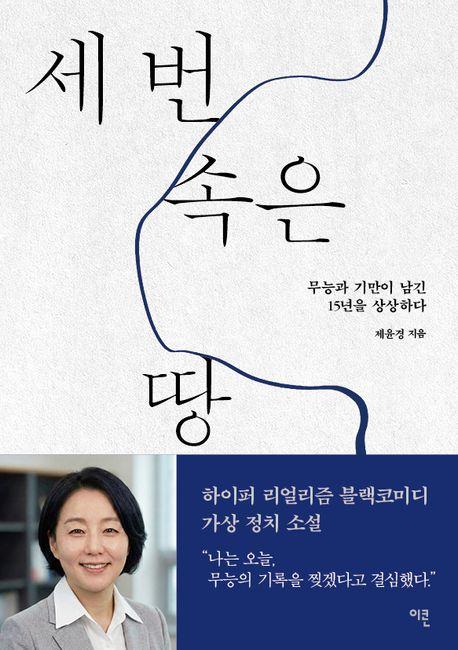
The Land That Deceived Three Times = Written by Je Yun-kyung, published by Icon.
The author, a former finance professional and civic activist, has woven the structures of failure and accountability he witnessed in finance, politics, and civic movements into a novel. The book realistically depicts why development projects and public policies often fail and the lack of accountability in these processes. It is an engaging read for those curious about the reasons behind the frequent failures of major development projects and public policies reported in the news or for readers seeking to understand politics and administration through real-life narratives rather than theory.
This novel, described as a "hyper-realistic black comedy," traces how a local development project culminated in failure over 15 years. Set in the fictional coastal city of "Reed Bay," it repeatedly presents rosy promises of wealth through land reclamation, plans to attract large corporations and global universities, and investment agreements worth trillions of won. However, the reality left behind is one of construction halts, lawsuits, and massive debts, with no one taking responsibility.
The novel also reflects the author's hometown story. Returning to his hometown of Hadong, the author witnessed a series of absurd scams and remarked, "It was such an unbelievable reality that I had no choice but to write it as a novel. The landscape I faced upon returning home was too absurd to be a tragedy and too tragic to be a comedy, making it impossible to comprehend with a sane mind."
"There are people who are deceived, but those who deceive are nowhere to be found." Duri slowly walked along the embankment, separating the land and marine departments of Reed Bay. The once-praised "artery of industry" was now overgrown with reeds beside the drainage ditch. Whenever the wind blew, the reeds seemed to nod to each other, as if holding a secret meeting." (p. 10)
* This article has been translated by AI.
Copyright ⓒ Aju Press All rights reserved.