

On May 15, the Shanghai Shipping Exchange (SSE) reported that the SCFI rose by 186.45 points to reach 2140.66 points, marking an increase of nearly 10% from the previous week.
The SCFI is a key indicator of global container shipping trends, calculated based on freight rates from Shanghai. It is recognized for its ability to reflect global trade flows and shipping supply-demand conditions relatively quickly. The industry typically uses SCFI trends to gauge future performance of shipping companies.
By route, freight rates for the U.S. East Coast (USEC) increased to $5,043 per 40-foot container (1 FEU), an approximate 8% rise, surpassing the psychological barrier of $5,000. This increase is attributed to a rapid rise in cargo volumes to the U.S. East Coast and challenges related to transiting the Panama Canal.
Freight rates for the U.S. West Coast (USWC) also saw a significant increase, rising about 12% to $4,393 per FEU, while European routes climbed to $2,518 per twenty-foot container (1 TEU), up 9.5% from the previous week.
The backdrop for this freight rate rebound is the prevailing geopolitical risks. Typically, the global shipping market experiences a surge in cargo volumes starting in the third quarter, leading up to the year-end shopping season. However, due to the recent conflict in the Middle East, concerns about supply disruptions have prompted shippers to secure cargo earlier than usual for the second half of the year. This has led to an early peak season phenomenon in the market.
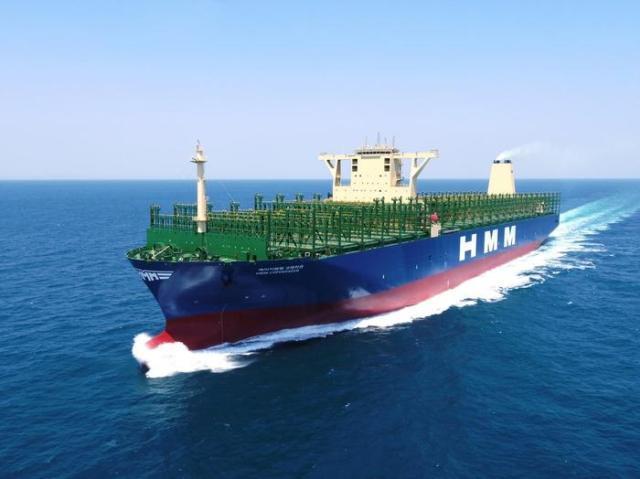
Shipping companies have also actively pursued freight rate increases. Major global carriers, including HMM and Yang Ming, have recently implemented General Rate Increases (GRI) and Peak Season Surcharges (PSS). While there was skepticism about the actual implementation of these increases, the sharp rise in the SCFI indicates that these pricing strategies are being reflected in the market.
Industry insiders believe that this freight rate rebound may not be a short-term spike. Although the likelihood of a return to the extremely high rates seen during the pandemic is limited, the ongoing supply shortage could enhance the pricing power of shipping companies more than anticipated.
The South Korean shipping industry is closely monitoring freight trends. Domestic carriers, including HMM, have faced sharp adjustments in freight rates due to the impact of the Middle East conflict. Notably, HMM's operating profit in the first quarter of this year was halved compared to the same period last year, with revenues of 2.7187 trillion won, down 4.8% from 2.8547 trillion won last year, and operating profit of 269.1 billion won, a 56.2% decrease from 613.9 billion won a year earlier.
However, the recent upward trend has increased expectations for improved performance in the second half of the year. Should the SCFI maintain a strong trajectory, operating profits could significantly exceed initial forecasts.
One industry source noted, "Given the high market volatility, a cautious approach is necessary," but added, "The recent rise in freight rates should be viewed as a reflection of actual supply-demand improvements rather than a temporary shift in sentiment."
* This article has been translated by AI.
Copyright ⓒ Aju Press All rights reserved.