

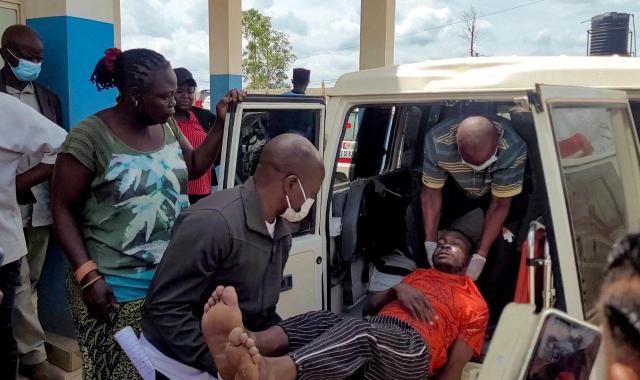
The World Health Organization (WHO) has declared an "International Public Health Emergency" (PHEIC) in response to the Ebola outbreak in the Democratic Republic of Congo and Uganda. However, the organization stated that the situation does not meet the criteria for a global pandemic.
According to reports from the Associated Press and others, WHO announced on May 17 via social media platform X (formerly Twitter) that the outbreak poses a public health risk to other countries due to the international spread of the disease, which has already been documented.
As of May 16, the WHO reported eight confirmed Ebola cases, 246 suspected cases, and 80 suspected deaths across at least three health zones in Ituri Province, including Bunia, Lwampala, and Mongbwalu. The Africa Centers for Disease Control and Prevention (CDC) noted that there are 336 suspected cases of Ebola.
In Uganda's capital, Kampala, two confirmed cases have recently been identified, one of which resulted in death. Both individuals had traveled to the Democratic Republic of Congo, although no direct link between them has been established, according to WHO. A confirmed case was also reported in Kinshasa, the capital of the Democratic Republic of Congo, involving a person who had returned from Ituri.
This outbreak has been linked to the Bundibugyo strain of the Ebola virus. WHO noted a high positivity rate, with eight out of 13 initial samples testing positive, and there has been an increase in reports of suspected cases and clusters of deaths throughout Ituri Province, raising concerns that the actual number of infections may be significantly higher than official counts.
WHO Director-General Tedros Adhanom Ghebreyesus stated, "There is considerable uncertainty regarding the actual number of infections and the geographical spread of this outbreak. Our understanding of the epidemiological links among suspected cases is also limited."
WHO highlighted that at least four healthcare workers have died from suspected viral hemorrhagic fever symptoms, raising concerns about the potential for transmission within healthcare facilities and gaps in infection prevention and control measures. The absence of approved treatments or vaccines for the Bundibugyo virus has further exacerbated the seriousness of the situation.
Nevertheless, WHO emphasized that the outbreak does not qualify as a global pandemic.
WHO has urged the Democratic Republic of Congo and Uganda to activate their national disaster and emergency response systems immediately. It recommended enhancing surveillance, contact tracing, laboratory testing, and infection prevention measures in both the affected and neighboring regions. Confirmed cases should be isolated and treated promptly, while contacts should be monitored daily for 21 days following exposure, with international travel restrictions advised.
Additionally, WHO recommended implementing exit screening for individuals exhibiting unexplained fever symptoms at international airports, seaports, and major land border checkpoints. However, it advised against closing borders or imposing travel and trade restrictions, warning that such measures, if implemented without scientific justification, could drive movement through unofficial border channels, complicating containment efforts.
The Democratic Republic of Congo has experienced repeated Ebola outbreaks since the virus was first identified there in 1976. This outbreak is particularly concerning as it is caused by the relatively rare Bundibugyo strain, rather than the more commonly reported Zaire strain.
Ebola is a deadly infectious disease that causes fever, muscle pain, vomiting, and diarrhea, and is transmitted through contact with the bodily fluids of infected individuals, contaminated materials, or deceased persons. Its high fatality rate has led to recurrent large-scale health crises in the African region.
* This article has been translated by AI.
Copyright ⓒ Aju Press All rights reserved.