

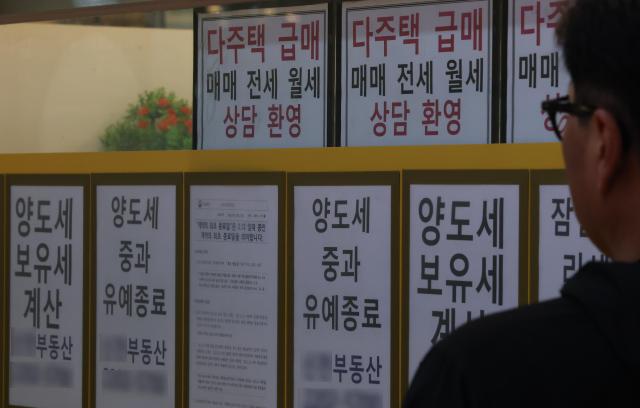
The South Korean government is expected to announce a significant reform of the real estate tax system in July, moving beyond merely reducing special exemptions to a phase of normalization. The policy focus is shifting toward a resident-centered approach and addressing market distortions, which is likely to result in a general reduction of various tax benefits.
According to the Ministry of Economy and Finance on May 17, the long-term holding special deduction (장특공) for capital gains tax is among the first items under review in this reform. Currently, homeowners with one property can receive a deduction of up to 80% based on the length of ownership (40% per year) and the duration of residence (40% per year).
Deputy Prime Minister and Minister of Economy and Finance Ku Yun-cheol stated on May 8 that the real estate market is transitioning from a previous overheating phase to one focused on actual residency, indicating a commitment to policy reform.
As a result, the government is reportedly considering increasing the weight of residency duration in calculating the long-term holding deduction. Previously, long-term ownership alone qualified for tax benefits, but the new approach would adjust the deduction based on actual residency. This means that the duration of actual residence will become a key factor in taxation, rather than merely the period of property ownership.
Additionally, tax benefits for housing rental businesses, introduced to stabilize the rental market, are also likely to be revised. In particular, the exemption from increased capital gains tax for landlords in designated adjustment areas is a major target for reform.
Critics have long argued that the rental business system has allowed multiple property owners to reduce their tax burden while expanding their assets. Consequently, the government is reportedly considering reducing existing benefits or allowing them to expire.
Property taxes, including comprehensive real estate taxes, remain a sensitive issue. While the current trend maintains a focus on reducing tax burdens, ongoing criticism highlights a lack of equity in asset taxation.
Raising property taxes could encourage multiple property owners to list their properties for sale, but there are concerns that this could also increase the housing cost burden on low-income residents through rent hikes.
Maintaining the current tax structure could stabilize the market and reduce tax resistance, but it may also exacerbate asset polarization and weaken the tax base, potentially leading to ongoing debates about so-called "tax cuts for the wealthy."
On the other hand, strengthening tax burdens could enhance equity in taxation and encourage an increase in property supply, but it also carries the risk of driving up rental prices.
However, some experts argue that tax reforms alone may not be sufficient to stabilize real estate prices. Yoon Ji-hae, head of the Real Estate R114 Research Lab, noted, "It has not been sufficiently proven that taxes directly control real estate prices," suggesting that lowering transaction taxes might be a more effective approach to stimulate market activity.
She added, "Realistically, the likelihood of a homeowner returning to being a non-owner is low," and indicated that those eligible for the long-term holding deduction are likely to purchase another property in a different area even if they sell their current one.
* This article has been translated by AI.
Copyright ⓒ Aju Press All rights reserved.