

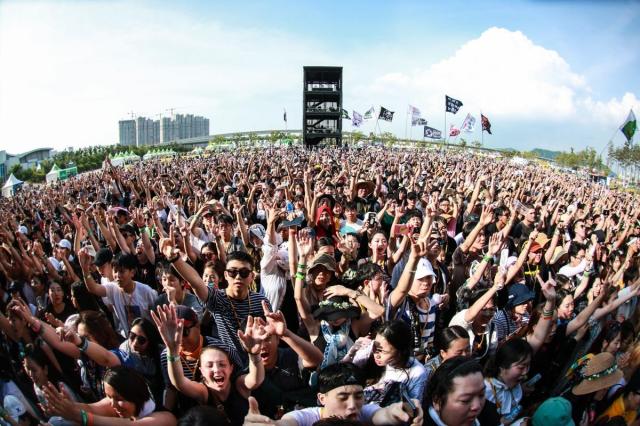
To address the disproportionate concentration of foreign tourists in Seoul, where over 80% of visitors stay, the South Korean government is focusing on revitalizing regional tourism. The plan involves designating local hubs outside the Seoul metropolitan area and Jeju as "global tourism zones" to enhance their capacity for foreign visitors. Additionally, the government aims to promote ten major "global festivals" to attract tourists to these regions.
On May 18, the Ministry of Culture, Sports and Tourism announced the launch of a two-track strategy to boost regional tourism. This initiative goes beyond one-time budget support and aligns with recent efforts to amend the Tourism Promotion Act. The goal is to innovate both the infrastructure (tourism zones) and the offerings (festivals) to provide a breakthrough for struggling local economies.
Seeking True 'Local' Global Tourism Zones
The ministry will accept applications from local governments for the "Global Tourism Zone Development Project" until July 6. Notably, the application process excludes the Seoul metropolitan area, including Incheon and Gyeonggi Province, as well as Jeju, which has its own tourism funding system. The clear objective is to cultivate neglected regional tourism hubs into world-class destinations.
Applications will be divided into two categories based on characteristics. The "Future Convergence Type" targets regions that attracted over 200,000 foreign tourists in the past year and incorporate smart technology, while the "Local Self-Sustaining Type" is for areas with over 100,000 visitors that possess unique historical and scenic resources.
Two selected regions will receive 3 billion won (approximately $2.3 million) in national funding over two years. Local governments will use these funds to enhance multilingual services, improve payment convenience at key tourist sites, and develop tailored products for foreign visitors.
Targeting 30 Million Visitors with Global Festivals
Festivals will be the key content to fill these regional tourism zones. The ministry, in collaboration with the Korea Tourism Organization, will launch a joint planning team to strengthen the competitiveness of ten global festivals and initiate precision marketing strategies.
Specific marketing approaches have been developed for different target markets. For instance, the Incheon Pentaport Rock Festival will implement the "eplus" ticketing system to lower barriers for Japanese tourists, who have a strong preference for rock music. The Boryeong Mud Festival plans to enhance autonomy and introduce nighttime mud experiences to significantly increase visitor stay duration.
Business-to-business (B2B) sales linking festivals and local attractions will also be strengthened. The Jinju Namgang Lantern Festival will collaborate with major overseas travel agencies such as Japan's HIS, Taiwan's Cola Tour, and Hong Kong's Easyel Tour to promote combined packages that include daytime visits to Jinju Castle and nighttime lantern viewing. The Jeongnamjin Jangheung Water Festival will offer unique stay packages contrasting daytime water fights with evening relaxation at zip houses to attract foreign tourists.
This initiative to develop tourism zones and support global festivals is an attempt to overcome the structural limitations of regional tourism that have been highlighted in the past. The ministry's two-track strategy is expected to serve as a practical catalyst to alleviate the persistent issue of foreign tourists flocking to Seoul. The final selection of two global tourism zones is planned for July, following written and presentation evaluations.
* This article has been translated by AI.
Copyright ⓒ Aju Press All rights reserved.