

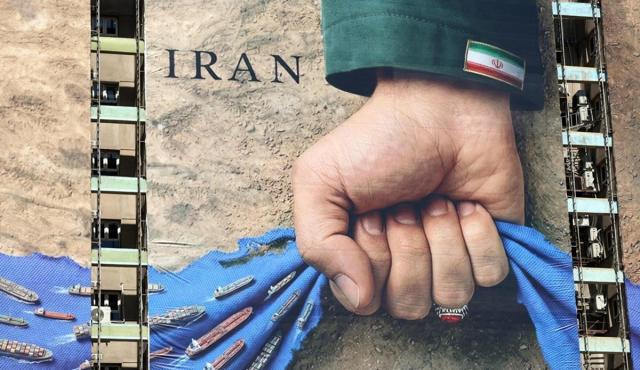
Concerns are growing that Iran may target undersea communication networks in addition to energy transport routes in the Strait of Hormuz.
On May 17, CNN reported that Brigadier General Ebrahim Zolfaqari, spokesperson for Iran's Central Military Command, stated on X (formerly Twitter) last week, "We will impose fees on internet cables in the Strait of Hormuz."
Media outlets linked to the Islamic Revolutionary Guard Corps (IRGC) reported that the Iranian government is pursuing ways to generate revenue from undersea cables in the Strait of Hormuz and plans to demand compliance from major U.S. tech companies such as Google, Microsoft, Meta, and Amazon.
Iranian media indicated that undersea cable companies would need to pay permit fees for passage through the Strait of Hormuz, and future rights for cable repairs and maintenance would be exclusively granted to Iranian firms. CNN also noted that the Iranian parliament discussed plans to impose fees on undersea cable usage last week.
There are concerns that Iran could use small submarines and underwater drones to damage these cables. The seabed of the Strait of Hormuz is home to major intercontinental undersea cables that connect Europe, Asia, and the Persian Gulf, transmitting significant internet traffic.
If Iran were to attack undersea cables, the repercussions could extend beyond mere internet speed reductions, potentially impacting critical digital infrastructure, including banking systems, military communications, and artificial intelligence (AI) cloud infrastructure.
Mustafa Ahmed, a senior researcher at the Hamptur Institute based in the United Arab Emirates, told CNN, "Any attack on undersea cables could trigger a cascading 'digital disaster' across multiple continents."
The damage could escalate if Iranian-backed proxy forces launch additional attacks on cables in the Red Sea. According to Hong Kong-based HGC Global Communications, three undersea cables were severed following an attack by Iranian-linked Houthi rebels in Yemen in 2024, disrupting about 25% of internet traffic in the region at that time.
However, it remains uncertain whether Iran's strategy will serve as a significant leverage point in negotiations with the United States. Some of these major U.S. tech companies have reportedly invested in undersea cable projects that pass through the Strait of Hormuz and the Persian Gulf, but it is unclear whether these cables actually traverse Iranian territorial waters.
Moreover, international telecommunications operators have historically avoided laying cables through Iranian waters due to security concerns, leading to a concentration of Gulf region undersea communication infrastructure in Omani waters.
According to telecommunications market research firm TeleGeography, only two undersea cables pass through Iranian waters: Falcon and Gulf Bridge International (GBI). Additionally, as of last year, cables traversing the Strait of Hormuz accounted for less than 1% of global international bandwidth.
Dina Espandiar, head of the Middle East team at Bloomberg Economics, stated, "Iran's threats are part of a strategy to showcase leverage over the Strait of Hormuz and ensure regime survival, aiming to impose significant costs on the global economy to deter any future attacks on Iran."
* This article has been translated by AI.
Copyright ⓒ Aju Press All rights reserved.