

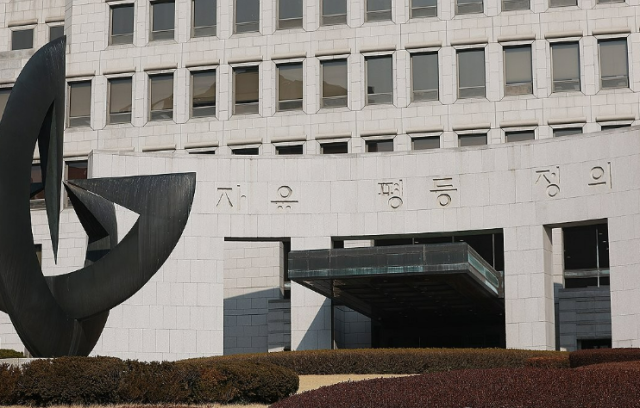
The Supreme Court has ruled that fees paid by U.S. companies to Korean firms for technology or know-how transfers are not exempt from corporate tax.
On May 18, the Supreme Court's third division, led by Justice Oh Seok-jun, overturned a lower court ruling that favored U.S. pharmaceutical company Genosco in its lawsuit against the head of the Dongjak Tax Office regarding the denial of a tax refund for withholding tax. The case has been sent back to the Seoul High Court for further proceedings.
In October 2016, Genosco entered into a contract with Yuhan Corporation to transfer technology and know-how related to a targeted treatment for liver cancer. The agreement stipulated that Genosco would receive a fixed technology fee and an annual royalty based on a percentage of net sales from the product until the expiration of the relevant patent.
In November of the same year, Yuhan paid Genosco a contract fee of 500 million won and subsequently paid the withholding tax to the Dongjak Tax Office. According to corporate tax law, foreign corporations must pay corporate tax on domestic source income. While the foreign corporation is the substantive taxpayer, a Korean company can pay the tax on behalf of the foreign entity after deducting it from the payment.
Genosco filed a claim for a refund of the withholding tax in July 2017, arguing that the income was not domestic source income under the Korea-U.S. tax treaty. However, the Dongjak Tax Office denied the claim in September of that year, prompting Genosco to sue for cancellation of the denial.
The key issue in the appeal was whether the income was exempt from taxation under Article 16, Section 1 of the Korea-U.S. tax treaty, which states that "income derived by a resident of the United States from the sale of capital assets shall, in principle, be exempt from taxation by our country."
The appellate court ruled that the know-how in question fell under the capital assets defined in the treaty, thus ruling in favor of Genosco.
However, the Supreme Court found that the lower court had misinterpreted the legal definition of capital assets under Article 16, Section 1 of the tax treaty, accepting the appeal from the Dongjak Tax Office.
The court noted that the term "capital assets" is not separately defined in the Korea-U.S. tax treaty, nor is it found in Korean law, and must be understood in the context of the treaty.
The court stated, "The know-how in this case can be considered property used in the business of the plaintiff, which is subject to depreciation deductions. Therefore, based on the context at the time of the treaty's conclusion, it cannot be classified as capital assets under Article 16, Section 1 of the Korea-U.S. tax treaty."
The Supreme Court referenced Section 1221 of the Internal Revenue Code from the time of the treaty's conclusion in 1976, which defines capital assets as all property held by the taxpayer except for certain specified properties. It further describes properties used in a business or held for income generation that are subject to depreciation under Section 167.
The court explained, "Therefore, in the case of know-how used in business, it is reasonable to conclude that it is generally excluded from the definition of 'capital assets' as stipulated in Article 16, Section 1 of the Korea-U.S. tax treaty when referring to Section 1221, Subsection 2 of the Internal Revenue Code at the time of the treaty's conclusion."
* This article has been translated by AI.
Copyright ⓒ Aju Press All rights reserved.