

The government is addressing concerns over the National Growth Fund, which has faced criticism for potentially supporting large corporations and distorting the market. Officials emphasized that the fund serves as a catalyst to attract private investment, given the nature of advanced industry investments that require substantial long-term funding and risk-sharing.
On May 18, the Financial Services Commission held a seminar at the Korea Development Bank's IR Center to assess the National Growth Fund's performance and explore future directions.
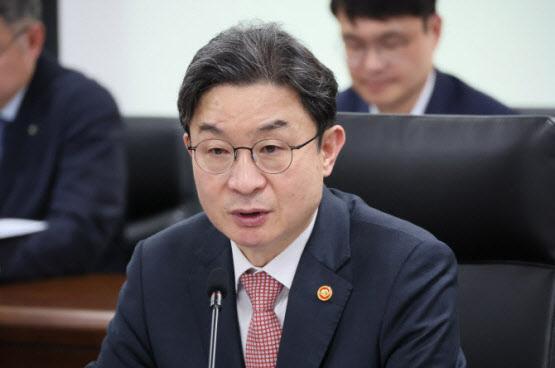
During the seminar, Financial Services Commission Chairman Lee Eok-won stated, "Since the National Growth Fund began full operations earlier this year, it has rapidly deployed funds to invigorate advanced industries. Over the past four months, more than half of the 8.4 trillion won in support has been allocated to local areas, broadening investment opportunities for promising regional companies."
However, concerns persist in the market regarding the inclusion of large corporations with their own funding capabilities as beneficiaries of policy financing. Critics question whether government funding might discourage private investment. There are also worries about potential overvaluation of companies and market overheating, particularly as funds increasingly flow into sectors like AI.
In response, the Financial Services Commission and experts argue that due to the significant initial capital requirements and long investment recovery periods characteristic of advanced industries, a certain level of policy risk-sharing is unavoidable. They assert that support should not only focus on individual companies but also aim to enhance the overall competitiveness of the industrial ecosystem.
Lee Byeong-yun, a senior researcher at the Financial Research Institute, remarked, "It is advisable to concentrate national energy on areas with the highest potential for global competitiveness to secure economies of scale for achieving a significant gap. This can also enable the co-growth of related small and medium-sized enterprises through anchor companies in the ecosystem."
Recent global venture capital investments have been increasingly concentrated among top firms. In 2025, global venture capital investments rose by 31% year-on-year to $512.1 billion, marking the third-highest level in history. Notably, in the fourth quarter of 2025 alone, eight AI companies raised over 50 trillion won in funding, with valuations skyrocketing in subsequent investment rounds, reflecting a global trend.
Additionally, the government is accelerating efforts to create mechanisms for sharing the results of advanced industry investments with the general public. This initiative aims to expand opportunities for citizens to directly participate in growth industry investments beyond policy financing. The Public Participation Growth Fund, set to launch on the 22nd, will offer tax deductions and separate taxation benefits on dividend income, with the government absorbing 20% of initial losses. More than 20% of the available shares will be allocated exclusively for low-income individuals.
Kang Seong-ho, head of the National Growth Fund at the Financial Services Commission, explained, "We have included tax deductions to incentivize public participation in long-term capital (with a five-year maturity). To ensure tax equity, we have established measures such as excluding tax benefits for those subject to comprehensive taxation on financial income, gradually reducing the deduction rate, and applying a comprehensive limit on deductions."
* This article has been translated by AI.
Copyright ⓒ Aju Press All rights reserved.