

The second comprehensive special investigation team, led by Special Prosecutor Kwon Chang-young, is intensifying its probe into allegations surrounding the second martial law, targeting both the Joint Chiefs of Staff leadership and field commanders. Notably, the special prosecutors are applying charges of 'rebellion' under military law to field commanders, indicating a focus on the mobilization of armed forces rather than merely executing unlawful orders.
As of the morning of May 19, the special prosecutors are questioning former Army Capital Defense Command Chief Lee Jin-woo as a suspect under military law for rebellion. On May 14, they also investigated former Army Special Warfare Command Chief Kwak Jong-geun on similar charges.
Lee is accused of instructing his armed subordinates to block the National Assembly during the declaration of emergency martial law and allowing troops to enter the National Assembly premises. The special prosecutors are expected to press Lee on the directives from former President Yoon Suk Yeol and the circumstances surrounding the troop deployment.
The investigation has already implicated Yoon, former Defense Minister Kim Yong-hyun, former National Intelligence Service Director Noh Sang-won, and former Commander Kwak on charges of rebellion. Yoon has been summoned to appear for questioning on May 23, while Kim is set to appear on May 26.
As of the morning of May 19, the special prosecutors are questioning former Army Capital Defense Command Chief Lee Jin-woo as a suspect under military law for rebellion. On May 14, they also investigated former Army Special Warfare Command Chief Kwak Jong-geun on similar charges.
Lee is accused of instructing his armed subordinates to block the National Assembly during the declaration of emergency martial law and allowing troops to enter the National Assembly premises. The special prosecutors are expected to press Lee on the directives from former President Yoon Suk Yeol and the circumstances surrounding the troop deployment.
The investigation has already implicated Yoon, former Defense Minister Kim Yong-hyun, former National Intelligence Service Director Noh Sang-won, and former Commander Kwak on charges of rebellion. Yoon has been summoned to appear for questioning on May 23, while Kim is set to appear on May 26.
Focus on Charges of 'Rebellion' Instead of 'Important Duties in Insurrection'
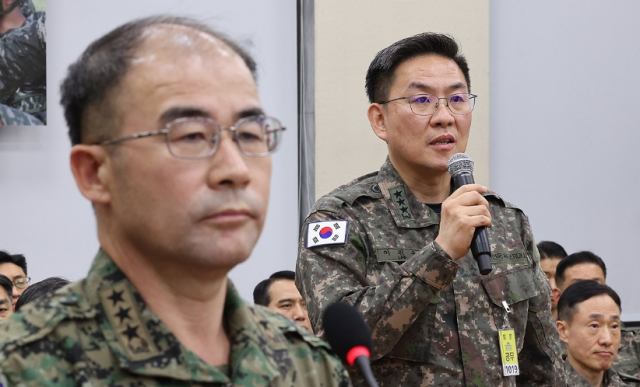
Legal experts are noting the significance of the special prosecutors applying charges of rebellion to Lee and Kwak instead of 'important duties in insurrection.'
The rebellion charge punishes collective violent acts using military organization and armed forces. The key issue is whether actual forces were mobilized to operate the military command structure, beyond merely transmitting or executing unlawful orders.
This suggests that the special prosecutors are investigating the Defense Command and Special Forces not merely as executing organizations but as 'actual perpetrators of armed force mobilization.'
This aligns with the interpretation that the special prosecutors view the case as a 'three-tier command structure' involving the final directive line of Yoon and Kim, the Joint Chiefs of Staff leadership, and the executing units of the Defense Command and Special Forces.
The special prosecutors are also accelerating their investigation into the Joint Chiefs of Staff leadership.
They have notified former Joint Chiefs of Staff Chairman Kim Myung-soo to appear for questioning on charges of important duties in insurrection on May 27. Kim is reported to have expressed his intention to attend.
Kim is suspected of being involved in the formation of the martial law command while monitoring the military's entry into the National Assembly from the Joint Chiefs of Staff command control center during the declaration of emergency martial law on December 3, 2024.
The special prosecutors suspect that Kim issued fragmentary orders to the Special Forces and Defense Command to prioritize martial law operations. Fragmentary orders are military operational commands that quickly convey changes in operational situations or missions.
The special prosecutors are examining whether Kim's orders went beyond mere situation management to actively support the emergency martial law operations.
Previously, the special prosecutors classified the Joint Chiefs of Staff-related allegations as a 'first recognized case.' In addition to Kim, they have also charged former Deputy Chief Jeong Jin-pal, former Military Support Headquarters Chief Kang Dong-gil, former Operations Headquarters Chief Lee Seung-o, former Operations Department Chief Ahn Chan-myung, and former Defense Readiness Inspection Chief Lee Jae-sik with important duties in insurrection. The special prosecutors conducted a search and seizure operation at the Joint Chiefs of Staff on April 24.
They have notified former Joint Chiefs of Staff Chairman Kim Myung-soo to appear for questioning on charges of important duties in insurrection on May 27. Kim is reported to have expressed his intention to attend.
Kim is suspected of being involved in the formation of the martial law command while monitoring the military's entry into the National Assembly from the Joint Chiefs of Staff command control center during the declaration of emergency martial law on December 3, 2024.
The special prosecutors suspect that Kim issued fragmentary orders to the Special Forces and Defense Command to prioritize martial law operations. Fragmentary orders are military operational commands that quickly convey changes in operational situations or missions.
The special prosecutors are examining whether Kim's orders went beyond mere situation management to actively support the emergency martial law operations.
Previously, the special prosecutors classified the Joint Chiefs of Staff-related allegations as a 'first recognized case.' In addition to Kim, they have also charged former Deputy Chief Jeong Jin-pal, former Military Support Headquarters Chief Kang Dong-gil, former Operations Headquarters Chief Lee Seung-o, former Operations Department Chief Ahn Chan-myung, and former Defense Readiness Inspection Chief Lee Jae-sik with important duties in insurrection. The special prosecutors conducted a search and seizure operation at the Joint Chiefs of Staff on April 24.
Military Requests for Troops After National Assembly's Martial Law Repeal
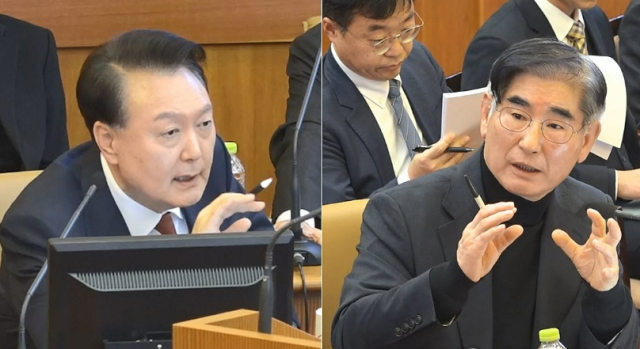
A key aspect of this investigation is whether discussions about additional troop deployments occurred after the National Assembly passed a resolution to repeal martial law.
The special prosecutors have reportedly secured statements from current and former Joint Chiefs of Staff officials indicating that there were requests for additional troop deployments after the National Assembly's resolution to repeal martial law.
Based on this, the special prosecutors are looking into whether Yoon and military leaders considered re-deploying troops or implementing additional martial law measures after the repeal.
The special prosecutors are broadening their investigation to include not only troop movements and entry into the National Assembly immediately after the martial law declaration but also the actions of military leadership following the resolution to repeal martial law.
Remaining Challenge: Evidence and C4I Operational Records
However, as the special prosecutors reach the midpoint of their extended investigation and enter the critical phase of questioning key suspects, securing decisive evidence to substantiate the 'three-tier command structure' is seen as a major challenge ahead.
So far, statements from military officials indicating that there were requests for additional troop deployments have been obtained, but legal experts emphasize the need to secure internal military records that objectively prove the structure of directives, transmission, and execution.
In particular, operational records from the military command and control system, known as C4I (Command, Control, Communications, Computers, and Information), are considered a key piece of evidence.
According to reports from Aju Economy, some military units during the martial law period did not operate C4I equipment normally. In standard military operations, troop movements, command orders, and location information are recorded within the C4I system. If the special prosecutors can obtain the operational logs, communication records, and terminal access records from the day of the martial law declaration, it could serve as crucial evidence to clarify the command line from Yoon to the Joint Chiefs of Staff, Defense Command, and Special Forces.
Conversely, if it is confirmed that some troops operated outside the command control network, the existence of separate command lines or abnormal operational systems within the military could also become a focus of investigation.
So far, statements from military officials indicating that there were requests for additional troop deployments have been obtained, but legal experts emphasize the need to secure internal military records that objectively prove the structure of directives, transmission, and execution.
In particular, operational records from the military command and control system, known as C4I (Command, Control, Communications, Computers, and Information), are considered a key piece of evidence.
According to reports from Aju Economy, some military units during the martial law period did not operate C4I equipment normally. In standard military operations, troop movements, command orders, and location information are recorded within the C4I system. If the special prosecutors can obtain the operational logs, communication records, and terminal access records from the day of the martial law declaration, it could serve as crucial evidence to clarify the command line from Yoon to the Joint Chiefs of Staff, Defense Command, and Special Forces.
Conversely, if it is confirmed that some troops operated outside the command control network, the existence of separate command lines or abnormal operational systems within the military could also become a focus of investigation.
* This article has been translated by AI.
Copyright ⓒ Aju Press All rights reserved.