

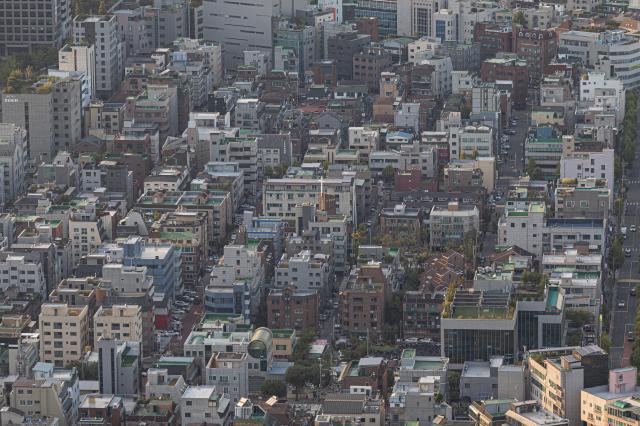
The volume of villa transactions (including multi-family homes) in Seoul has increased by more than 30% this year compared to last year. As the rental crisis for apartments intensifies, demand is shifting to the relatively lower-priced non-apartment market, while investment interest is also returning, particularly in areas undergoing early redevelopment.
According to the Ministry of Land, Infrastructure and Transport's real transaction disclosure system, from January to May 19, 2026, there were 15,157 villa transactions in Seoul. This marks a 31.0% increase (3,587 transactions) from the same period last year, which recorded 11,570 transactions.
This represents the most significant recovery since the sharp decline in transactions following rental scams in 2023. The recovery trend, which began in the second half of last year in certain redevelopment areas, has now spread across Seoul.
By district, Jongno-gu saw the highest increase in transaction volume, rising 150.0% compared to last year. However, analysts note that Jongno's overall transaction volume is relatively small, making it susceptible to base effect influences. More substantial increases were observed in districts such as Gwangjin-gu, Dobong-gu, Seodaemun-gu, and Gangbuk-gu.
In Gwangjin-gu, villa transactions surged from 617 last year to 1,071 this year, a 73.6% increase. Dobong-gu followed with a 63.6% rise, Seodaemun-gu with 47.8%, and Gangbuk-gu with 36.4%. Other districts, including Songpa-gu, Eunpyeong-gu, and Yangcheon-gu, also experienced notable increases.
Gwangjin-gu's growth is attributed to investment demand driven by redevelopment expectations in the Jayang and Junggok-dong areas. Villas in the early stages of redevelopment require relatively lower initial investments, and the possibility of purchasing with a rental guarantee—known as 'gap investment'—has led to continued inquiries from investors.
A real estate agent in Gwangjin-gu stated, "With lower entry prices than apartments and the anticipation of redevelopment, there is a simultaneous movement of demand for both living and investment purposes. We are also seeing steady inquiries from those looking to purchase villas as a form of asset investment."
In contrast, the increase in transactions in outer districts like Dobong, Gangbuk, and Seodaemun is seen as being driven more by actual housing needs than investment. According to Asil, the number of rental listings in Dobong-gu has decreased by over 14% in the past ten days, totaling 164 listings. As apartment rental prices rise rapidly and listings dwindle, tenants are moving towards older villas or non-apartment markets, which have lower deposit burdens.
Statistics from the Korea Real Estate Agency indicate that last month, rental prices in Seongbuk-gu rose by 0.92%, the highest increase in Seoul, followed by Gwangjin-gu (0.96%), Nowon-gu (0.79%), Seodaemun-gu (0.78%), and Dongdaemun-gu (0.77%).
A decrease in supply is also cited as a factor influencing market dynamics. According to the Ministry of Land, Infrastructure and Transport, the number of completed villas in Seoul dropped from 23,389 units in 2021 to just 4,329 units last year, an 81.5% decline.
With both actual and investment demand flowing into the market, signs of price rebounds are emerging in some areas. The Korea Real Estate Agency's "April National Housing Price Trend Survey" reported a 0.55% increase in Seoul's housing price index. Both apartments and villas have continued to rise in price this year, with the average sale price of villas increasing by 0.62% last month, surpassing the apartment price increase of 0.55% during the same period.
However, some experts caution against declaring a full market recovery. There remains significant regional polarization, and transactions for less desirable locations or older villas continue to lag.
Kim Hyo-seon, a senior real estate analyst at KB Kookmin Bank, noted, "In key areas like Gwangjin, Yongsan, and Dongjak, investment demand is driven by redevelopment expectations that circumvent land transaction permit regulations, while in outer districts, the majority of purchases are motivated by actual housing needs due to rising living costs. However, unlike earlier this year, villa prices have risen significantly, and market risks persist, so it is advisable to refrain from hasty purchases and to adopt a wait-and-see approach."
* This article has been translated by AI.
Copyright ⓒ Aju Press All rights reserved.