Exploring the Impact of '21st Century Great Lady' on Historical Drama and Korean History
by Park HeewonPosted : May 23, 2026, 21:42Updated : May 23, 2026, 21:42
Share
facebook
twitter
URL
Text size
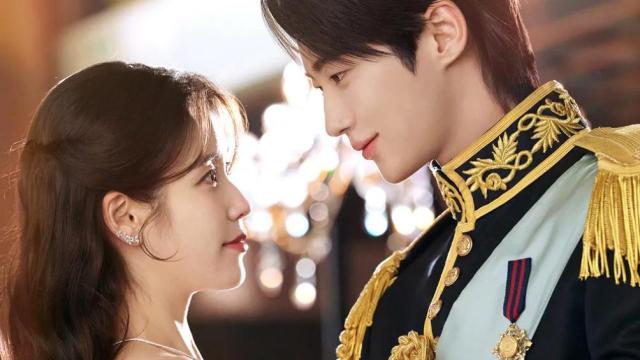
The official poster of '21st Century Great Lady' featuring IU and Byun Woo-seok. [Photo=MBC '21st Century Great Lady']
MBC's drama '21st Century Great Lady' has sparked significant discussion.
The first point to evaluate is the writer's imagination and the strength of the plot development. Few recent Korean dramas have boldly reinterpreted royal politics, human desires, love, and the tragedy of power with a modern sensibility as this one has.
The ability to present the age-old theme of court power not merely as a historical reenactment but as a narrative about contemporary humanity is quite impressive. The rapid pacing, stylish dialogue, and character interpretations tailored to younger audiences stand out. The camera beautifully and chillingly captures the closed space of the palace, while the actors express the loneliness of power and human desires with subtlety.
Notably, this work is significant for breaking away from the heavy tone typical of traditional historical dramas, attempting a more popular and sensory visual language. The effort to transform the historical setting of the Joseon dynasty into a living human drama is commendable.
However, the issues arise thereafter.
Historical dramas are not mere fantasies; they occupy a genre that straddles the line between history and imagination. Imagination is necessary, as a historical drama without it can easily lose vitality. Yet, when dealing with public memory, creators bear a certain responsibility.
The controversy surrounding '21st Century Great Lady' stems from this very point. The drama significantly restructured character relationships and political dynamics for dramatic tension. This in itself is not problematic, as historical dramas are an art form that fills the gaps in records with imagination.
However, some scenes have faced criticism for insufficient historical verification regarding the temporal context and historical order. Critics argue that the reinterpretation of Joseon royal rituals, political systems, Confucian governance, and the relationship between king and subjects through overly modern emotional frameworks has weakened the historical realism.
In South Korea, debates over historical accuracy do not end with mere drama criticism. Koreans are particularly sensitive to historical issues, a reaction rooted in a long history of foreign invasions and colonial rule that distorted and robbed them of their history.
The Joseon dynasty established a strong Confucian state system after its founder, Yi Seong-gye. During the reign of King Sejong, advancements in science, literature, music, astronomy, administration, and agricultural technology ushered in a golden age of Joseon civilization. However, at the same time, Joseon adopted a diplomatic principle of subservience to the Ming dynasty, with Confucianism as a core governance principle.
In this process, the autonomous understanding of the ancient history of the Korean people and northern ancient history gradually diminished. Narratives that diverged from the Sinocentric worldview were often treated as uncomfortable.
Records and controversies exist regarding the confiscation or control of ancient texts and esoteric literature during the Joseon era. Following the reign of King Sejo, the so-called 'Suseo-ryeong' issue arose, with claims that some ancient records disappeared. Various interpretations exist within academia regarding this matter. However, it is largely true that under the strong Confucian order that persisted until the late Joseon period, the study of ancient history and northern history faced significant restrictions.
This trend continued in a more organized manner during the Japanese colonial period.
The Government-General of Korea and the Korean History Compilation Committee attempted to reconstruct Korean history as subordinate to Japanese rule. The histories of Gojoseon, Buyeo, Goguryeo, and Balhae were minimized or distorted, and the activities of the Korean people were confined to the Korean Peninsula. The northern ancient history connecting Manchuria, the Liao River, and the Japanese archipelago was intentionally downplayed.
However, recent research on ancient Northeast Asian history is entering a new phase, notably with the study of Hongshan culture.
Hongshan culture is a late Neolithic cultural sphere discovered in Liaoning Province and southeastern Inner Mongolia, along the Liao River. It is estimated to date back to around 4000-3000 B.C., with significant archaeological finds at the site of Wuhaliang, including large altars, temples, megalithic structures, jade artifacts, and goddess statues.
The Wuhaliang site is evaluated as evidence of an ancient civilization with a significant religious system and social hierarchy, surpassing mere tribal society. The jade dragon and intricate jade artifacts, along with sacrificial facilities and massive megalithic structures, indicate that Northeast Asia's prehistoric culture possessed a much higher level of civilization than previously thought.
Importantly, some elements found at Hongshan culture sites suggest connections to the Bronze Age cultures of northern Korea and Manchuria. Some researchers highlight the potential links between the biphasic bronze culture, megalithic tomb structures, and northern equestrian culture with the later cultures of Gojoseon, Buyeo, and Goguryeo.
Academically, caution is still necessary. Equating Hongshan culture directly with Gojoseon history may be an overinterpretation. However, it is increasingly recognized that the origins of Northeast Asian civilization cannot be solely explained by the Yellow River civilization, and the possibility of a northern civilization axis connecting the Liao River, Manchuria, and the Korean Peninsula is gaining attention.
Interestingly, China's historical strategy is shifting.
Ancient China viewed itself as the center of civilization, referring to northern tribes as Beidi, eastern tribes as Dongyi, southern tribes as Nanman, and western tribes as Xiyong. Surrounding peoples were long regarded as 'barbarians.'
In contrast, modern China employs an opposite strategy. Since the establishment of the People's Republic of China, the Communist Party has promoted the theory of a 'unified multi-ethnic state,' seeking to incorporate the histories of surrounding ethnic groups into Chinese history. The Northeast Project, which interprets Goguryeo and Balhae as Chinese regional powers, is a continuation of this approach.
This is not merely a historical debate; history is ultimately tied to territory, identity, and future strategies.
Thus, South Korean society must move beyond emotional nationalism and uncritical mythologizing to engage in deeper and more rational historical research. The legends of Dangun, Hwanung, and the idea of the 'heavenly lineage' are important symbols of Korean spiritual culture. However, uncritically absolutizing them as history must also be avoided. Simultaneously, attitudes that excessively downplay Korean ancient history due to remnants of colonial historiography must be transcended.
Ultimately, balance is crucial.
Research on Hongshan culture and Liao civilization suggests that Korean ancient history was not confined to the Korean Peninsula. It prompts a reevaluation of the position of Korean ancient history within the vast Northeast Asian civilization.
This is why the responsibility of historical dramas is even greater.
Historical dramas are not mere entertainment; they are cultural devices that shape the public's historical consciousness and create powerful narratives for future generations.
Therefore, drama writers and broadcasters, including MBC, must exercise greater caution in producing historical dramas. While dramatic appeal and imagination are necessary, respect for historical verification and contextual accuracy must also be prioritized. This is especially true when dealing with themes related to dynastic history, ancient history, and national identity, which require deeper research, consultation, and academic validation.
Creativity must be free, but humility before history is essential.
As important as fresh imagination is a reverence for history. Ratings and buzz may be fleeting, but historical consciousness endures across generations.
Ultimately, a new perspective on Korean ancient history will not be one of extreme nationalism or self-deprecation rooted in colonial historiography. The key is a calm study and a confident awareness of civilization.
Just as Greece has shaped the archetypes of Western civilization through Zeus, Achilles, the Trojan War, and Olympus mythology, China has utilized the myths of the Yellow Emperor, Yao, Shun, and the Three Sovereigns and Five Emperors as roots of its civilizational history. India has similarly connected its ancient narratives through the Vedas, Mahabharata, and Ramayana to its national identity today.
Korea must do the same.
The legends of Dangun, Hwanung, and the heavenly lineage hold significance beyond mere folklore. They represent the roots of Korean spiritual culture, emphasizing harmony between heaven, humanity, and nature. However, modern historiography also requires a clear distinction between myth and empirical history.
Thus, future research on Korean ancient history needs to develop in a more systematic and balanced manner. While expanding studies on Dangun Joseon, Gojoseon, Buyeo, Goguryeo, Balhae, and northern civilizations, it is essential to actively research and organize areas that can be verified through current historical and archaeological data within the framework of established historical narratives. At the same time, the earlier domains, such as the myths of Hwanung and Dangun, should be studied in terms of their significance to Korean spiritual culture and civilization symbolism.
The attitude of unconditionally transforming myths into history is dangerous, but conversely, dismissing all myths as mere superstition or fiction is also not the attitude of a civilized nation. The important thing is to embrace both history and myth while respecting each domain's boundaries.
In particular, research on Hongshan culture and Liao civilization opens the possibility that Korean ancient history is not confined to the Korean Peninsula. A new era is dawning for the study of Korean ancient history, connecting Manchuria, the Liao River, the Korean Peninsula, and the Japanese archipelago, as well as Central Asia and the Silk Road.
In this process, the interactions with the Mughal Empire of India and Central Asian and Turkic civilizations, as well as the Silk Road, should also be illuminated. Goguryeo, Balhae, and Goryeo were not merely states that interacted with China; they were continuously connected to the northern nomadic world and the steppe civilization. The movements of horses, iron, bows, equestrian culture, Buddhism, and trade networks also flowed within this context.
Ultimately, Korean ancient history must be read anew within the perspective of Eurasian civilizational exchange, transcending the confines of a closed peninsula narrative.
This is why historical dramas must also be approached with greater caution.
Historical dramas are not just consumable content; they are monumental cultural devices that shape the public's historical consciousness and create the civilizational awareness of future generations. The writer's imagination deserves respect, but humility before history is paramount. Dramatic appeal may be fleeting, but distorted historical perceptions linger.
'21st Century Great Lady' undoubtedly showcased remarkable imagination and artistic direction. At the same time, it posed profound questions about historical verification, perceptions of ancient history, and the direction of Northeast Asian civilization in Korean society.
Ultimately, what we may need today is a reflection that moves beyond emotional debates surrounding the past, aiming for a deeper, broader, and more dignified historical and civilizational state.