

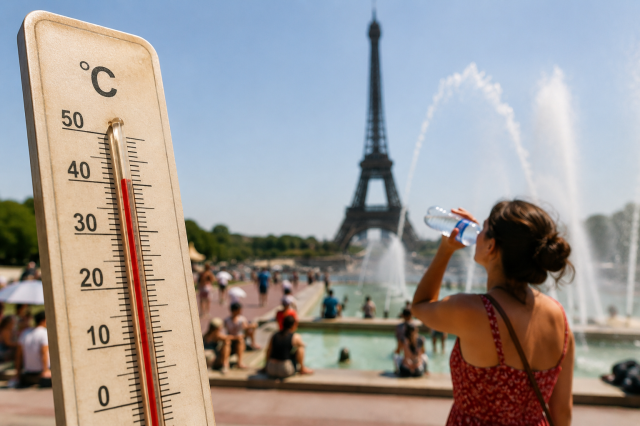
According to reports from Reuters on May 28, at least seven people have died in France due to heat-related incidents. Among them, five drowned in lakes, rivers, and beaches, while two lost their lives during sporting events. The French government has issued warnings about the risks of heatstroke, dehydration, and accidents during outdoor activities.
The UK is also experiencing unusual heat. Temperatures at Kew Gardens in London reached 34.8 degrees Celsius, setting a new record for May. The UK Health Security Agency has issued an amber heat health alert for London and parts of southeastern and eastern England, indicating a significant health risk.
In South Asia, the situation is similarly dire. The World Weather Attribution (WWA) reported that at least 37 heat-related deaths have been recorded in India as of mid-May. In Karachi, Pakistan, 10 fatalities have been reported. In Andhra Pradesh, India, there have been 325 suspected cases of heatstroke from early March to mid-May.
A significant issue is that the impact of high temperatures is often underreported in official statistics. In addition to heatstroke, there is an increase in cardiovascular issues, dehydration, drowning incidents, and accidents among outdoor workers due to the heat.
Analysts suggest that this heatwave should not be viewed as a one-time anomaly. The World Meteorological Organization (WMO) has projected a high likelihood that the global average temperature will exceed 1.5 degrees Celsius above pre-industrial levels within the next five years. This raises alarms that the May heatwave may not be a temporary phenomenon.
The heat is also straining infrastructure beyond health services. In India, a surge in demand for cooling has led to record electricity consumption, resulting in nighttime blackouts in some areas.
Consequently, experts are calling for an earlier response to heatwaves. They recommend activating heat health alerts in spring and implementing restrictions on outdoor work and support for vulnerable populations sooner.
* This article has been translated by AI.
Copyright ⓒ Aju Press All rights reserved.