

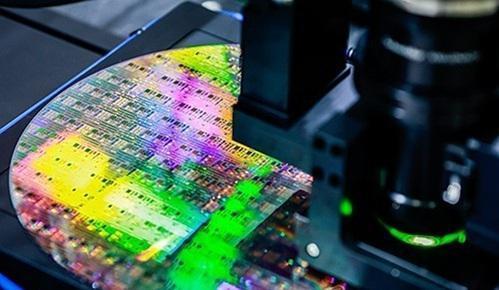
However, the advent of the AI era has rapidly transformed the global industrial landscape. The generative AI revolution, sparked by ChatGPT, has led to a surge in investments in data centers and AI servers worldwide. AI requires the ability to process vast amounts of data simultaneously, demanding ultra-fast and high-capacity memory that far exceeds traditional DRAM. This is where high-bandwidth memory (HBM) comes into play. While the global AI industry currently revolves around Nvidia, South Korean memory technology is integral to its operations. If the U.S. dominates AI platforms and software, South Korea supplies the “memory” of the AI era. Consequently, the market now refers to this situation as a “semiconductor supercycle” not seen in 43 years.
Yet, South Korea must remain cautious at this juncture. Economic booms can cloud judgment. Historically, when a specific industry surges, Korean society tends to view it as a permanent future. From the heavy chemical industry in the 1970s to shipbuilding and steel in the 1980s, IT and semiconductors in the 1990s, real estate and construction in the 2000s, and the recent platform and secondary battery booms, South Korea has often embraced the rise of a single industry as the fate of the entire nation. However, industrial history is cyclical. Booms lead to over-investment, which results in oversupply, ultimately causing price crashes and restructuring. This cycle is a harsh reality of capitalist industrial history.
The semiconductor industry is no exception. In the 1980s, Japan dominated the global semiconductor market, instilling fear in the U.S. as Japanese companies nearly monopolized the memory sector. The world declared it the “era of Japanese semiconductors.” However, following the bubble burst and structural changes, coupled with U.S. technological and trade pressures, the Japanese semiconductor industry rapidly faltered, paving the way for South Korea to rise. Samsung Electronics emerged as a dominant force in the memory market, and SK Hynix also ascended to become a top-tier company. Yet, this journey was fraught with challenges, as the South Korean semiconductor industry survived numerous downturns, price crashes, and the global financial crisis. This makes the current moment crucial; economic booms are often the most perilous times.
Recent debates in South Korea, while appearing to be simple wage disputes, actually reflect deeper issues. Labor unions, corporations, political factions, and financial markets are clashing over how to distribute record-high operating profits. Labor representatives argue that “the record performance is due to the dedication of workers.” Meanwhile, market participants and minority shareholders assert that “the profits of publicly traded companies fundamentally belong to shareholders.” Politicians add another dimension, claiming that “semiconductors are a strategic national industry.” The problem lies in the collision of these three narratives. Semiconductors are no longer just an industry; they have become a vital export sector, a matter of national security, a driving force in the stock market, and a cornerstone of youth aspirations and the nation’s future. Consequently, semiconductors are increasingly treated as if they embody the “nation itself.”
This is where the danger of “semiconductor disease” begins. Dutch Disease, a term in economics, describes a scenario where a specific industry or resource becomes overly dominant, disrupting the balance of the entire national economy. Originally coined from the Netherlands’ experience with a natural gas boom that weakened manufacturing competitiveness, South Korea now faces a similar risk in a different form. As the semiconductor industry grows too powerful, there is a potential for the national economy, financial markets, and policy decisions to become overly centered around semiconductors. In fact, the South Korean stock market has effectively become a semiconductor market; when Samsung Electronics and SK Hynix rise, the entire market follows, and conversely, when semiconductors falter, the whole economy shakes. This is not a healthy long-term structure. Over-reliance on a single industry can ultimately destabilize the nation’s fate.
A more pressing issue is the essence of the AI era. Currently, many believe the AI industry will grow indefinitely. However, the history of technology industries does not support this notion. The dot-com bubble, the LCD industry, and the solar and battery sectors have all experienced significant cycles. AI will inevitably face oversupply, price competition, shifts in technological standards, geopolitical risks, and the challenge posed by China. The Chinese factor is particularly critical, as China is pouring substantial funds into AI semiconductors and memory industries. Despite existing technological gaps, China is waging a national effort to create its own semiconductor ecosystem, even amid U.S. technological sanctions. Underestimating a competitor’s pace of advancement is the most dangerous mistake in industrial competition. Japan once chased the U.S., South Korea pursued Japan, and now China is closing in on South Korea. Ultimately, the semiconductor industry is a battleground with no permanent victors.
Moreover, the AI era will not conclude with mere memory competition. Future competition is likely to encompass a vast ecosystem involving semiconductors, energy, software, cloud computing, data centers, robotics, AI platforms, defense AI, and quantum computing. At this critical juncture, South Korea faces a significant choice. While it currently possesses world-class memory competitiveness, relying solely on memory cannot guarantee future success. The true victor in the AI era will likely be the nation that dominates the entire AI ecosystem. The strength of the U.S. is not solely due to Nvidia; it stems from a cohesive ecosystem that includes OpenAI, Microsoft, Google, Amazon, Meta, and Tesla, integrating AI platforms, cloud computing, data centers, and software. In contrast, South Korea remains overly focused on a hardware-centric structure.
Therefore, what South Korea truly needs to contemplate is not merely the distribution of operating profits. The more critical issues are how to prepare for next-generation AI structures, innovate energy efficiency, ensure data sovereignty in AI software, restructure global supply chains, cultivate talent, diversify industries, and develop energy strategies. Particularly in the AI era, energy issues are pivotal. AI data centers consume enormous amounts of electricity. Ultimately, semiconductor competitiveness is likely to be linked to energy competitiveness. This is why major U.S. tech companies are competing to secure nuclear, LNG, and renewable energy sources. The AI era is not just a semiconductor era; it is an “era of energy and data.”
In fact, the world is currently undergoing three massive transitions simultaneously. The first is the AI revolution. The second is the U.S.-China power struggle. The third is the restructuring of energy and supply chains. Semiconductors lie at the intersection of these three axes. The U.S. has begun to view semiconductors as a national security issue, while China regards them as a matter of national survival. Europe is also investing heavily to revive its domestic semiconductor industry. Ultimately, semiconductors have evolved into a strategic asset of modern civilization, rather than just an industry.
However, this is precisely why a level-headed approach is essential. The moment one becomes complacent during a boom, the risk begins. The Korean proverb “거사안위 (Gyeosa Anwi)” suggests thinking about crises during times of comfort. The South Korean semiconductor industry is undoubtedly at a world-class level. Yet paradoxically, this may be the most dangerous moment. History has not favored arrogant victors for long. The industries that survive are not those intoxicated by current booms, but those prepared for future crises. The same applies to South Korea’s semiconductor industry.
What is needed now is not mere celebration but a sober strategy. Labor must consider long-term competitiveness, companies should prioritize preparing for future ecosystems over short-term results, and the government must focus on the overall structure of national industries rather than political popularity.
Above all, balance is crucial. Semiconductors are a core strategic industry for South Korea. However, they must not become a “semiconductor disease” that engulfs the entire nation. The world has already entered an era where the AI revolution, U.S.-China power competition, and energy restructuring and supply chain wars are occurring simultaneously. For South Korea to survive amid these monumental changes, what is needed is not just a jackpot but the ability to design future structures.
Preparing for downturns without succumbing to booms, prioritizing future survival structures over current profits—this is the true strategy that the South Korean semiconductor industry and the entire economy must adopt. The AI era is just beginning, and South Korea stands at the center of this monumental historical transition. Ultimately, the nations that endure will be those that prepare for future crises rather than those intoxicated by present successes.
The same applies to industries. Semiconductors should be a source of pride for South Korea. However, the nation must also prepare for a future that extends beyond semiconductors. This is the true national strategy and the condition for survival in the AI era.
* This article has been translated by AI.
Copyright ⓒ Aju Press All rights reserved.