

According to the National Data Agency's report on April 2025 industrial activity trends released on the 29th, the index for total industrial production (seasonally adjusted, excluding agriculture and fisheries) fell to 117.8 (2020=100), a decrease of 0.6% from the previous month. This is the first decline in total industrial production since January, when it dropped by 0.8%.
The decrease in production is largely attributed to declines in the service, mining, and construction sectors. While semiconductor production increased by 3.1%, mining production overall fell by 0.7%, driven down by significant drops in automotive production (-10.0%) and petroleum refining (-19.4%).
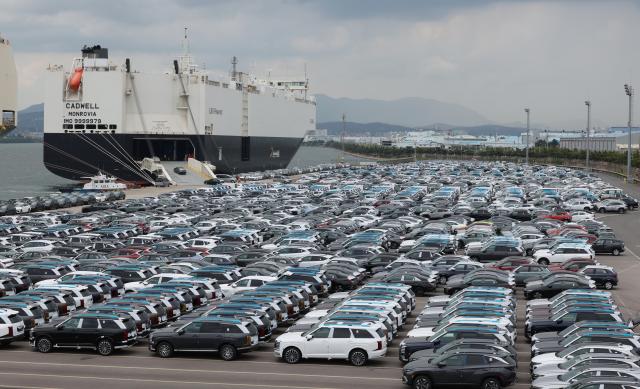
Automotive production saw its largest decline since September of last year, when it fell by 15.3%. A representative from the data agency noted, "The decline in March was influenced by supply chain disruptions caused by fires at some parts manufacturers. However, we should also consider the pent-up demand due to new model launches starting in May."
Petroleum refining experienced its steepest drop since May 1988, when it fell by 22.1%. Analysts interpret this as a result of supply difficulties caused by the blockade of the Strait of Hormuz due to the Middle East war, compounded by scheduled maintenance at some refineries.
In the service sector, while production in information and communication increased by 4.3%, declines in finance and insurance (-7.7%) and retail (-1.5%) led to an overall decrease of 1.0% from the previous month. This is the largest drop since February 2022, when it fell by 1.7%.
Domestic indicators also showed weakness. The retail sales index decreased by 3.6% compared to the previous month, marking the largest decline since February 2024, when it fell by 3.7%. While semi-durable goods remained stable, sales of durable goods, including communication devices, computers, and automobiles (-11.1%), as well as non-durable goods like vehicle fuel (-1.1%), significantly contributed to the decline.
The representative added, "The sales of communication devices and computers may have been affected by a base effect from last month's 40.0% increase, while the drop in automobile sales is related to the surge in electric vehicle shipments earlier this year due to government subsidies."
Investment also faced a downturn, with facility investment decreasing by 3.6% from the previous month. Although investment in machinery for semiconductor manufacturing rose by 0.5%, investment in transportation equipment, including other transport vehicles, fell by 11.5%. The data agency identified a significant reduction in aircraft imports as a key factor.
Construction output declined by 1.4% compared to March, with both building (-1.5%) and civil engineering (-1.1%) projects seeing reduced activity.
The coincident composite index, which reflects the current economic situation, rose by 0.2 points to 100.2, remaining above the baseline of 100 for the second consecutive month. The leading composite index, which forecasts future economic conditions, increased by 0.6 points to 104.1.
* This article has been translated by AI.
Copyright ⓒ Aju Press All rights reserved.